
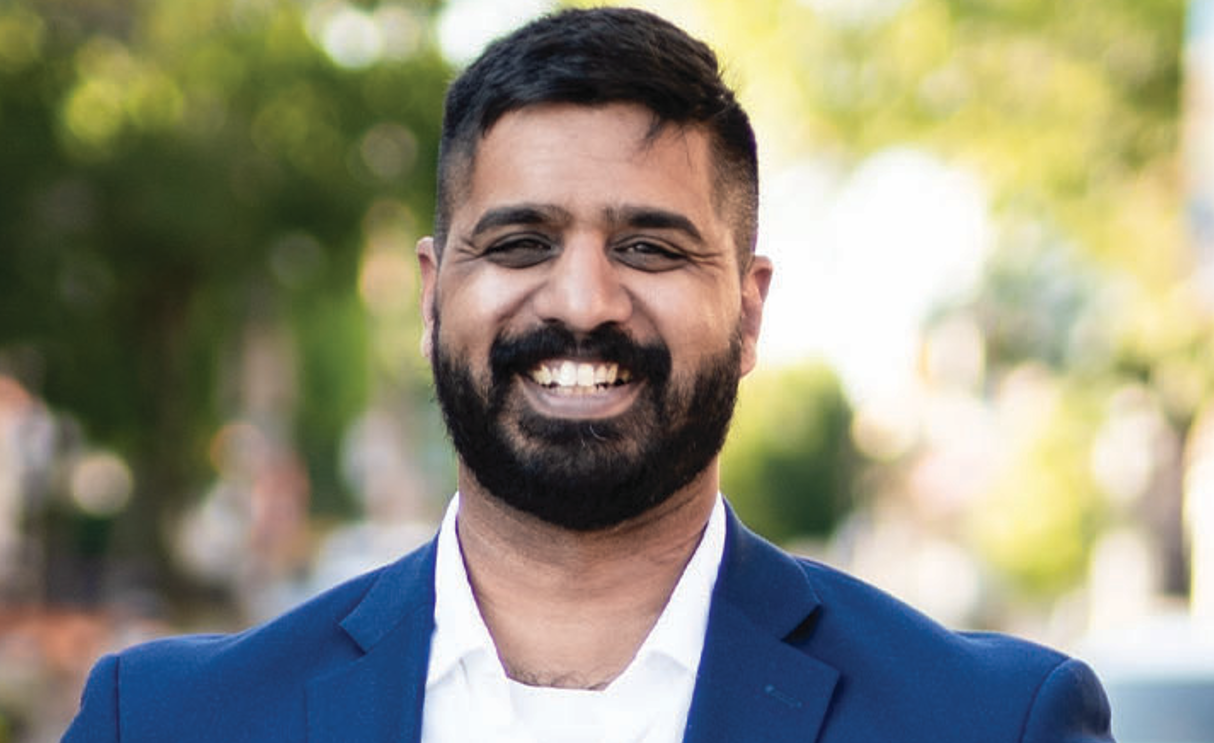
Municipal elections are October 26 in Ontario. To help voters make an informed decision here in Cornwall, the editorial board of The Seeker has put together 10 questions for candidates seeking a seat at the municipal council table, whether as Councillor or as Mayor. To ensure fairness, the same questions were sent to every candidate. We sent a total of 10 and they had the option to answer all of them, or pick a minimum of 5. Their answers will be published in their entirety, in the order they are received. We will not edit, correct or modify any responses.
These are Justin Towndale’s Answers. He is running to retain his seat as Mayor.
Who are you? Where are you from? What education do you have? What relevant experience do you have?
I’ve had the privilege to serve as Mayor of Cornwall for the past four years, and a Councillor for eight years prior. I’m 43, grew up in Cornwall, raised by my parents, Angelo and Margaret. I’m engaged to the love of my life, Sarah. I attended St. Anne’s and St. Joe’s before leaving for the University of Toronto. After graduation, I worked at Queen’s Park for four years. I’m also a Reservist with the Canadian Armed Forces, serving with the SD&G Highlanders as an Infantry Officer, holding the rank of Captain. I’ve sat on a number of local and provincial level boards, such as Habitat for Humanity, SASS for Women, Cornwall and Area Chamber of Commerce, River Institute, Cornwall Police Services Board, Eastern Ontario Health Unit, Border Mayors Alliance, and Good Roads to name a few. I’m a founding member of the Cornwall Chamber of Commerce Young Professionals. I’m currently the Vice-Chair of the Eastern Ontario Mayor’s Caucus. I’m also on two committees for the Great Lakes St. Lawrence Cities Initiative: The Ontario Regional Advisory Committee, where I sit as Second Vice-Chair, and the Mayors Transition Team. I’ve helped organize community events, and I’m a former business owner. And most importantly, I love my community.
In The Seeker’s poll asking constituents about the most important issue facing them, a large majority of respondents answered “taxes/affordability”. What would you do as a Councillor/Mayor to make Cornwall more affordable, and what city services or spending, if any, would you be willing to reduce, change or eliminate to keep tax increases under control?
The question of affordability is a big one. Since the pandemic, we’ve seen costs increase across the board and the City is not immune from these pressures. We need to change the way that we budget. Right now, when any capital project is approved, it is done so upfront in a given year. However, a better way is to break down a project into phases that can be budgeted on a yearly basis, so that actual costs are known up front and projects can be paused if a year looks fiscally unfavourable. Similarly, instead of looking at larger projects, we need to look at smaller projects that add up to the larger goal. It is easier to manage smaller projects over time than larger ones which take multiple years and can result in larger cost overruns. We need to look at different options when building buildings, like leasehold agreements. These are common amongst other police forces like the RCMP and OPP, and as we look at a new station, this is a viable option that could save the City tens of millions of dollars. We also need to maximize our investment strategy, whereby we look at investments that are safe and secure, but also offer high returns. Tying into this is ensuring that our finance department is set up for success. We learned earlier this year that our financial policies had not been updated in 15 years. Some of these policies outlined now out of date practices and precluded newer, more modern, practices. For the first time in 18 years, we have a treasurer who is a Chartered Accountant with a financial designation. This is especially important for the City, which has a $250 million budget annually. We need to ensure that we are investing our money safely and effectively. By growing the tax base, we can increase city revenues by having new houses, new businesses and new industry contributing, reducing the burden on the existing tax base. We also have to shift our mindset on how we are looking at our key areas. Downtown and Le Village need work. The prevalent mentality has been to wait for decades and do a big project all at once. With rising costs, this is becoming increasingly out of reach. We need to undertake preventative maintenance, along with smaller repairs. When upgrades become necessary, we need to plan accordingly over multiple years. When it comes to business licensing and building permitting, we have to change our style to a customer service model, like our neighbours, where we help, provide guidance and advice, and walk people through the entire process. I’ve said this before: Small businesses are the backbone of our community. When local businesses succeed, we all succeed.
Over the past few years, many constituents have expressed concern that the city’s homelessness situation has significantly worsened. What would you do as a Councillor/Mayor to address this issue?
We recently received updated numbers from our Human Services Department when it comes to homelessness. Since 2023, we have moved 99 people from the street to safe, secure, housing. In June of 2025, we reached a high of 35 individuals living in 33 tents. In June 2026, this number was 10 individuals in 5 tents. In July 2025, we saw 28 individuals living rough. In July 2026, this number was 8 individuals in 5 tents. We have to remember that there is an increase in the number of people experiencing homelessness across Canada. Despite this, the number of people living in tents within the city is actually decreasing. Earlier this year, we were at zero encampments reported across the City. We know that the work is far from over, as the number of people experiencing homelessness keeps changing, but we are committed to continuing this work. In working with Lisa Duprau from Agage, I helped establish a warming centre for the winter months, and worked with staff to coordinate cooling centres during the warmer months. We’ve spent or committed over $49 million for new housing. We’ve also purchased Parisien Manor to increase our emergency housing, creating space for warming and cooling areas and space for service and support organizations to come in and meet with people who need help on site, at a central hub. The City has adopted a housing first model which is showing results. Real change and impact takes time. It’s not just about getting people inside, it’s about ensuring that they are given the supports that they need to thrive and prevent a return to homelessness. We also need to work with builders and other partners to find ways to build more housing across the housing spectrum. We’ve lowered development charges and have entered into agreements with builders to provide tax increment grants in exchange for affordable rent guarantee.
Why are you running for Council? What is the most important issue facing the City of Cornwall today?
It is difficult to identify a single issue. Housing and homelessness, access to primary care physicians and the cost of living remain major challenges. All of these issues are addressed in other questions as a part of this questionnaire. I have provided more detailed answers under those questions, but I do believe that housing and homelessness is the most important issue as it also ties into affordability. Please see my answer under number 3 which discusses this issue more in depth. I think that we’ve accomplished some good work over the last four years. While it hasn’t always been easy, and we’ve faced numerous unprecedented challenges this term, we’ve made progress on some of these challenges. I speak to some of this progress under some of the other questions. In addition, I used Strong Mayor Powers to start the conversation to establish Sunday Bus Service, which eventually led to Council approving its implementation, with a start date of September 27 of this year. During the 2022 campaign, I had identified most of the issues discussed here as the top priorities in our community. None of these issues are easily solvable and it’s after lots of hard work and team effort that we are finally starting to see progress. But there remains more work to do. Seeing the progress on these issues, progress we’ve made, and wanting to follow these through, inspires me to continue the meaningful work we’ve started. I want to ensure that our community remains a great place to work, live and play. When we work together, we can accomplish great things.
Many constituents have expressed concerns about accountability and controversy surrounding Council. What could you do as a Councillor/Mayor to improve transparency and accountability?
When Council Members are sworn into office, we take an oath to not voluntarily disclose certain types of information. This typically includes information surrounding sensitive topics like employees. While the public wants more information and we would love to be able to provide it, unfortunately, we are bound by law to not do so. I know that this isn’t the answer that people want to hear but it is the truth. That said, I do acknowledge that we can do better with communications and how we get the message out there. Misinformation is part of the challenge here as well. One side of a story, or a claim, gets posted online and it spreads like wildfire and is believed without question. A great example of this is the new boards at the Civic Complex. A claim was made that they did not meet standards and would prevent the OHL from playing here. During my press conference with OHL Commissioner Bryan Crawford earlier this year, he was asked about the boards and said there were no concerns with them. He had also previously told us that another team in the league had the same boards. In this case, the misinformation became hard to combat. In other instances, people simply accuse us of lying, which convolutes the issue further. The best we can do is to attempt to provide information when we are able to and address misinformation as quickly as possible. However, we also need some understanding from residents when we are legally bound as to what we can say or do. We had also originally committed to more townhalls, and while we did have a few, we unfortunately were not able to keep up as much as we wanted. This is an important way we can hear from our residents directly in front of all of council, and creates more community involvement.
We constantly hear about the Art Centre and the water meters. Many residents have expressed the view that these were bad decisions on Council’s part. Both projects are being implemented, but they remain a sore spot for some voters. Would you consider revisiting or changing decisions made on those projects?
There are procedures and by-laws in place which prevent projects from being cancelled mid-project. That and the contract with the company usually has standard terminology that states that they will receive full payment if the project is cancelled mid way through. But let’s look at them. Water meters were approved last term, in 2021. Right now, residents are billed on how many fixtures are in their homes and not actual usage like electricity or natural gas. This requires the City to know how many taps are in your house. Imagine this scenario with your electric bill, if you had to pay per outlet. It’s not really feasible. There’s also a disparity between some of the commercial sector and residential sector where the residential sector is picking up the extra cost for businesses that do not currently have water meters. The project will fix this and provide a fair and equitable billing service that is already in place across Ontario. Cornwall is the last and only city of our size that does not have water meters. When it comes to the Arts Centre, the project was presented to Council as an entire project all at once, and not in phases. The cost presented was based on estimates at that time. This is what was approved by Council and regrettably, this has shown us the flaws in this method. The Arts Centre is a project that will ultimately benefit the community. When the Aquatic Centre was proposed, many residents were against it and spoke out as such at a public meeting. However, look at the Aquatic Centre today. Not every child is interested in sports. Places like the Arts Centre will give our creatively inclined youth a place to thrive and also give an additional venue downtown for events, which will draw more people downtown and benefit downtown restaurants and businesses. However, if I could, I would have changed the way that we budgeted for the project, it should have been phased, with better budget projections and planning. This could have mitigated the cost overruns.
What would you do to improve our relationship with Akwesasne? What does Truth and Reconciliation look like to you? Explain how Cornwall can take steps toward it. Our most important partnership is the one that we have with Akwesasne.
We recently approved our official Truth and Reconciliation Plan, with a focus on the 94 Calls to Action. We continue to work closely with Akwesasne on the Portlands project. While progress may seem slow, there are factors outside our control, like the environmental assessment that we are still waiting on. This project is of great importance to both of our communities and is meant to last generations. We have to get it right, together. When it comes to Truth and Reconciliation, we are working together on initiatives like the Community Conversations and other local events. But it’s more than just this. It’s joining together on common issues, like the toll booth, which separates us. It’s also providing resources, like buses, when asked. In 2023, when the PowWow was first hosted in Lamoureux Park, I put forward a motion to waive all municipal fees typically associated with such an event. The PowWow remains exempt today. We have also added Mohawk to some welcome signage around the city. My fiance, Sarah, and I have tried to attend as many events as possible in Akwesasne, including the annual Friendship Day hosted at the Native North American Travelling College, and Orange Shirt Day hosted in Generations Park, amongst many others. To me, Truth and Reconciliation means to listen and learn. I am fortunate to have a great relationship with the Grand Chief, Leonard Lazore, and we attended the 2026 PowWow together. During my first term on Council, 2014-2018, then District Chief Troy Thompson was looking to establish a skatepark in Akwesasne and asked about attending the Skatepark Subcommittee that I was on. I of course told him that he was more than welcome. When I was first elected as Mayor and was looking at appointments to the Portlands Committee, I spoke to then, Grand Chief Abram Benedict, about his suggestions and asked for his advice. One of the outcomes was relinquishing hosting of the bank accounts for the Portlands to the Mohawk Council of Akwesasne. It was something that they had asked for since the beginning but had been denied by Cornwall consistently. We did so, in the spirit of true Reconciliation and true partnership. All financial approvals still require approval from both sides. Upon taking office as Mayor, when I looked to order my business cards, I wanted to ensure that they were in three language, English, French, and Mohawk. I worked with Abram on this as well, with help from The Ahkwesáhsne Mohawk Board of Education. While Abram is now the Ontario Regional Chief, I am fortunate to continue to have a great relationship with him. I highlight some of these actions and points because I want to stress the personal importance of Truth and Reconciliation to me. To me, our actions are always just as important as our words. Moving forward, we need to ensure that we keep up our listening, learning, and positive actions.
Cornwall’s municipal government relies on experienced and qualified staff to deliver services to residents. What would you do as a Councillor/Mayor to ensure the city can attract, retain and support the best possible people in senior positions?
City Council is directly responsible for hiring one employee, that being the CAO. The CAO then turns around and hires the General Managers, and so forth. We need to empower the CAO to be able to make the staffing changes that they feel are in the best interest for the municipality. I’ve had excellent working relationships with the CAOs that I’ve had the pleasure of working with. Offering competitive wages and benefits is one way. Another way is to ensure that Senior Managers have the ability to upgrade their skills and have the ability to effect real change. We do have to remember that opportunities for advancement in the public sector can be limited at the top, and that there is nothing wrong when Senior Managers, or any municipal employee, decides to pursue job opportunities elsewhere, especially when these include advancement. In these cases we should encourage our staff and support their decisions. We also need to provide a positive and non toxic work environment. This applies to all levels throughout the corporation, not just the senior positions. We are one team. We need to ensure that the unionized employees also feel appreciated and supported. We need to ensure that these employees also have their voices heard and are able to raise concerns and suggest new ideas. This term, I’ve looked at improving the relationships between The Mayor’s Office, Administration, and the Unions. We’ve shifted to attempting to address grievances at the lowest level, as opposed to arbitration, which also has the benefit of reducing legal costs. We’ve also restructured our Human Resources Department, with a new General Manager who comes from a public sector unionized environment, rather than the private sector. It was this term that we started to truly have employee appreciation events, with a BBQ in the summer and an indoor event in the winter. We also make sure that the formal retirement and milestone celebration includes an appropriate setting and quality food. These small steps add up. While things will never be perfect, we can do our best to get as close as possible. Right now, some locals have zero grievances, down from 40-50 per year. Where morale was lower it is increasing. While there is always more work to do, there is real progress being made. To continue to attract qualified employees we must represent our City on a larger stage. I’ve attended many conferences and speaking opportunities across Ontario where I’ve had the opportunity to highlight our beautiful city, its amenities, unique community and real estate. This is an important opportunity to influence experienced applicants to relocate to our city. Highlighting and improving our amenities and services, and improving our quality of life, helps ensure our youth who spread their wings for real world experience or education come back home to fill these positions in the future, and also attract new employees.
Healthcare is primarily a provincial responsibility, but access to healthcare is a major concern for Cornwall residents. What can the City of Cornwall realistically do to help improve healthcare access, and would you make it a priority as a Councillor/Mayor?
The City has to compete for doctors and have recruitment programs in place, or we will lose the opportunity to recruit more doctors to our area. This term, we recruited 11 new doctors via our relocation program and 3 new medical students via our medical scholarship. I also formed a Task Force to look at Medical Recruitment, and how to improve our offerings. The task force met with the experts: doctors and medical professionals to hear a variety of input and suggestions on how to improve our offerings and what doctors and other allied medical professionals are looking for. These recommendations include new funding streams to attract and support foreign trained doctors, target the recruitment of nurse practitioners, and establishing a Community Improvement Program (CIP) exclusively for medical offices, among some other recommendations, which were all approved by Council. Previously we only offered the relocation and scholarship streams, but by increasing our offerings, and hearing from the experts, we are able to pivot and make our community more attractive. At the 2026 AMO Conference, we met with representatives of the Ontario Medical Association, and were able to present them with our final report. The feedback was positive, and they commended us on our efforts saying that all municipalities should look at what we are doing. Every year, I’ve also had the opportunity to meet with first year medical students from the University of Ottawa as they participate in their community week here at the Cornwall Community Hospital. It is a chance to engage with the next generation of medical students and understand their needs, concerns and what they are looking for. This past year the students who participated indicated Cornwall was one of their program’s favourite cities to visit for community week. We hope this translates to them choosing to practice medicine here. Moving forward I would like to see greater collaboration between Cornwall, SD&G and Akwesasne. There are some great efforts already underway, but I would like to see us go a step further and pool our resources and undertake even more projects together.
Many residents are concerned about crime, vandalism, drug use and a general decline in their sense of safety. What can the city realistically do to address these concerns, and where should municipal responsibility end and provincial or federal responsibility begin?
I can understand this. There are a couple of things that we can do and have done to try to address this. I’ve previously spoken to the Deputy Chief of Police, Chad Maxwell, about increasing patrols downtown and in Lamoureux Park as areas that had previously been identified as areas of concern by residents. More recently, the Cornwall Police Service invested in new cameras in public areas to deter and record possible criminal activity. When it comes to policing, I believe that it is important to defer to the experts, and rely on the advice and guidance of the Chief of Police. Since 2022, we have done so, and all asks by Chief Spowart as part of the Police Budget have been approved, including the hiring of more police officers and the implementation and expansion of MCRT (formerly VSMART) teams. These teams include a social worker to help individuals in distress. Further to this, I would like to look at ‘blue light’ emergency call towers, similar to those found in other waterfront cities. At the same time, we have to recognize that there has been some stigmatization of individuals facing homelessness and in some cases, alleged crimes did not happen. The police investigated after some alleged crimes were posted on social media. There was no victim/complainant, no witnesses, no assailant, and no crime. It appears that some individuals are fabricating stories to stoke stigma, fear, and division. When it comes to the more complicated issues of addiction, a more fulsome approach is required. The CPS MCRT teams are a great first point of contact when the police are called. From there, we can look to help individuals who need a safe space, and get them access to the supports that they need, like addiction services. Ensuring that our first responders have access to naloxone kits can help in those instances when they are required. When it comes to general services that combat addiction, those are usually funded by higher levels of government. However, we can partner with these agencies to help as many individuals as possible. As part of the 2026 budget, I allocated $50,000 to Centre 105 to help with a social worker, to help address the needs of their clients.
About the Author