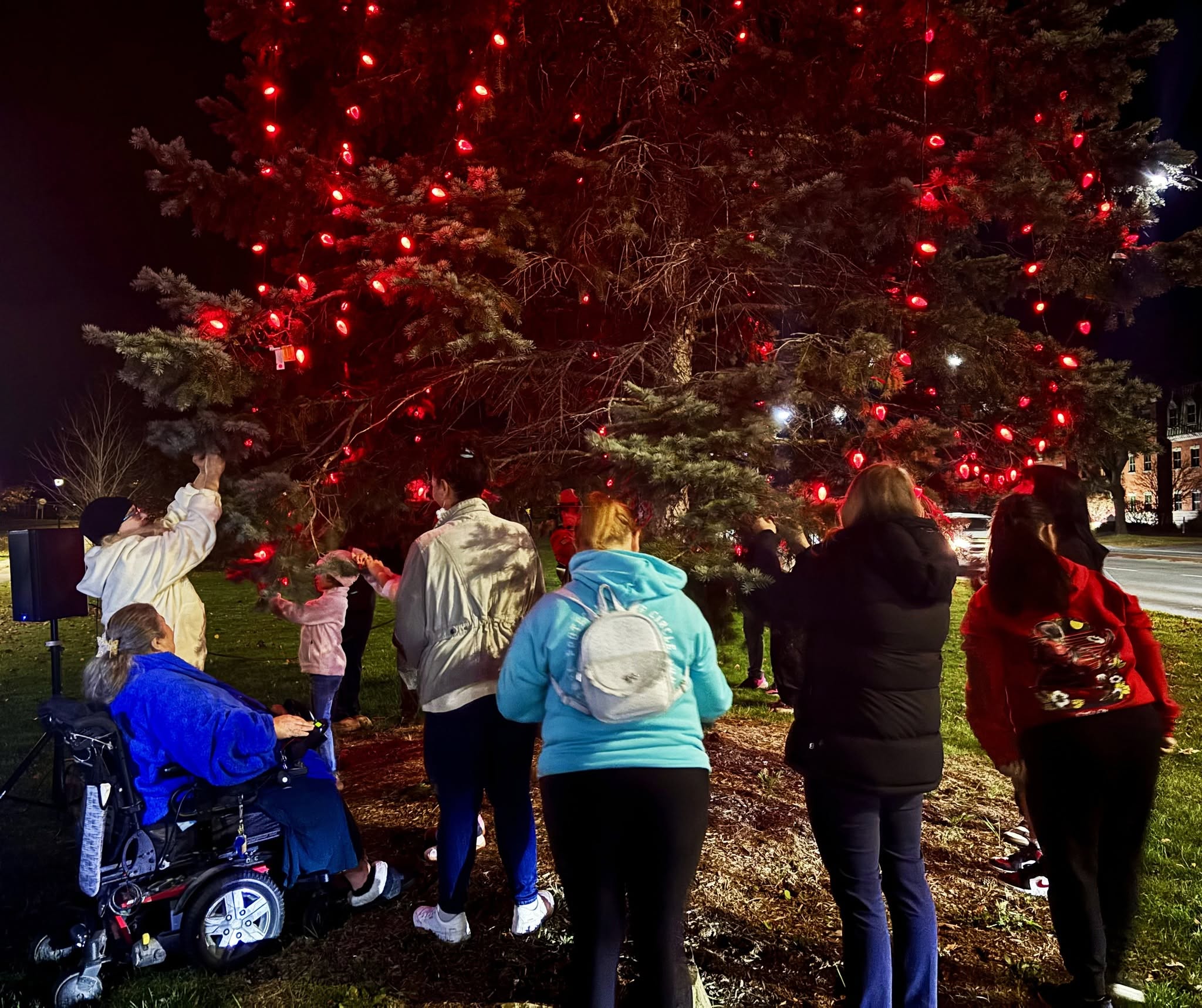
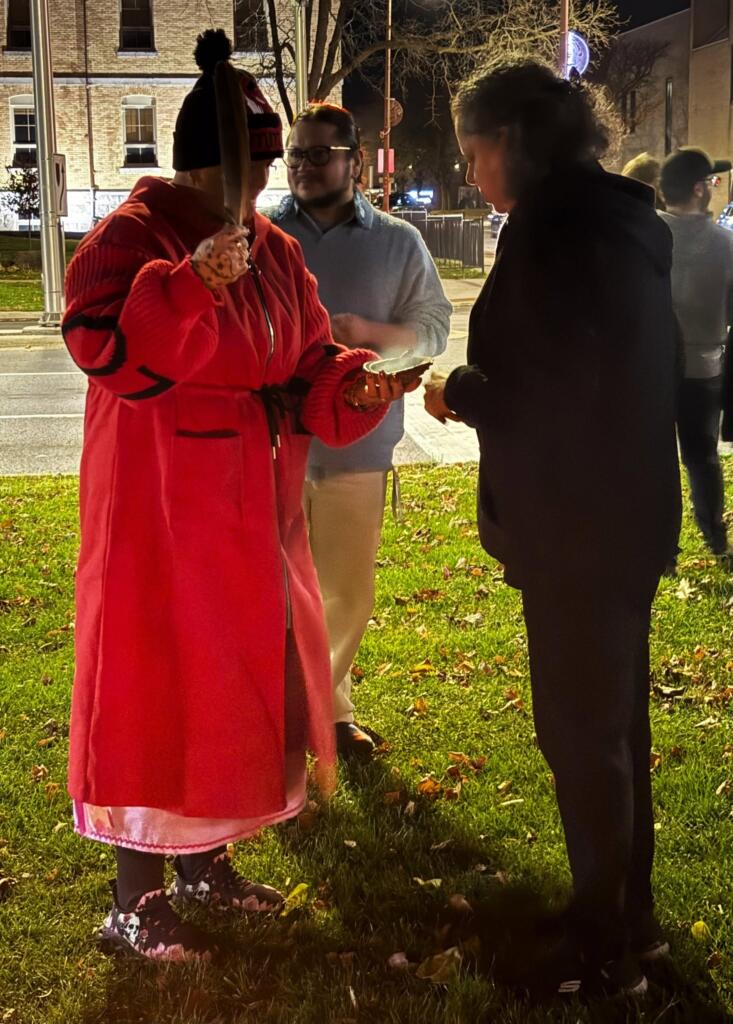
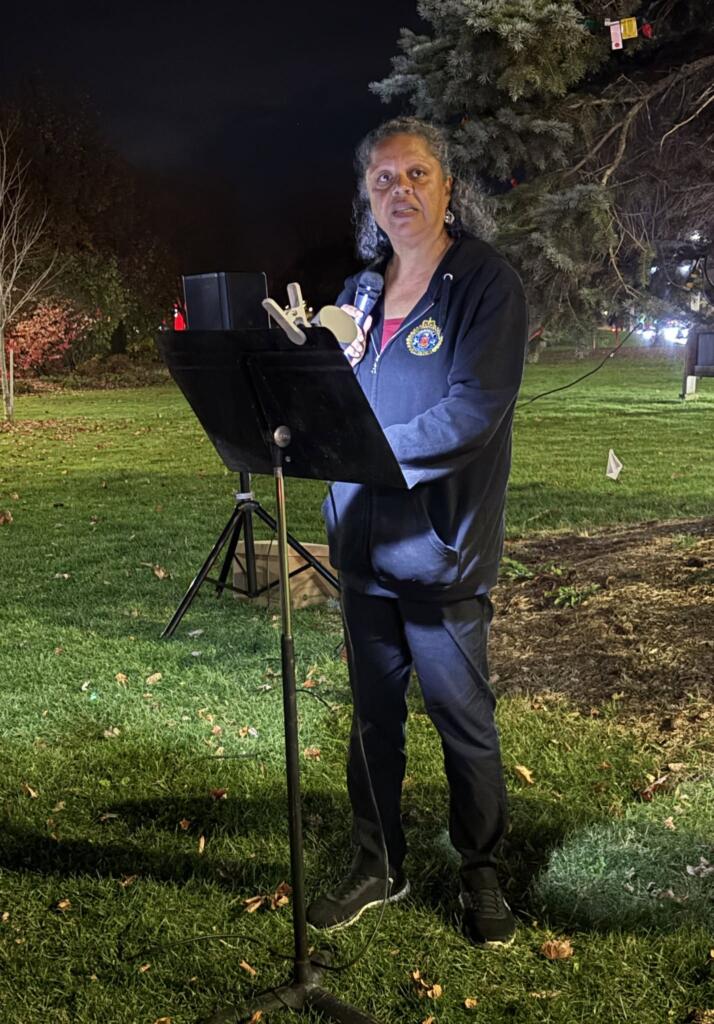
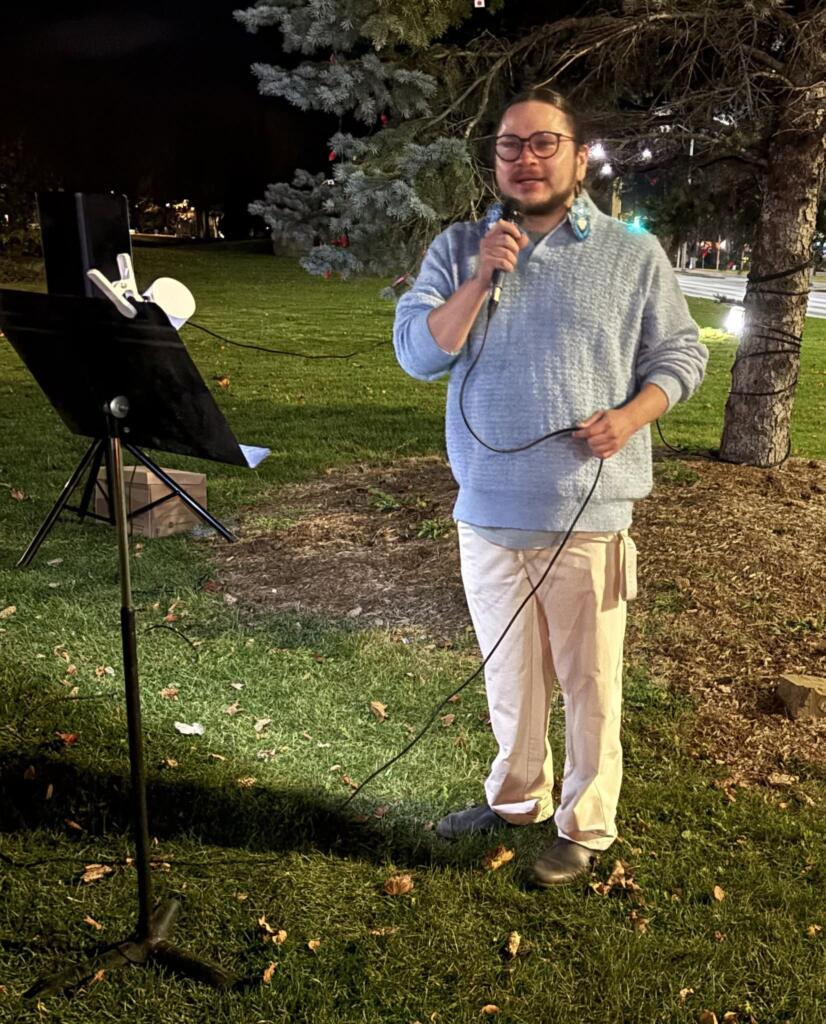
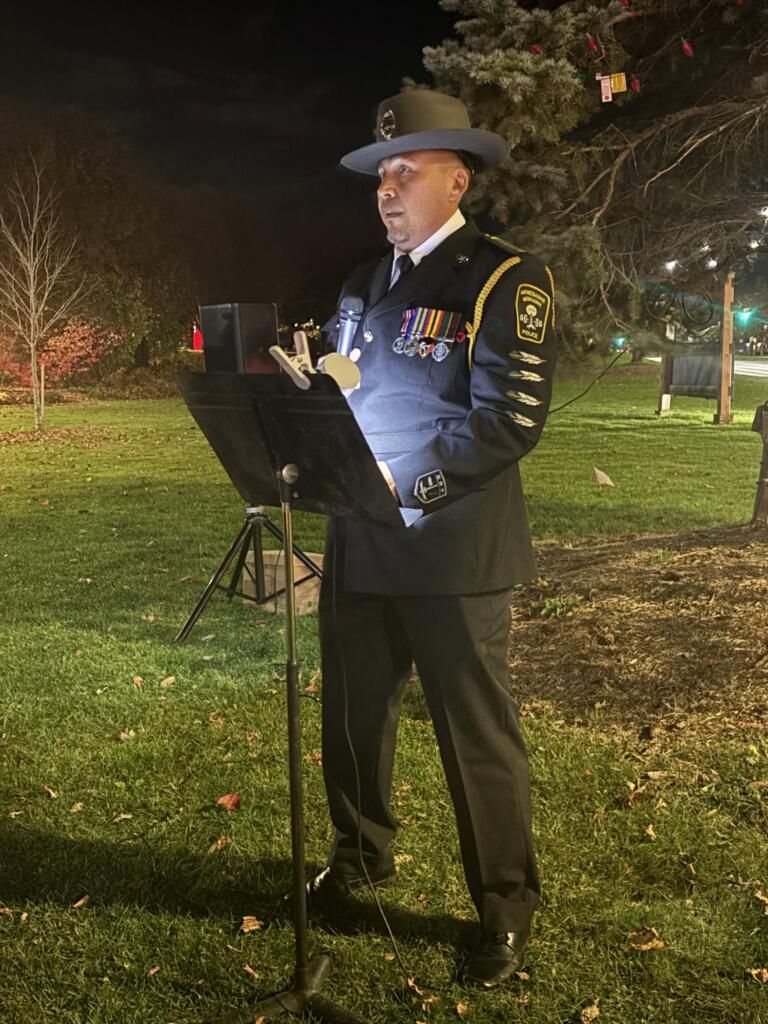
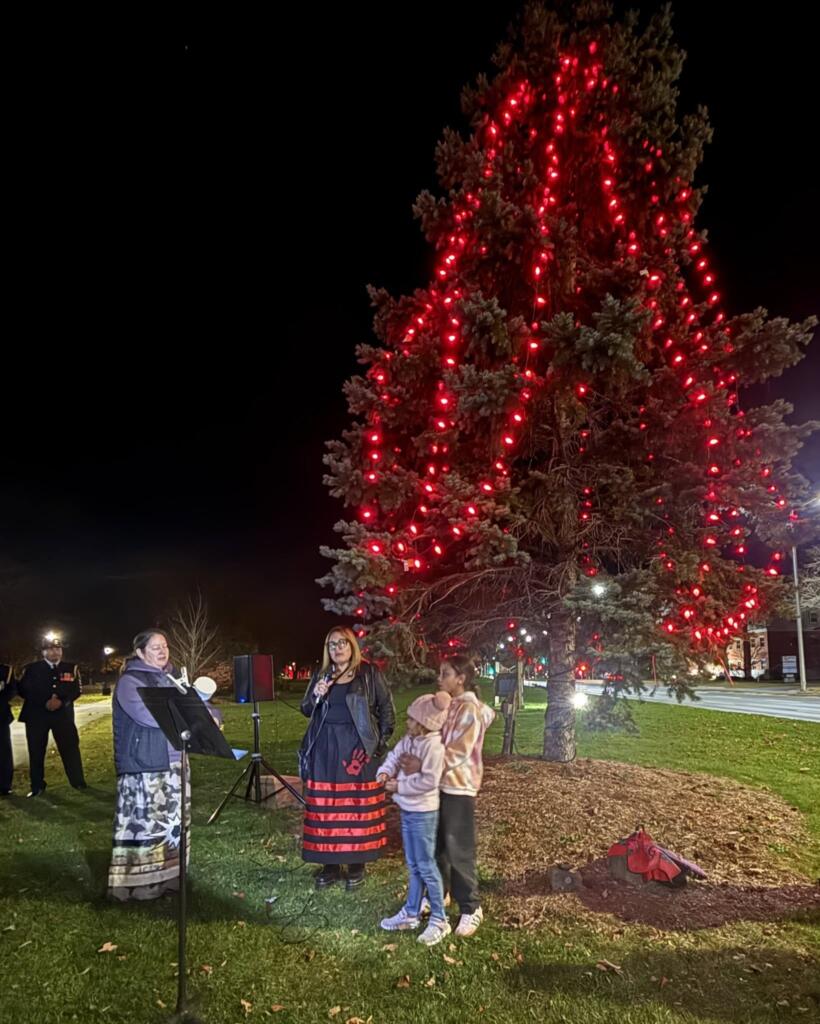
On November 5, I attended the Tree of Hope Lighting at the clock tower in Lamoureux Park. The third-year celebration honours missing and murdered indigenous women, girls, and two-spirited+ Persons (MMIWF2S+).
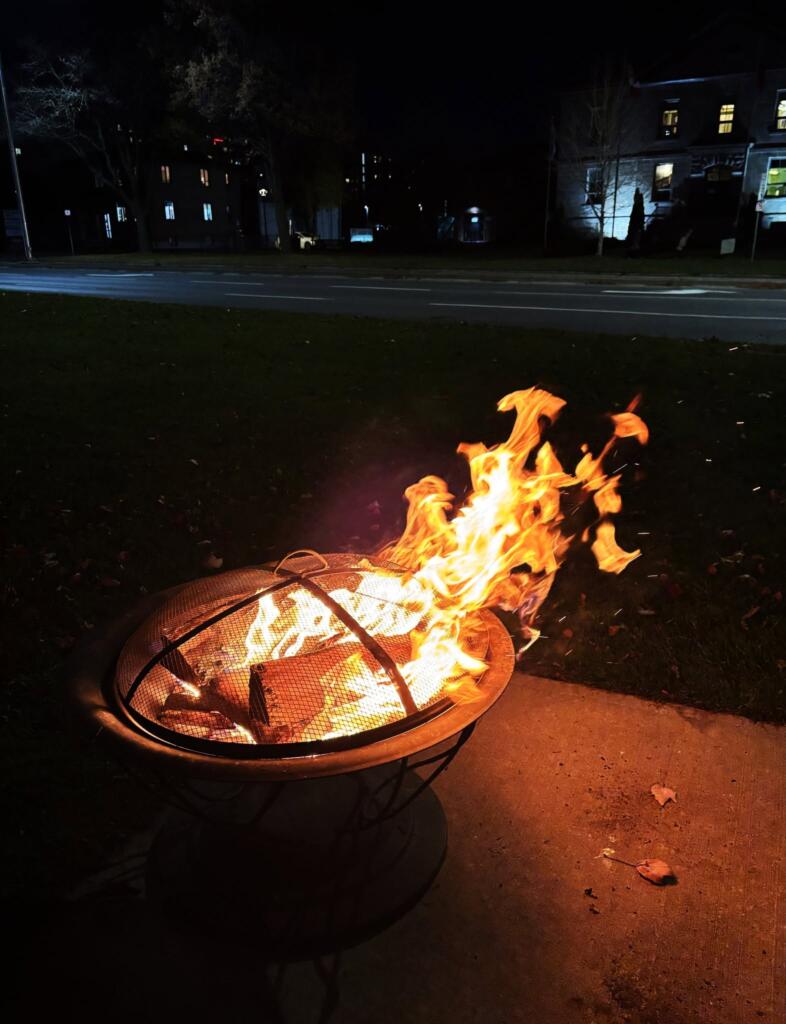
I arrived early to find a campfire blazing and music playing – a haunting, beautifully written song about the pain of losing a mother at a young age.
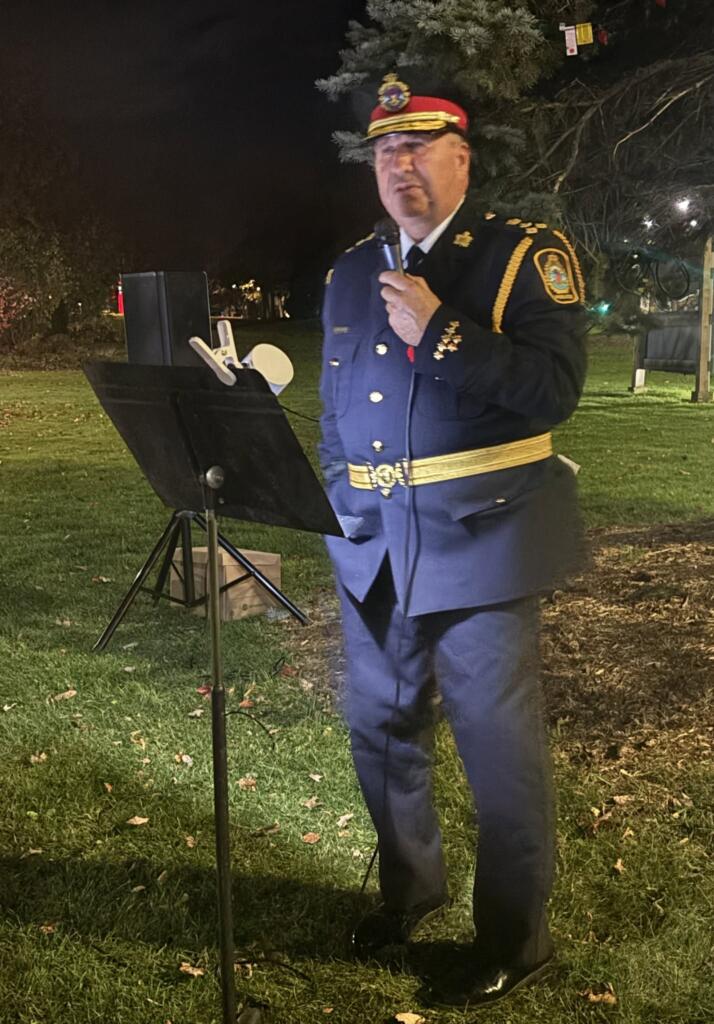
Among those present were representatives from the Akwesasne Mohawk Police Service, Cornwall Police Service, RCMP, OPP, Akwesasne Family Wellness, and the City of Cornwall. Farhana Meghji, Cornwall Police Service Equity, Diversity, and Inclusivity Co-ordinator, opened the ceremony speaking about hope as something misunderstood.
“Hope is found in the relationships we build, the commitments we keep, the conversations we’re willing to have, and the actions we take when work is difficult. The tree we gather around today is symbolic of that hope. Its roots remind us of the importance of where we come from, of family, culture, identity, and connection. It reminds us that meaningful change requires strong roots.”
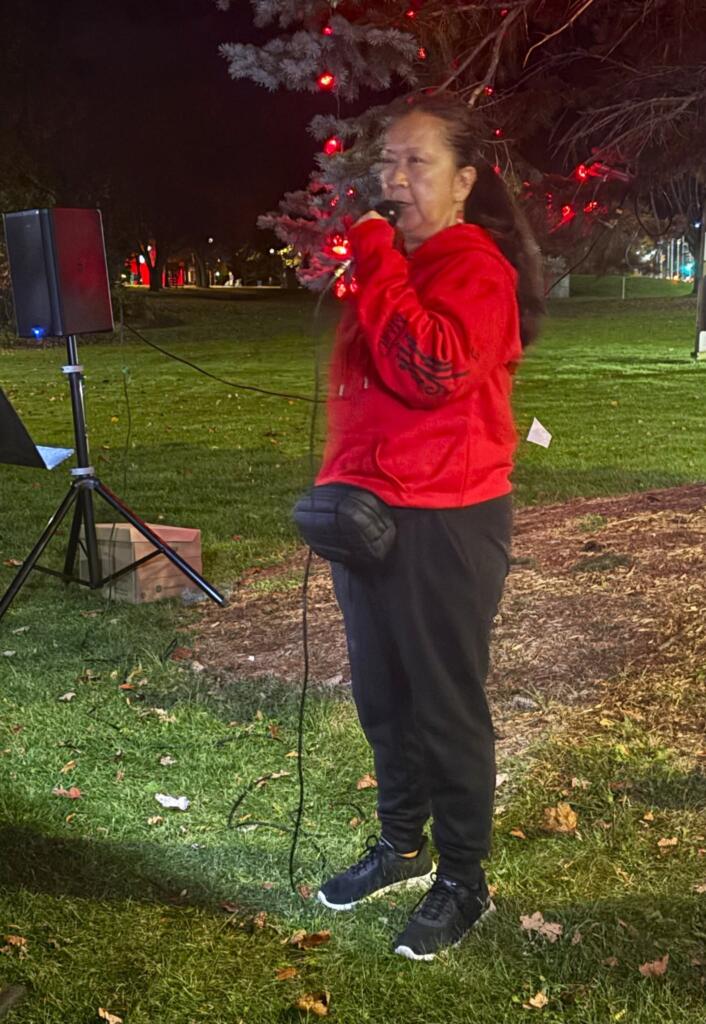
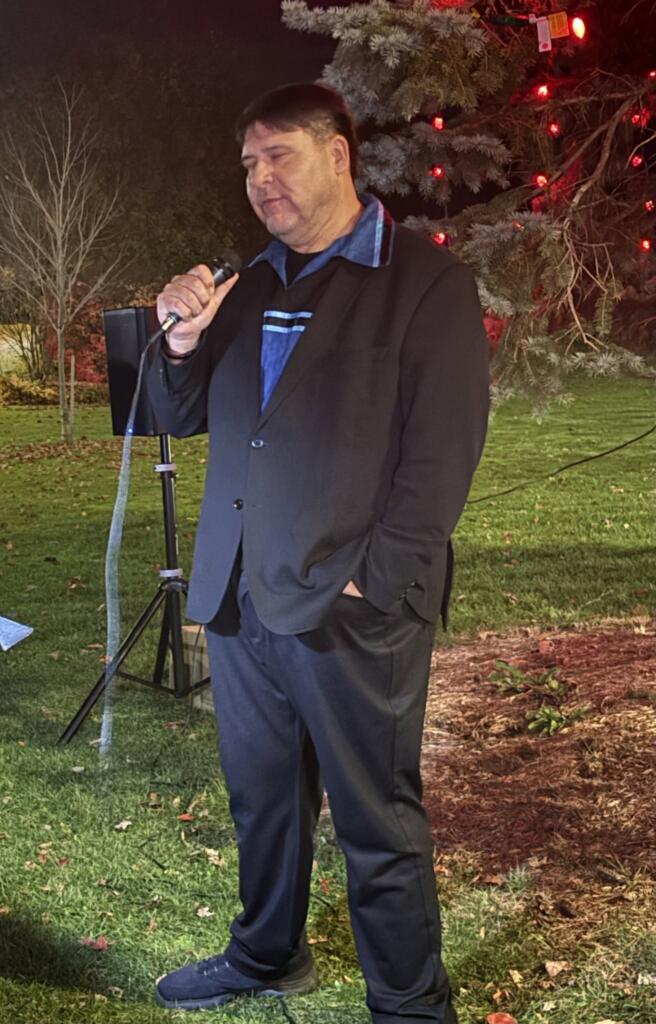
Speakers included Abraham Francis of the Mohawk Council of Akwesasne, Chief of Police for the Akwesasne Mohawk Police Service, Ranatiiostha Swamp, Cornwall Chief of Police, Hugh Stevenson, Mohawk Council of Akwesasne Grand Chief, Leonard Lazone, and Dr. Sarah Funnell, Director of Indigenous Health and Education at the University of Ottawa Medical School. All spoke about the need to do better, be accountable, and take meaningful action.
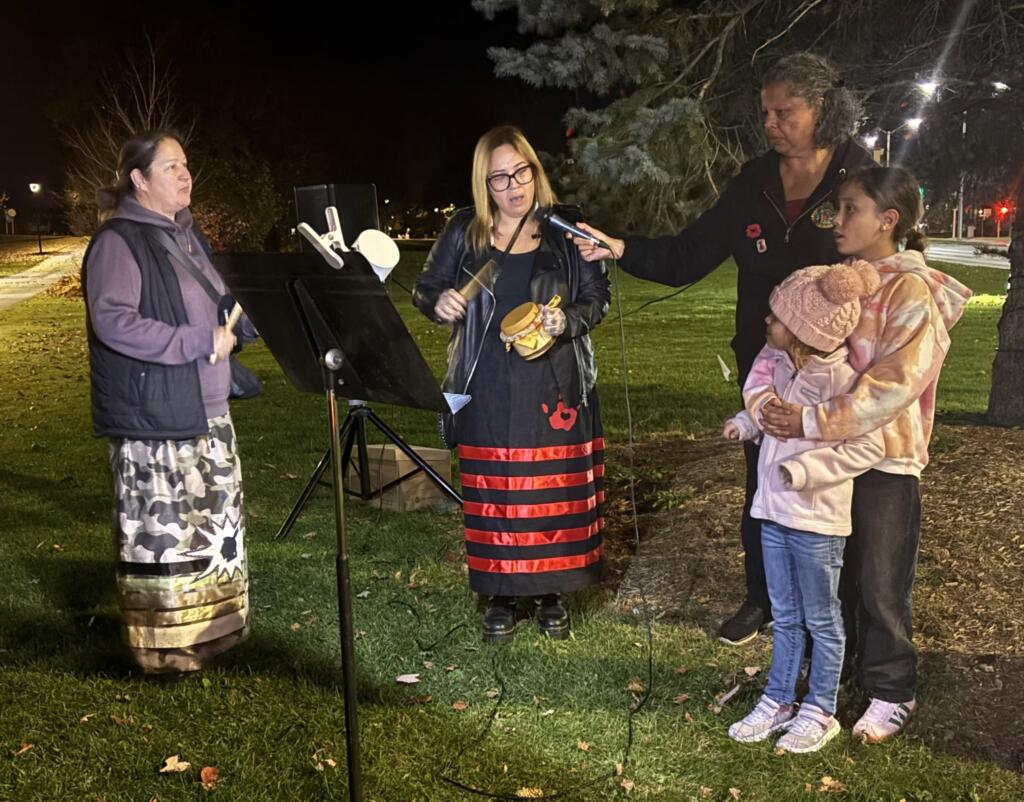
After drumming and singing, Dr. Sarah spoke:
“Every person we honour had a laugh someone could recognize across the room, favourite songs, people they teased, people who counted on them, responsibilities, dreams, and a future that should have been theirs. Their lives hold far more than the violence that brought us here.”
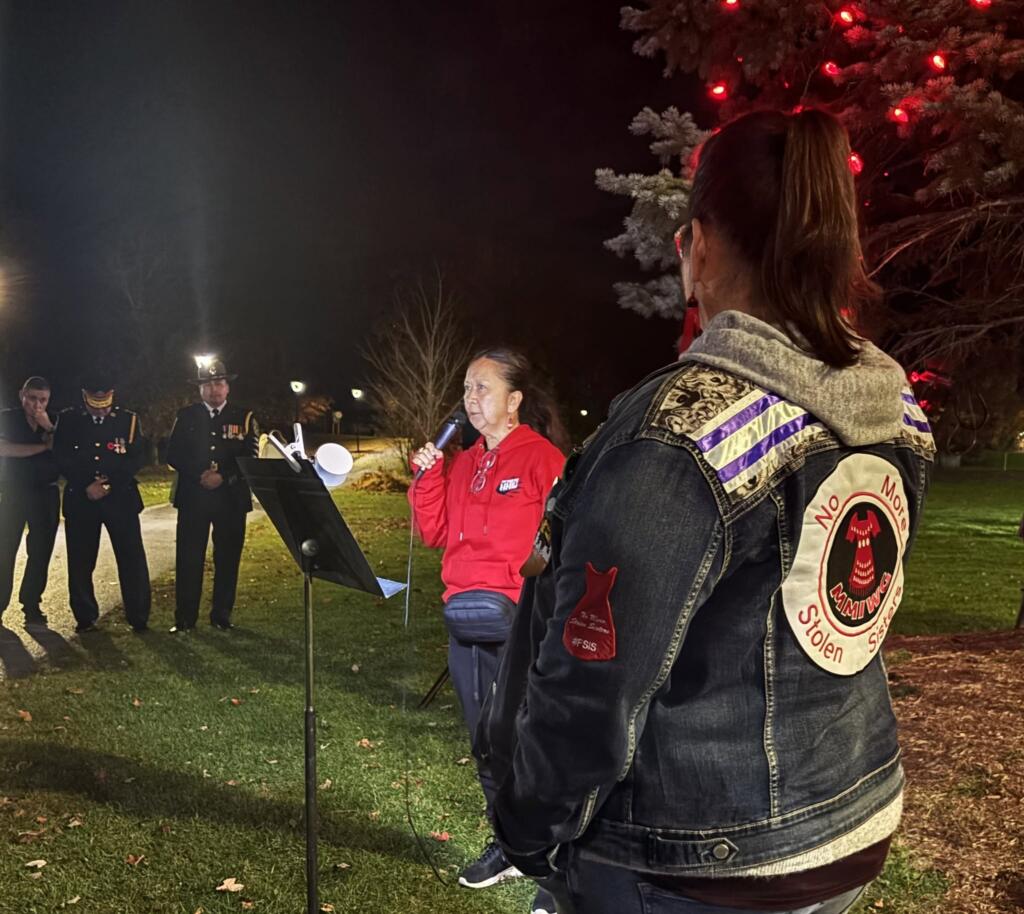
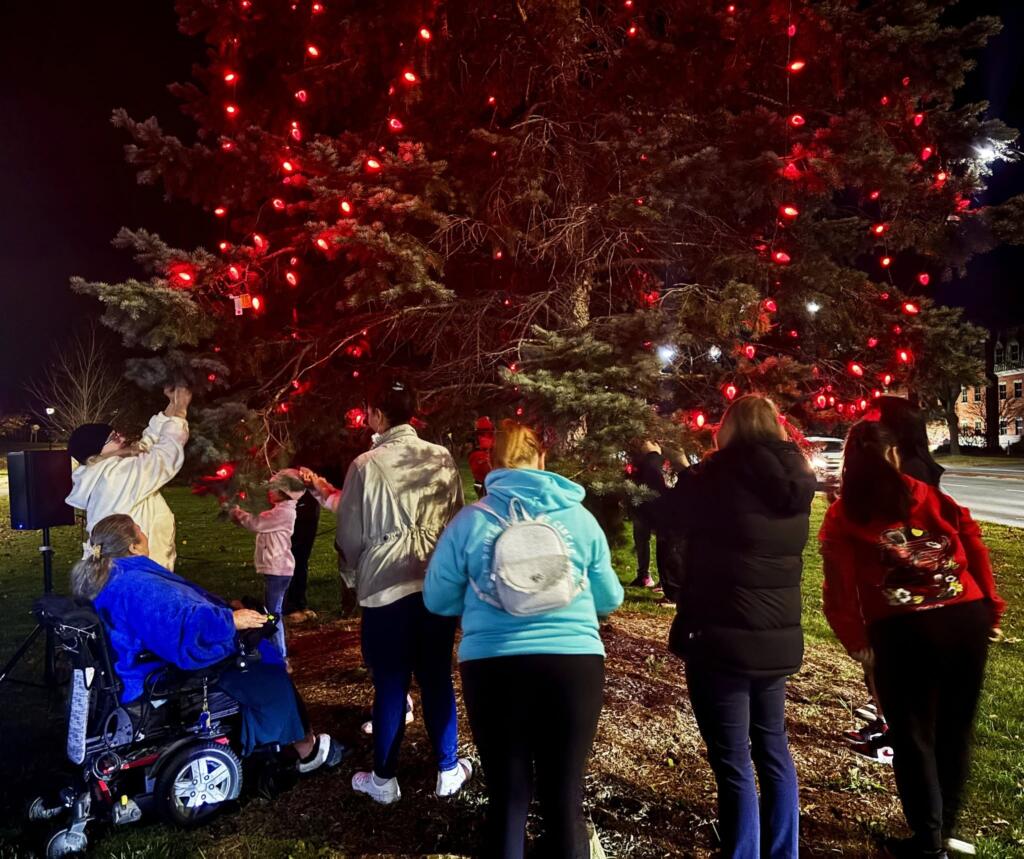
Once the tree was lit with more than a thousand red bulbs, each one representing an indigenous person who has gone missing or has been murdered, Cheryl McDonald delivered a powerful, emotional testimony about the fateful day in 1988 that changed her family’s life forever: the disappearance of her older sister, Carleen Anne Marie McDonald, only 25 years old at the time, and the mother of three young children.
“For seven weeks I searched for her. For seven weeks, everyone around us was a suspect, and those were the people who loved her. It’s been 3 years, and I still don’t have answers.”
Ultimately, Carleen’s body was discovered in the woods. She had taken her own life to escape the abuse she had suffered. Speaking of generational trauma suffered by indigenous people, she added: “We know we have addictions in our family. Who do you think created that?”
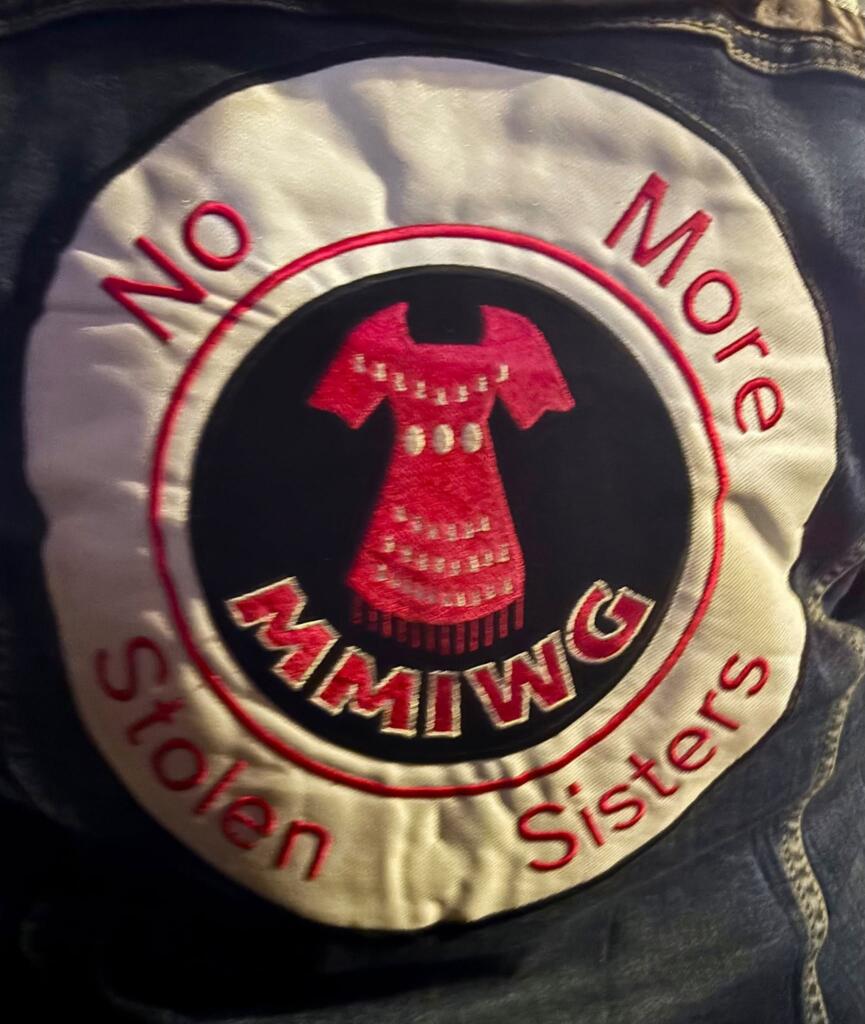
As people were invited to tie a red ribbon on the tree as a sign of remembrance, the woman who had stood quietly beside me, wearing a denim jacket with a crest on the back reading “No More Stolen Sisters – MMIWG,” stepped forward. She announced that she would play the song she wrote for her mother – Carleen.
The songwriter’s name was Lisa Gibson. I spoke to her briefly. “I was seven years old when my mother disappeared,” she told me, as she showed me a photo of Carleen on her phone and told me that her brother Bryce, unable to deal with the trauma, had followed in their mother’s footsteps.
The heartbreaking song can be heard here: https://youtube.com/shorts/saIcFufmFao?si=943FPGl12Z32rgNK
It was an evening of quiet reflection and strong emotions. Cheryl McDonald’s testimony was difficult to hear, but necessary. It brought tears to people’s eyes, mine included. Her words are a call to action. We need to do better. We need to be better leaders, better advocates, better human beings.
In closing, I am sharing an interview with Lisa Gibson conducted by our newest Seeker Contributor, Jason Mousseau, who forwarded it to me for publication:
J: I was listening to the music playing, and Lisa informed me that she wrote these songs and that they are on her YouTube channel. Can you tell me more about this music and what it means to you?
L: My mother went missing in 1988, just across the water here in Snye, QC, when I was seven years old. I’ve been on this path of advocacy, trying to figure things out, trying to figure out why life has become the way it’s become for us, indigenous people, and I had the idea of writing music. It connects with people. People can relate to music. And using all my talents (I used to write poetry), I ended up writing songs. I was looking at it two days ago, and I’ve written 62 songs. They’re on my YouTube Page called ‘Lisa D Queen Bee.’
J: It’s brilliant! The songs caught my attention. I was listening to the lyrics and the powerful message. There is no sugarcoating it. It’s a clear message. Your inspiration comes from your mother and the missing women from indigenous communities across this country. What is your hope with your music?
L: I hope it will reach the right people and get that message to them. We are people just like you, and these are the things that we’re having to do. I just migrated back here from Quebec because my son was taken from me through the youth protection system. All because I asked for help, and we were treated so badly by Quebec’s youth protection system. They went through everything. My son was placed in youth protection, and he was abused. I got him back, and I came here to Akwesasne for safety.
J: Hosting events like this and getting the community involved in raising awareness is so important for stories about real people who go missing, stories that sometimes get pushed underneath by so-called bigger stories. There are no bigger stories than this, in my opinion. What message do you want to give the people who are here to hear it? What do you want our government to hear?
L: That enough is enough now. We just want to live free. We don’t want to be oppressed and under their thumb. We’ve been through enough in the past 150 years. We just want to be free. We want to be equal to everybody else. We want to stop being targeted. We want things to be fair. We want peace. That’s what we want. We want peace. We want peace for everyone.
Shared on Facebook by Sylvie O’Rourke.
About the Author