
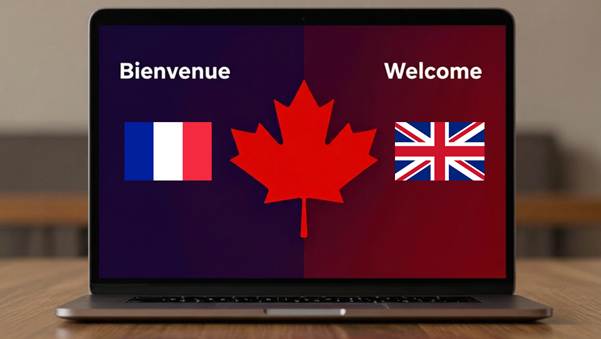
Although some may not realise it, Canada is officially a bilingual country, where both English and French are recognised at a federal level as official languages. This linguistic identity understandably has an impact when it comes to public communication, whether for governmental services, media and businesses operating across different regions. Depending on the circumstances, both languages often have to be considered whenever customer-facing information is relayed.
The online gambling sector is one example where language considerations are intertwined with regulatory obligations. Operators often offer their services across different regions that may have their own rules and regulations around the language used and the information it is used to provide.
Therefore, sites such as the licensed swiper online casino must consider the requirements of the jurisdictions where their services are offered, including expectations around transparency, consumer information and accessibility.
Canada’s Bilingual Identity Shapes Digital Communication
Both English and French are central to Canada’s legal and cultural framework. According to the Official Languages Act, both languages have equal status in the country, not least when it comes to federal institutions. The legislation establishes extensive obligations for federal institutions to provide communications and services in both official languages, subject to the requirements set out in the Act.
While both languages share the official language status, their use does vary significantly across different provinces and communities. According to Canada’s 2021 population census, English is the first language for 75.5% of the population, but in Quebec, 80% of people predominantly speak French.
For businesses everywhere, including online casinos, this means language considerations can vary according to the location, audience and applicable regulatory requirements. Rather than taking a single language approach like they might in single-language countries, digital services may need to consider expectations in multiple regions.
Language Requirements Depend on the Jurisdiction
While federal services and communications are subject to extensive obligations concerning the use of English and French across information such as tax budgets, changes to laws, or anything else, that is not always the case for private businesses. Typically, they’re subject to the requirements of the provinces and territories that they operate in. Therefore, language obligations can often differ depending on the type of business being provided and where it is located.
That is particularly relevant in the Canadian iGaming sector, as gambling regulation is not governed by a single national framework like it is in countries such as the United Kingdom and Germany. Instead, provinces have their own regulatory structures. In Ontario, the Alcohol and Gaming Commission of Ontario (AGCO) regulates the private iGaming market, while iGaming Ontario conducts and manages the market on behalf of the province.
For that reason, operators serving Ontario must distinguish between the language preferences of the population and any specific language obligations that apply to the services and information they provide. The same applies if an operator is serving Quebec, Alberta or another regulated province or territory.
In short, operators and technology providers serving different Canadian markets must do two things. First, they must understand the language demographics of the regions they operate in, and secondly, they must consider the relevant rules that apply to each jurisdiction rather than assuming identical requirements nationwide.
Translation and Consumer Information Requirements
The language considerations of an operator serving different markets in Canada go deeper than just consumer-facing content on regular website pages. Regulatory requirements can also affect how operators provide information about their services, including terms and conditions, responsible gambling measures and account-related information.
Depending on the jurisdiction and any applicable rules, operators may need to consider how they relay the following information to consumers
- Account terms and conditions
- Responsible gambling information and support resources
- Privacy policies and data protection notices
- Customer support communications
- Regulatory disclosures
Regulation Remains Central to Canadian Online Gambling
Language considerations form only one part of the broader regulatory obligations applicable to online gambling operators.
Operators must consider everything from licensing requirements and responsible gambling obligations to consumer protection rules and technical standards of each of the jurisdictions they wish to operate in. In Ontario, for example, regulated operators must comply with the requirements established by the provincial framework overseen by the Alcohol and Gaming Commission of Ontario (AGCO) and iGaming Ontario.
The Two-Language Reality of Canadian Digital Services
Canada’s bilingual identity is one of many challenges facing operators providing online gambling services across the country. Unlike in some other countries, there is no one-size-fits-all approach that can be taken, as both English and French play different roles depending on the region and the different regulatory requirements.
Therefore, it’s not always a simple case of deciding which languages to use, but a case of ensuring the correct information is being provided as per the requirements of the legal and regulatory framework in each jurisdiction.
About the Author