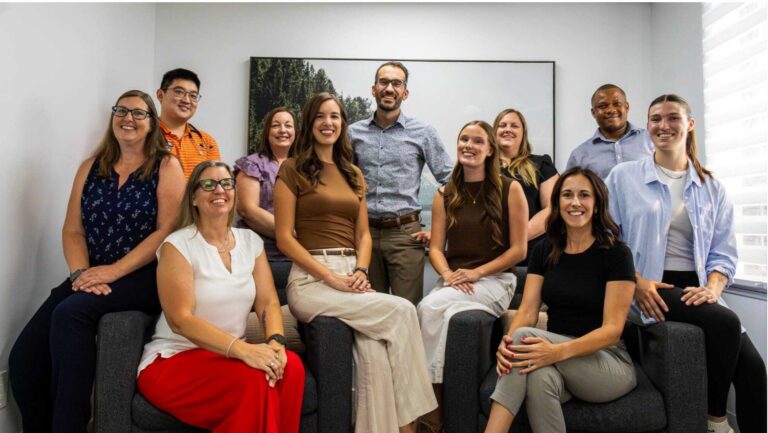



Municipal elections are October 26 in Ontario. To help voters make an informed decision here in Cornwall, the editorial board of The Seeker has put together 10 questions for candidates seeking a seat at the municipal council table, whether as Councillor or as Mayor. To ensure fairness, the same questions were sent to every candidate. We sent a total of 10 and they had the option to answer all of them, or pick a minimum of 5. Their answers will be published in their entirety, in the order they are received. We will not edit, correct or modify any responses.
These are Vamini Mohanathas’ Answers. She is running for councillor.
1. Who are you? Where are you from? What education do you have? What relevant experience do you have?
My name is Vamini Mohanathas, and Cornwall is my home. I attended Viscount Alexander Public School throughout elementary school, followed by St. Lawrence Secondary School from Grades 7 to 12. My post-secondary studies include Political Science at the University of Ottawa and Business Management and Entrepreneurship at Algonquin College. Professionally, I have worked in the City of Cornwall’s Finance Department, with Employment and Social Development Canada with the Government of Canada, and now in the financial sector. Growing up here, I volunteered with organizations and associations across our community. I want to put that experience, along with my education and professional background, to work for the city that raised me
2. In The Seeker’s poll asking constituents about the most important issue facing them, a large majority of respondents answered “taxes/affordability”. What would you do as a Councillor/Mayor to make Cornwall more affordable, and what city services or spending, if any, would you be willing to reduce, change or eliminate to keep tax increases under control?
Affordability is a real concern, and I do not believe candidates should simply throw out a low tax percentage without explaining how they would achieve it. Cornwall’s adopted 2026 budget increased the general tax levy by 5.41%. For the City’s example of an average residential property assessed at $176,700, that represented an increase of $165.94, or 5.34%. Water and wastewater billings increased by 6.81% overall. There is also a longer-term concern. Cornwall’s 2025 Long-Term Financial Plan projected an average annual tax-levy increase of approximately 5.9% between 2025 and 2035, or approximately 5.5% per household. Those are projections, not already-approved annual tax increases, and I think that distinction is important. I would not begin by cutting frontline or essential services. I would first look at discretionary spending, repeated outside consulting costs where internal expertise exists, procurement, project scope changes and overruns, administrative duplication, and whether non-urgent capital projects can reasonably be delayed or redesigned. If a program is not producing results or is no longer serving residents effectively, I am willing to review it. But I would not promise to eliminate a service before understanding who relies on it and what the financial consequences would be. My goal would be responsible budgeting, protect essential services, challenge unnecessary costs and make sure residents receive value before asking them to pay more.
3. Over the past few years, many constituents have expressed concern that the city’s homelessness situation has significantly worsened. What would you do as a Councillor/Mayor to address this issue?
Homelessness cannot be solved with one building or one program. The City’s own Housing Needs Assessment found 2,530 Cornwall households in core housing need, including 2,090 renter households. It also projects that Cornwall will require between approximately 2,592 and 4,046 additional housing units over the next decade, depending on the growth scenario, with more than half expected to require some form of affordability support. Cornwall is already doing some work in this area. Parisen Manor is intended to provide transitional housing for 30 people, Massey Commons will provide 22 affordable apartments, and the City’s overnight warming centre recorded 110 uses in January 2026 alone. The Bridge Housing proposal was paused by Council in March 2026, and none of the three proposed sites is moving forward under that proposal at this time. I support continuing to pursue transitional and supportive housing, but location, neighbourhood impact, access to services, operating costs and community consultation all matter. We also cannot treat homelessness only as a housing problem. Mental-health treatment, addiction services, healthcare, income support and supportive services require meaningful provincial and federal involvement. My approach would be to build on what is working, correct what is not, involve neighbourhoods earlier, and push other levels of government to properly fund the services that municipalities cannot provide alone.
4. Why are you running for Council? What is the most important issue facing the City of Cornwall today?
I am running because Cornwall is my home and I want to contribute to the community that has shaped my life, education, career and community involvement. My platform identifies five major priorities: housing, community safety, roads and infrastructure, economic growth and opportunity, and transparent leadership. Those are areas where I believe Cornwall needs sustained attention. However, I do not believe being elected means representing only five items on a campaign platform. Every issue that affects Cornwall residents is a Cornwall issue, and if elected, my responsibility would be to represent Cornwall as a whole. That includes seniors, youth, transit, accessibility, recreation, arts and culture, healthcare advocacy, homelessness, small businesses, environmental concerns, neighbourhood issues and the everyday municipal services residents rely on. If I had to identify the issue connecting many of these concerns, it would be affordability and responsible growth. Cornwall needs to grow, but growth has to translate into housing, infrastructure, services and opportunities that residents can actually benefit from. There are encouraging signs. In 2025 Cornwall issued 515 building permits, representing approximately $138.6 million in construction value, including 82 residential units. Growth is happening. The question for the next Council is how we manage it responsibly and make sure residents see the benefit. I am not running because I believe one councillor can fix everything. I am running because I believe I can contribute research, financial awareness, different experience and a willingness to work with others toward practical and sustainable results.
5. Many constituents have expressed concerns about accountability and controversy surrounding Council. What could you do as a Councillor/Mayor to improve transparency and accountability?
Transparency should mean more than putting a 200 page document online and expecting residents to find the answer themselves. For major projects, I would support clear public reporting that shows the original approved budget, current approved budget, major change orders, outside funding, debt or reserve funding, timelines and the reasons behind significant changes. I also believe residents should be able to distinguish clearly between something Council has approved, something staff has recommended, and something that is only a forecast or proposal. Accuracy matters to me as part of accountability. When I share facts and figures, I will identify the source where possible and distinguish approved decisions from estimates and proposals. If information I have shared turns out to be incorrect, I would rather acknowledge it and correct it than defend something that is wrong. I would also explain my votes, ask questions when information is unclear and be honest when I do not know an answer. Accountability does not mean creating conflict for attention. It means being able to explain your decision, show residents the information behind it and accept responsibility for the vote you cast.
6. We constantly hear about the Art Centre and the water meters. Many residents have expressed the view that these were bad decisions on Council’s part. Both projects are being implemented, but they remain a sore spot for some voters. Would you consider revisiting or changing decisions made on those projects?
Yes. I would consider revisiting any policy when evidence shows that changes are justified. However, I would not tell residents that Council can simply erase money already spent or cancel contracts without consequences. For the Arts Centre, Council approved increasing the project budget in June 2025 from approximately $10.48 million to $13.3 million, excluding fit-up. A separate fit-up procurement of approximately $1.963 million was also approved. The Centre is now scheduled to open in November 2026. At this stage, I would focus on keeping future operating costs under scrutiny, maximizing rentals and community use, pursuing grants, donations and partnerships, and reporting clearly on whether the Centre is meeting its objectives. The City has already received significant private support, including a $1 million commitment announced in 2025, in addition to an earlier $100,000 donation from the same donors. Water meters are also already being installed. They are mandatory under By-law 2024-066, and the City says metered billing is scheduled to begin in 2027.I would want to see the actual billing data once the system is operating. If the rate structure creates unintended affordability problems or unfair impacts on particular households, I would support reviewing it. Revisiting a decision does not always mean reversing it. Sometimes it means correcting the parts that are not working.
7. What would you do to improve our relationship with Akwesasne? What does Truth and Reconciliation look like to you? Explain how Cornwall can take steps toward it.
Cornwall and Akwesasne are neighbours, and our communities share economic, cultural, environmental and family connections. I believe the first responsibility is to listen. Cornwall should not decide by itself what reconciliation with Akwesasne should look like. The City already has a Truth and Reconciliation Action Plan intended to strengthen relationships, address barriers and incorporate reconciliation into municipal services and decision-making. I would support continuing that work while making sure residents can see the progress being made. I would also support regular dialogue with the Mohawk Council of Akwesasne on practical issues affecting both communities: transportation, economic development, environmental protection of the river, emergency services, community programs and cross-border issues. Truth and Reconciliation, to me, is not one event or statement. It is listening, learning and building a relationship based on mutual respect. The most meaningful initiatives should be developed with Akwesasne, not simply for Akwesasne.
8. Cornwall’s municipal government relies on experienced and qualified staff to deliver services to residents. What would you do as a Councillor/Mayor to ensure the city can attract, retain and support the best possible people in senior positions?
Good municipal services depend heavily on good staff. Council should establish policy, priorities, budgets and accountability. It should not attempt to run every department or micromanage professional staff. I would support regular comparisons of senior compensation and benefits with comparable municipalities so Cornwall can remain competitive without paying more than is reasonably required. I would also support succession planning, professional development and opportunities for qualified employees already working within the City to move into senior positions. Performance should matter as much as recruitment. Residents should be able to see whether departments are meeting reasonable service standards.For example, Cornwall reported that between June 2024 and May 2025 the median building-permit processing time improved from 13 days to 8 days, and compliance with legislated review timelines improved from 90% to 95%. That is the type of measurable performance information I think Council should pay attention to. I also want professional staff to be comfortable telling Council when they disagree with us. Council needs honest professional advice, not simply the answer elected officials want to hear.
9. Healthcare is primarily a provincial responsibility, but access to healthcare is a major concern for Cornwall residents. What can the City of Cornwall realistically do to help improve healthcare access, and would you make it a priority as a Councillor/Mayor?
Yes. Healthcare access would absolutely be a priority for municipal advocacy, but I would never tell residents that City Council controls Ontario’s healthcare system. What Cornwall can do is help recruit and retain healthcare professionals and advocate strongly to the Province. Cornwall’s existing Medical Recruitment Program provides qualifying physicians with up to $25,000 toward relocation in exchange for at least three years of practice in Cornwall. The City’s Medical Scholarship can provide up to $25,000 per year for six years, with a return-of-service commitment. In December 2025, the City announced six physicians recruited through its programs and related recruitment efforts. Two additional physicians were announced through the recruitment program in July 2026. Council also endorsed 18 recommendations from the Mayor’s Task Force on Medical Recruitment in September 2025. So I would not pretend we need to start over. I would build on what is already producing results. I would want regular reporting on recruitment, retention and which specialties or primary-care needs remain underserved. I would also continue partnerships with Cornwall Community Hospital, community health providers, medical schools and regional partners. The Province is responsible for healthcare delivery, but the City can make sure Cornwall is aggressively advocating for its fair share of professionals and resources.
10. Many residents are concerned about crime, vandalism, drug use and a general decline in their sense of safety. What can the city realistically do to address these concerns, and where should municipal responsibility end and provincial or federal responsibility begin?
When residents tell me they no longer feel comfortable in a park, downtown, on the waterfront or in their neighbourhood, I do not think we should dismiss that simply because a statistic may tell a different story. Perception of safety matters, but our response should still be based on evidence. The municipality funds local policing and other services that contribute to safety, including by-law enforcement, fire services, street lighting, property standards, roads, parks and public spaces. But there are limits to Council’s authority. Under Ontario’s Community Safety and Policing Act, the municipality establishes an overall police-board budget, but Council cannot approve or reject individual line items or direct individual investigations. I would support looking at neighbourhood-level data to identify where calls for service, vandalism, disorder or safety concerns are concentrated and then use the appropriate response whether that is policing, by-law enforcement, lighting, environmental design, outreach or a combination. Cornwall has already experimented with coordinated approaches involving police, by-law, fire and other City services. I believe those approaches should be evaluated and expanded where there is evidence they work. Mental-health treatment and much of addiction treatment fall primarily under provincial responsibility. Criminal law is federal, while the Province has major responsibilities for healthcare, courts and corrections. Municipal government cannot rewrite the Criminal Code or operate the provincial healthcare system. But Council can advocate when those systems are not adequately serving Cornwall. My approach would be firm but balanced, appropriate enforcement where laws are being broken, prevention where problems can be prevented, support where health intervention is needed, and clear accountability from every level of government responsible.
About the Author