
I left Long Sault on a Tuesday morning, drove to Montréal, got on a plane, landed in Seoul, got on another plane, and finally landed in Bangkok at 11 pm the next night. I’m in my mid-50s, and this is the first time in my life I’ve understood what “culture shock” really means.
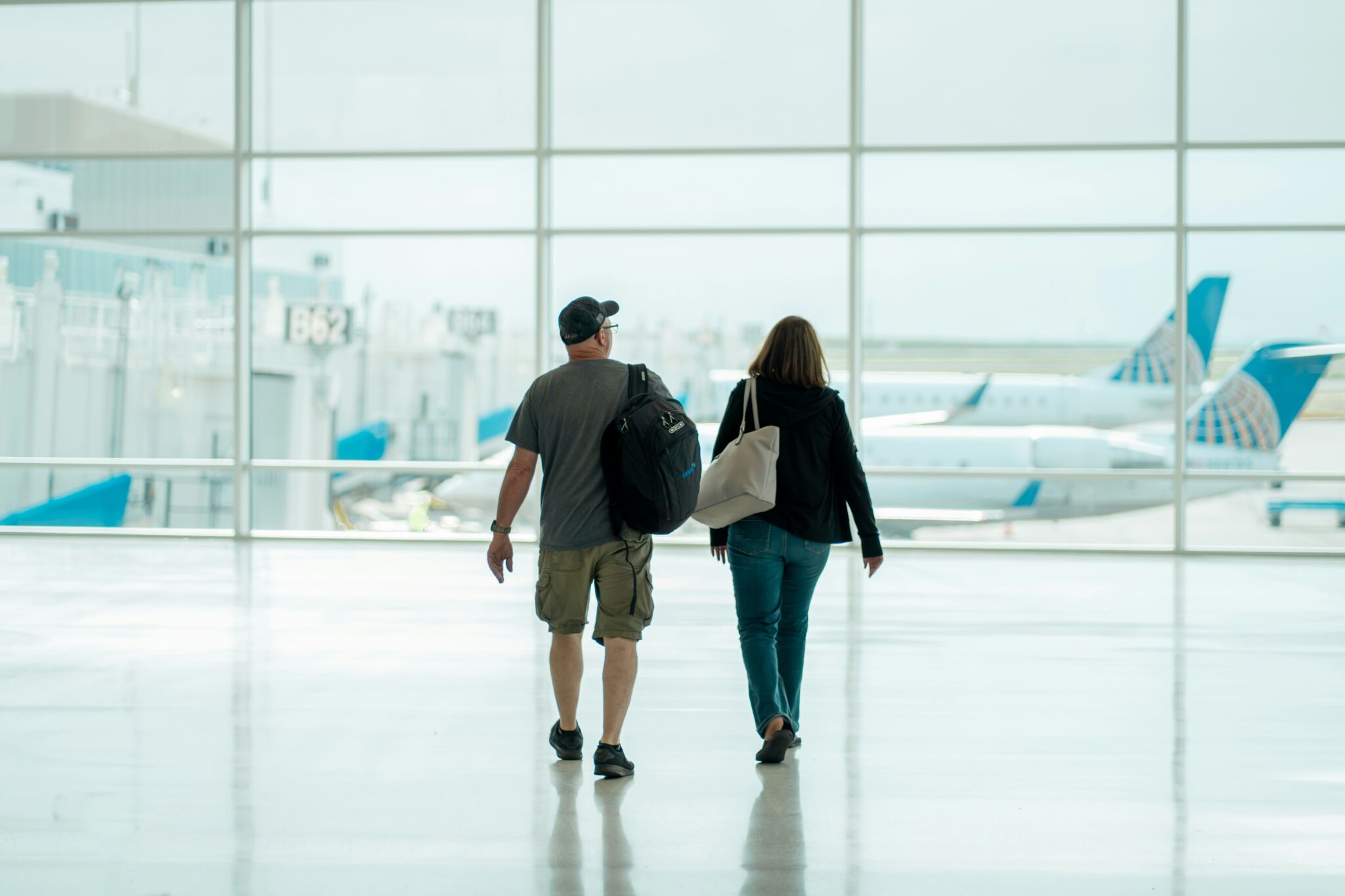
The arrivals hall at “Swampy” (Suvarnabhumi Airport) was busy, but most arrivals halls are. Immigration was a bit of a scrum, but it moved reasonably quickly. Then the automatic doors opened and released me into Bangkok.
I don’t know what hit me first: the heat, the humidity, the noise, the sheer volume of people, or the utterly unfamiliar smells.
I had no internet on my phone and no Thai baht in my wallet. I spotted a row of phone company counters, currency exchange booths, and a 7-Eleven. I needed to get online, so I ignored everyone trying to flag me down for a taxi and joined the queue at a small counter with a big sign promising “SIM cards.” A German guy was ahead of me, and when it was his turn, he got into a loud argument with the man behind the counter, then turned and stalked off, muttering about 1,500 baht and rip-offs.
Figuring my hotel would have Wi-Fi, I left the queue. I went to one of the currency exchange booths, received a shockingly small amount of baht in exchange for the large pile of Canadian notes I handed over, and made eye contact with a guy holding a piece of paper with taxi scribbled on it. He ushered me outside to a beaten-up Toyota and asked where I was going. Thankfully, I’d written the name of my hotel down. When he heard it, he said, “Sukhumvit Road, 3,000 baht, no meter.” I’m no mathematician, but that didn’t sound too expensive to me, so I agreed and got in the car.
By now it was midnight. I couldn’t believe how much traffic there was at that hour, and it took about an hour to reach my hotel. The air conditioning was cold, at least. I stared out the window as we sat in yet another traffic jam.
My hotel room felt like an oasis when I finally shut the door. Too tired to even shower, I closed my eyes and drifted off, dreaming about SIM cards and taxi meters.
What’s really going on in airport arrival halls
Over breakfast the following morning, a Dutch guy who spoke better English than I did looked at me and said, “First time?” He told me he came here four or five times a year, so I asked him what had been going on at the airport. He explained that arrival halls are notorious for being full of people who are tired, bewildered, and easy to exploit. The most common traps, apparently:
- Taxi touts and rides without a meter. If you don’t use the official counter, you end up paying way too much. I paid 3,000 baht. It would have been a few hundred on a meter.
- Currency exchange booths give poor rates at the airport, as I found out when my large stack of Canadian bills turned into a small stack of baht. Use an ATM inside the terminal instead — from a real bank.
- SIM kiosks aren’t a scam exactly, but staff will push the biggest bundles and add-ons you don’t need. That explains the angry German guy.
- Fake free Wi-Fi can catch you out if someone sets up a network with an official-looking name. Don’t connect to anything you don’t recognize.
- Helpful strangers. Your new “friend” who offers to carry your bag and book you a hotel will want a big tip at the end of it.
He went on to say that the number one rule is to keep smiling. Say “No, thank you, someone is meeting me” when drivers get pushy. In a taxi, insist on the meter; in a tuk-tuk, agree on the fare first. Keep smiling and keep walking — it’s enough to get you out of most uncomfortable situations.
How to sort your phone before you land
Don’t let the fear of being scammed stop you from travelling. You just have to be a bit sensible, which is tough when you’re exhausted. Next time I head to Asia, I’m sorting my phone before I fly. Roaming with my Canadian provider costs around $18 a day. That airport SIM is cheaper — roughly $12 to $28 — but far more hassle. Instead, I’ll install an eSIM Asia plan from my sofa. About $17 gets you 3 GB for a month, it works the moment you land, and as long as your phone is unlocked and eSIM-compatible, it’s one less thing to deal with after a long journey.
Before you go:
- Set up your eSIM or roaming
- Get some local currency from your bank
- Screenshot your hotel address
- Find out where the official taxi counter is
Most of all, though — keep smiling.
About the Author