
★★★★★
Last night, I had the opportunity to attend the Seaway Valley Theatre Company’s production of Icemen, and what a night of theatre it was.
You know a production has done something special when you stop watching actors play characters and start believing the people in front of you. From start to finish, Icemen held my attention, kept changing who I was rooting for, and gave me plenty to think about afterward.
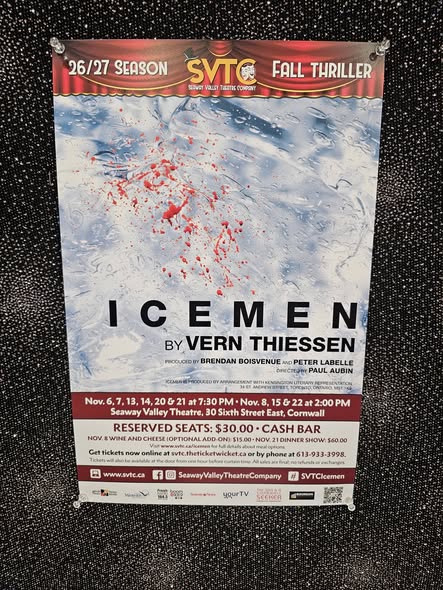
Written by Vern Thiessen and directed by Paul Aubin, Icemen takes us to Simcoe County, Ontario, in 1936. Brothers Joe and Rennie earn their living harvesting ice, but the arrival of electric refrigeration threatens their livelihood. A confrontation with their wealthy employer, F.F., becomes a hostage situation, setting the stage for a story about desperation, power, and the human cost of progress.
I won’t give away where that story goes. Part of the experience is discovering how your feelings toward these three men change along the way.
At the heart of it all is the relationship between the brothers. Mike Chatelain brings tremendous emotion to Joe, particularly in the longer speeches where you can feel the weight of what he is carrying. His need to protect Rennie is powerful. You might question his actions, but you understand the desperation behind them. That is what makes the performance so compelling.
Alex Merizzi’s portrayal of Rennie is equally impressive. There is a vulnerability and directness to the character that he handles with remarkable care. The small nuances never feel exaggerated. He never overplays it, and that makes it powerful. At times, Rennie becomes the voice of reason, cutting through the conflict in ways that stay with you.
Nicholas Merizzi’s portrayal of F.F. deserves recognition as well. As the wealthy employer held hostage by his own workers, he could easily be someone you make up your mind about right away. But his performance, and the changing dynamic between him and the brothers, kept me questioning where my sympathies belonged. There were moments when I found myself feeling for him, even while understanding the brothers’ anger. That is part of what makes this cast so effective together. Just when you think you know who holds the power, who the villain is, or who you are rooting for, something shifts.
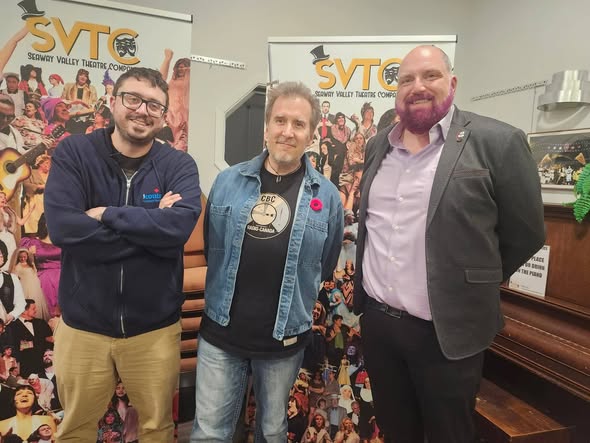
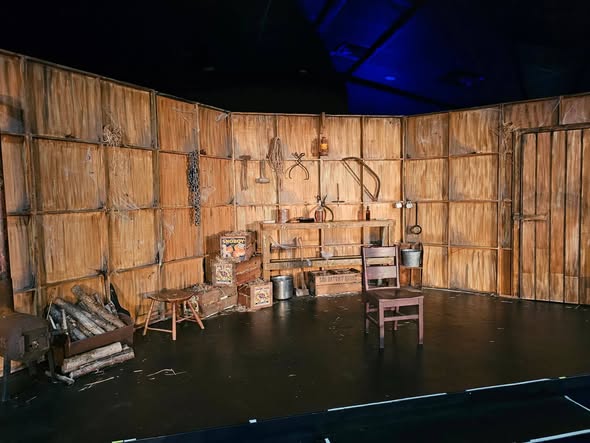
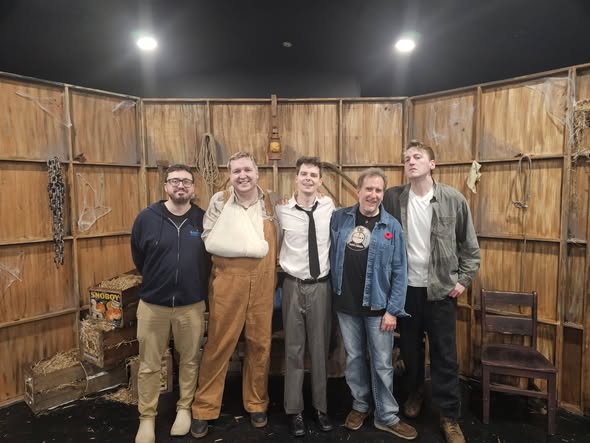
The set is simple in its layout but full of detail. Weathered-looking wooden walls, hanging tools, stacked crates, and a stove with firewood beside it make the shed feel believable. Nothing distracts from the characters. The restrained lighting and sound help establish the atmosphere, while the pauses and silences carry real weight. Sometimes, what is left unsaid is every bit as powerful as the dialogue.
The pacing held me throughout. Just when there seemed to be hope, another turn would leave me wondering what could possibly happen next.
Before the performance, I asked Aubin how he builds tension in a small theatre where the audience sits so close to the action.
“You let the story do its own work,” he told me.
He described his role as a connection between the playwright’s words and what the actors bring to the stage.
“It’s not necessarily about me, it’s about the actors and how they convey the playwright’s vision.”
Watching the production, I could see that approach at work. The performances have room to breathe, and the story draws you in. There is something special about experiencing theatre in such an intimate environment. Once the lights go down, you feel close to everything unfolding in front of you.
What stayed with me most, though, was how relevant the story felt. The treatment of injured workers, the divide between the haves and the have-nots, and the idea that people can be discarded once they are no longer considered useful are difficult things to sit with. Watching these characters, you feel what it means to be treated as disposable.
When I asked Aubin about the connection between the brothers’ fear of losing their work in 1936 and the changes workers face today, he drew a direct parallel with artificial intelligence. The technology changes, but the fear of losing your livelihood remains familiar.
For Aubin, the questions surrounding progress and sacrifice were part of what drew him to the play. He spoke about whether those sacrifices are worth making, who makes them, and how.
That stayed with me. Who benefits from progress, and who is expected to pay the price?
The work behind the scenes deserves recognition as well. Produced by Brendan Boisvenue and Peter Labelle, this is a production where the care extends beyond the performances. Boisvenue spoke about the challenges of the practical effects and the value of having a great crew beside him. Without revealing the moment, he recalled seeing one effect work for the first time and being struck by how realistic it was.
Asked what he would say to someone attending a Seaway Valley Theatre Company production for the first time, his answer was straightforward.
“I would say just lean back and enjoy the show.”
He also spoke about a crew passionate about the art and dedicated to putting on a good show. From my seat, that dedication came through.
We don’t have to leave Cornwall to experience theatre of this quality. The talent is here. The passion is here. The arts in this city are alive and well, and they deserve our support.
If you have never attended a play, this is a wonderful opportunity to give live theatre a try. If you already love theatre, Icemen gives you plenty of reasons to book a night out.
For me, this was a five-star experience. Powerful performances, thoughtful direction, and a story that keeps you guessing while leaving you with something to think about.
They hit it out of the park. Go see it.
Photo contribution by Yafa Goawily
PLAN YOUR VISIT
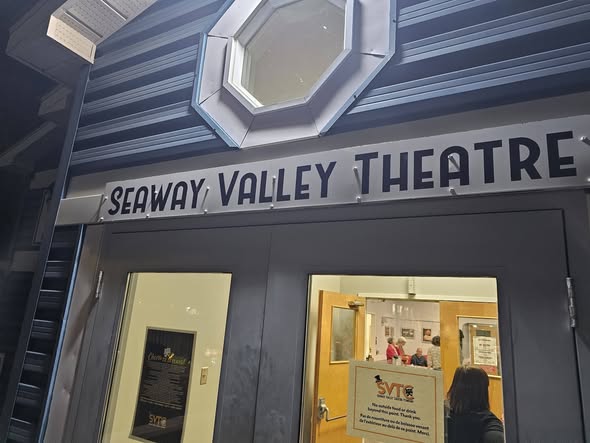
Venue: Seaway Valley Theatre, 30 Sixth Street East, Cornwall.
Evening performances: November 6, 7, 13, 14, 20 and 21, 2026, at 7:30 p.m.
Matinees: November 8, 15 and 22, 2026, at 2 p.m.
Regular reserved seats: $30. Special dinner and wine-and-cheese options have separate pricing.
Tickets and details: https://www.svtc.ca/icemen.html or 613-933-3998.
Shared on Facebook by Jason Mousseau.
About the Author