

Joy is a net of love by which you can catch souls. – Mother Teresa
January is a month often drained of joy, the beginning of resolutions that can lead to disappointments and ultimately, unhappiness.
Watching little ones make art can elicit joy; for seasoned artists learning something new, might lead to exciting and pleasing outcomes. For those who love to look, discovering new artists or new work by old favourites can be an inspiration to the soul.
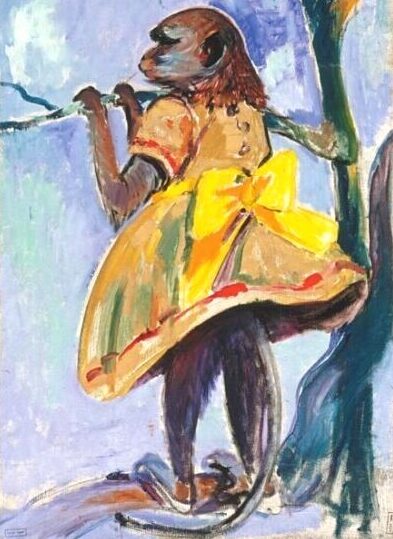
Emily Carr, Woo, oil on canvas, date unknown, courtesy of the Royal BC Museum
We tend to typically frame the artist Emily Carr with moody landscapes and an antagonistic view of early 20th century (very) British Columbia. Carr however was called ‘Klee Wyck’ by her Indigenous friends which translates to ‘laughing one.’ This moniker was the title of her 1941 Governor General’s award winning novel.
Carr’s happiness stemmed from being in nature, and being with animals. She raised dogs, had cats, two cockatoos Sally and Jane, and most infamously a pet monkey named Woo. Woo became the subject of a bright and colorful painting.
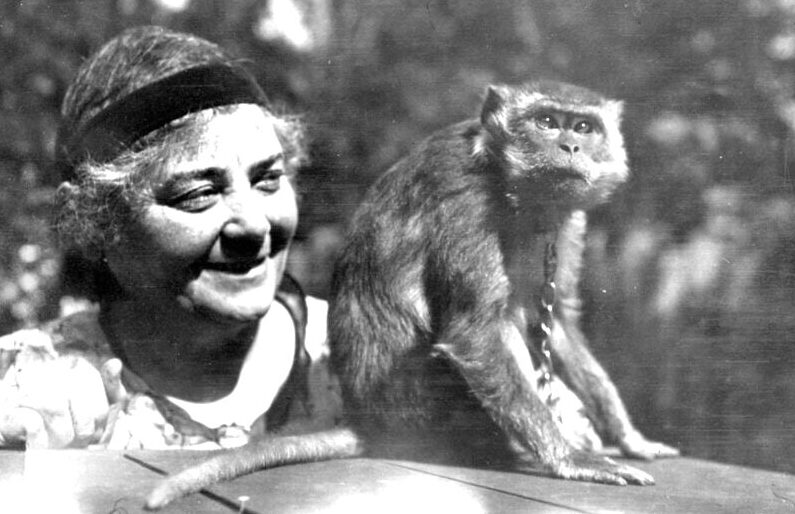
Emily Carr loved her Monkey Woo (1930), Image-City of Victoria Archives
American artist Winslow Homer’s panoramic vision of boys playing snap the whip calls up the joy of school yard games. Homer’s depicts a rural way of life in post Civil War America. By the end of the 19th century, however, American families were leaving the rural and pastoral for the industrial and urban lifestyle.
Look further and see what else is depicted. This is the first of two versions of this painting. The second removes the mountains and opens up the background.
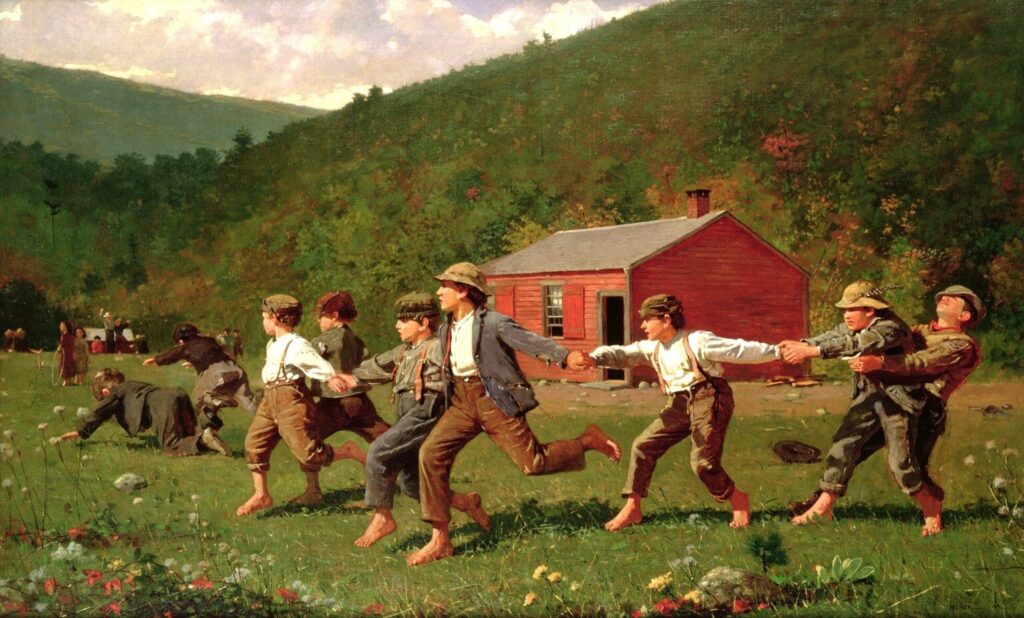
Winslow Homer, Snap the Whip, 1872, oil on canvas, Butler Institute of American Art, Youngstown, Ohio, USA
Henri Matisse’s The Dance is not a conga line or snap the whip; its lush dancing figures suggest moments of physical pleasure and connectedness that can happen at any age. The lack of background belies a specific era, making for a timeless and universal artwork.
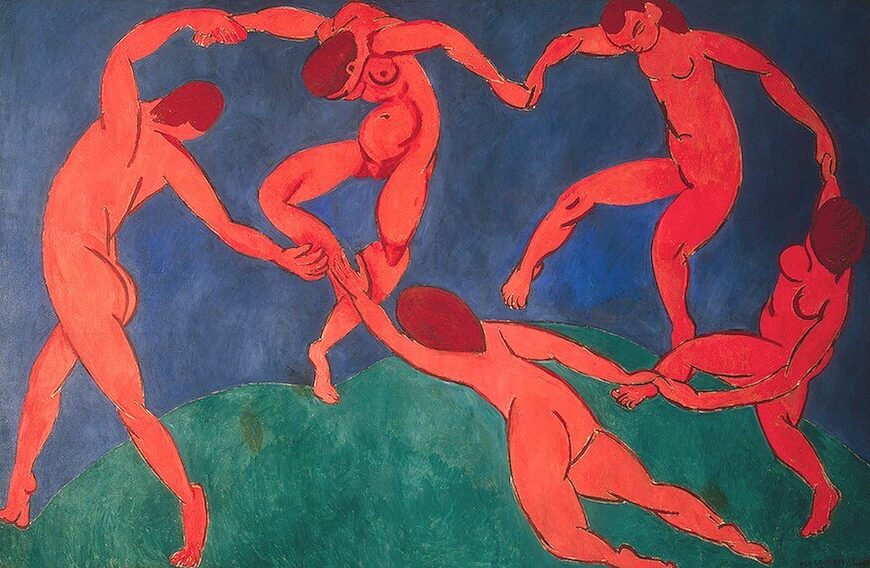
Henri Matisse, La Danse, 1910, oil on canvas, The Hermitage, St Petersburg, Russia
The “Big Yellow Duck” (often referred to as the World’s Largest Rubber Duck) became a notable flashpoint of political controversy in Canada during the 2017 Canada 150 celebrations. While the primary criticism came from the Ontario Progressive Conservatives (PCs), federal Conservative figures also weighed in, turning the $200,000 art installation into a symbol of debate over government spending.
Despite the uproar, the event was largely successful in attracting tourists, with an estimated 750,000 attendees and a $7.6 million economic impact on the city of Toronto.
This success was due in large part to families with young children; seeing a gigantic yellow rubber duck would have elicited that innate sense of child-like wonder and joy.
In 2026 make a resolution to connect with joy, seek out culture from stand-up comedy, to colourful canvases, and find ways to make your world joyful.
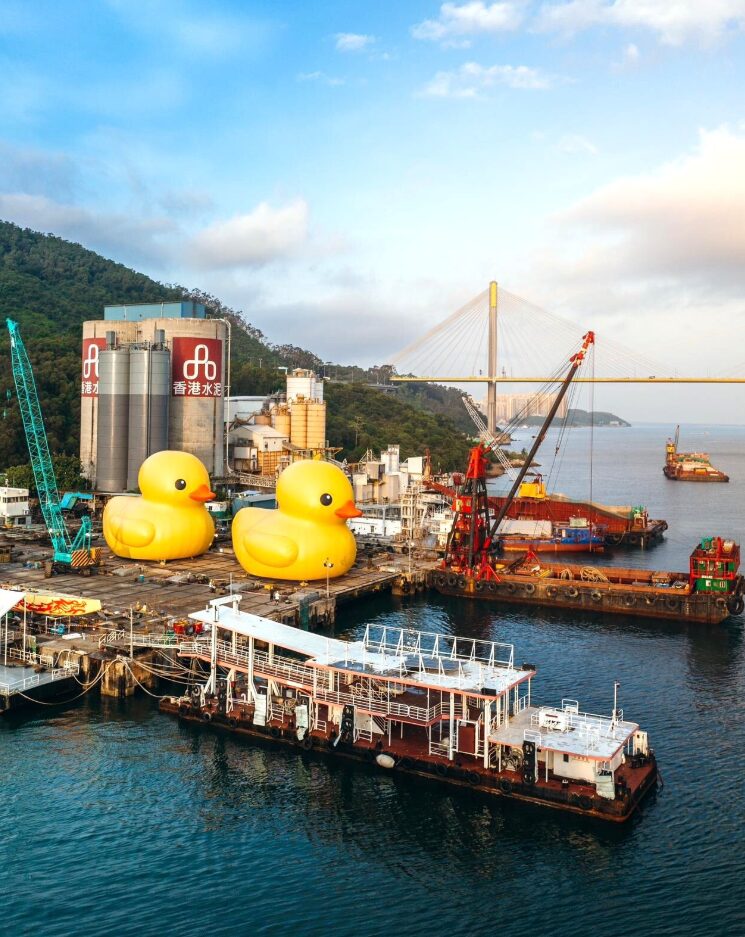
A pair of inflatable rubber ducks created by artist Florentijn Hofman are seen in Hong Kong on May 25, 2023.
About the Author