

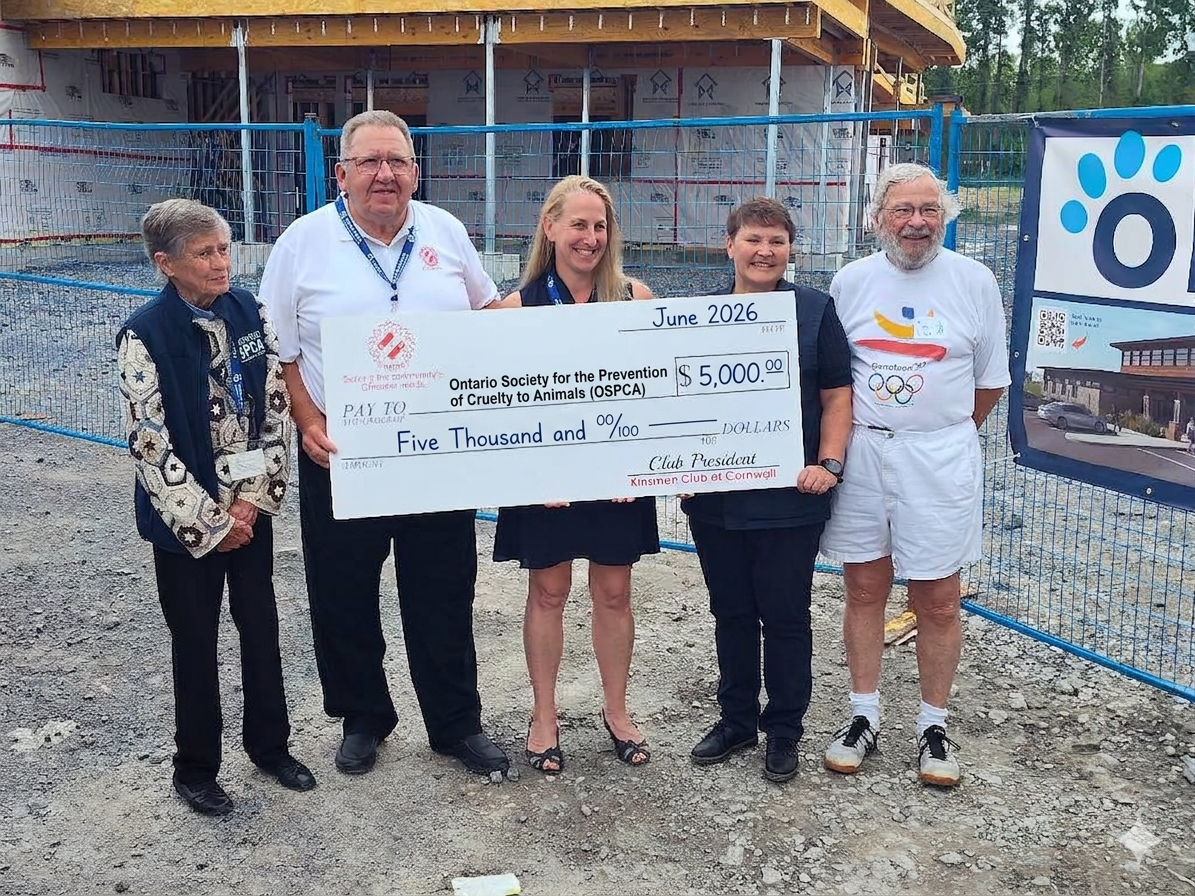
In photo at the OSPCA new site are Dr Janet Lalonde , Kin incoming President Rick Shaver, Charmaine Brett President CEO Ontario SPCA, Bonnie Bishop , Eastern regional Manager OSPCA and Kinsmen Wes Libbey donating $ 5,000 towards your Building a Brighter Future for Pets and People Campaign.
The Ontario SPCA and Humane Society has been at the forefront of animal welfare for 150 years, transforming lives and building compassionate communities across Ontario including the communities we serve: Akwesasne, Cornwall, United Counties of Stormont, Dundas and Glengarry, and the United Counties of Prescott and Russell. In a world increasingly marked by social isolation and disconnection, the Ontario SPCA’s mission goes beyond basic animal welfare; it’s about creating a better, more compassionate society.
The Ontario SPCA is leading the development of a new 8,000-square-foot facility designed to significantly improve animal health and welfare for the communities of Akwesasne, Cornwall, United Counties of Stormont, Dundas & Glengarry, and United Counties of Prescott and Russell.
Kinsmen Club of Cornwall will help build and equip a 6,600 sq ft animal centre and a 1,400 sq ft veterinary clinic in Cornwall to replace our current facility. The new build will increase capacity by 300%, with animal housing spaces more than doubling. Features will include isolation and quarantine areas for dogs and cats, a dedicated meet-and-greet room for adoptions, separate entrances for cats and dogs, and design elements that reduce stress and support infection control.
This cutting-edge new centre and clinic will strengthen the delivery of essential disease-prevention services; help reduce overpopulation through spay/neuter services; and attract skilled veterinary professionals to the region. Additionally, having access to such a facility will foster educational partnerships to train and inspire the next generation of animal care providers.
The new Cornwall and Region Animal Centre and Veterinary Clinic will provide a practical and impactful solution to the mounting challenges surrounding animal welfare, public health and community safety in our region. Its realization is not only essential – it is urgently needed.
About the Author