


Municipal elections are October 26 in Ontario. To help voters make an informed decision here in Cornwall, the editorial board of The Seeker has put together 10 questions for candidates seeking to be elected as School Board Trustee. To ensure fairness, the same questions were sent to every candidate. We sent a total of 10 and they had the option to answer all of them, or pick a minimum of 5. Their answers will be published in their entirety, in the order they are received. We will not edit, correct or modify any responses.
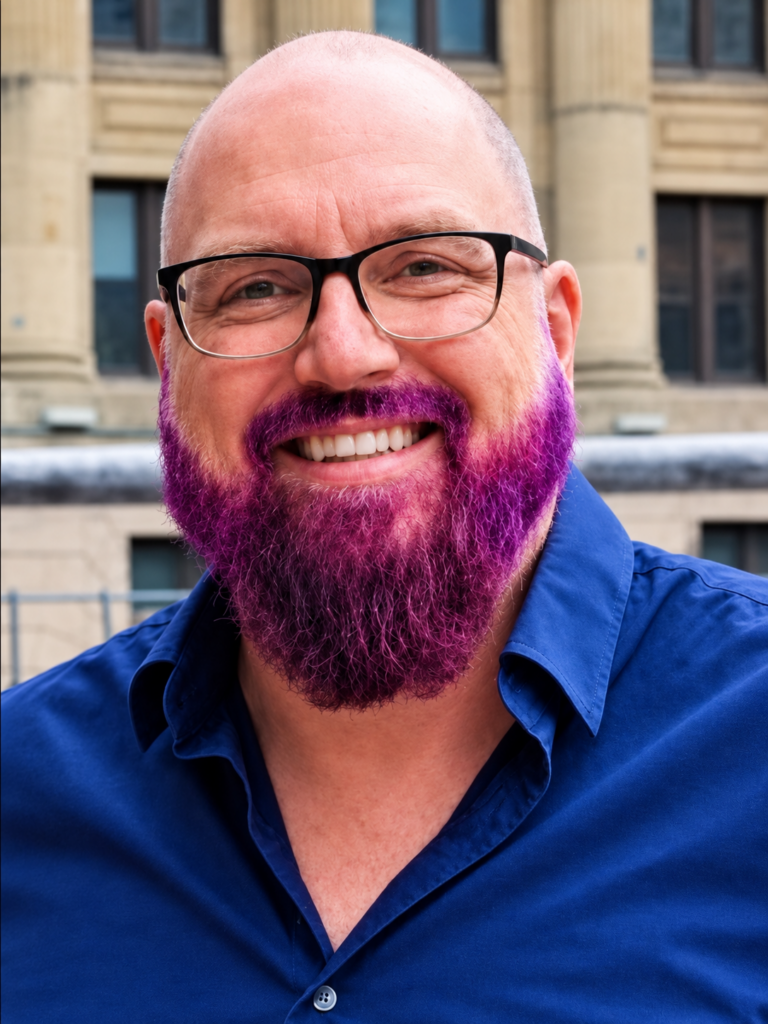
These are Ryan MacKay’s Answers. He is running for trustee for UCDSB.
1. Who are you, and what experience or perspective would you bring to the school board if elected?
My life is dedicated to the world of learning. As a father of school-aged children, husband of an educator, and lifelong Carleton University employee, I’ve had the opportunity to witness firsthand the evolution of education. Through my children I see firsthand their learning journey, filled with both success and challenges. My wife’s role as an Educational Assistant, and prior to that being a Registered Early Childhood Educator, has brought to light the pressures the staff face and the rapidly evolving landscape in public education. My professional career is centered in post-secondary education. Each year I see a new crop of students enter the system. With that, the dynamics of what it takes to be successful have changed over the years. That insight will be critical to discussions and decisions related to our high school population and the multiple pathways to graduation presented to them, whether it’s going off to university, a trades related program at the college level, or direct entry into the world of work.
I bring real world observations and practical experience in decision making and advocacy through several committee and governance board memberships. Currently I am the Chair of the Heritage-Patrrimoine Cornwall advisory committee and a member of the Cornwall Public Library Board. Prior to that I was involved in Bereaved Families of Ontario, helping reestablish the Board of Directors which had gone dormant. I feel combining my community focus and educational experience will be key to advocating Cornwall’s need on the UCDSB.
2. What do you believe is the biggest issue facing students and families in Cornwall and the surrounding area, and what would you do about it?
Families are facing a challenging financial landscape. The cost of living is on the rise, and many are struggling to keep up. The impact this has on students can range from not having the supplies they need to worrying about how they are going to pay for the cost of a field trip. I’ve witnessed firsthand how parents and an active community can come together to help ease this burden. When I was Chair of Eamer’s Coners Parent Council, we contributed some of our fundraising earnings towards bussing to so that no child would be left behind in attending a schoolwide drama production. That is one example of how parents can rally together to contribute to their school community.
Moving forward, I would continue to encourage collaboration with local community organizations that offer supports to families in need. We also need to reevaluate what costs we’re passing along to parents, are they reasonable and what alternatives do we have in place to ease the financial burden.
3. What can the school board do to improve student achievement, particularly for students who are struggling in reading, writing and mathematics?
The School Board needs to continue to make investments directly into our schools that provide the resources critical to student success. Providing the necessary supports to our educators will in turn allow them to best work with our children. This includes the time needed for daily strengthening of skills and building confidences in reading, writing and mathematics. Monitoring progress and achievements is essential to determining if we continue on the same path or if adjustments are needed along the way. We must ensure students with Individual Education Plans (IEPs) receive the accommodations and supports required. Additionally, keeping parents/caregivers informed with more frequent progress updates and working directly with them for what they need to work on at home to complement their classroom studies will help keep our children’s progress moving forward.
4. How should the board address staffing challenges, including recruiting and retaining teachers, educational assistants and other support staff?
We need to make the Upper Canada District School Board a place where staff feel welcomed, valued and able to feel fulfilled in their careers. They are the ones in our schools and leading our classrooms. Their input and feedback through yearly staffing surveys and open lines of communication can help shape policy direction and identify areas of concern and where we need to improve. Making sure we have adequate staffing levels is necessary to ensure our educators are not being overworked and reduce the effects of burnout. We need to build and maintain partnerships with post-secondary institutions to enhance visibility and actively recruit new talent. The UCDSB is uniquely positioned geographically to appeal to talent from cities such as Ottawa and even Kingston for the far-west area of our board. Making ourselves visible and fostering a positive and nurturing environment for our staff and students will cement our reputation as an employer of choice.
5. What should the board do to improve support for students with special education needs and ensure families can access the services their children require.
The Board needs to be proactive in directly communicating with parents, ensuring they fully understand the details of Individual Education Plans (IEPs). Strengthening communication early on with regards to course of action and available supports can help put families more at ease within their school environment. At times trying to navigate the system can be overwhelming. Helping out by being a resource and a guide for both in-school learning but also connections to community resources in a timely manner can help ensure families are keeping their children on track.
6. School transportation is facing financial pressures and potential changes. What would you do to ensure Cornwall-area students have reliable transportation without putting an unreasonable burden on families?
Recent changes to walking distances have put stress on many families. Children who once qualified for bus transportation have now lost this service. This has resulted in longer walks for children and parents now making the choice to drive their kids. This has increased congestion at our schools during the peak pick-up and drop-off hours. Unfortunately, this problem is not unique to our area, with other boards feeling the pinch. STEO, which is responsible for our busing, is a sharded resource through our board and the Catholic District Schol Board of Eastern Ontario. We need to work in partnership with them to review funding levels and see where efficiencies can be gained, without compromising student safety. We need to have in-depth discussions and reevaluate how this service is affordably delivered to ease the strain on families.
7. How should the board balance the needs of Cornwall’s urban schools with those of smaller and rural schools in the surrounding communities when making decisions about funding, programs and possible school closures or consolidations?
Closing a school, particularly a rural school, should be a last resort after all other reasonable options have been exhausted. When I worked at Queen’s Park for former M.P.P. John Cleary, a line he frequently used when he was fighting for rural schools struck a chord with me; “When you close a rural school, you cut the heart out of a community.” I grew up in the country and proudly attended Martintown P.S. and Char-Lan D.H.S. Closing a rural school puts a strain on students and families. The students have to be relocated to other districts, resulting in longer bus commutes and greater distances for families to attend school functions or pick up their children for appointments or other emergencies. Cornwall’s elementary schools as an example have very little capacity to take on new students. As the city is experiencing increased housing development, we are potentially looking at strain in the foreseeable future. This needs to be taken into account when making decisions on the future of schools that neighbour us.
8. What is your position on cellphone use and other technology in schools, and where should the board draw the line?
During classroom instruction, cellphones should be stored away and set to silent so that they do not disrupt classroom learning. There are always exceptional and reasonable circumstances, and I believe those individual needs and exceptions can take place through consultation with the teacher and principal.
9. What is your position on AI use, and where should the board draw the line?
AI can be useful when it is used to support learning but should never be used as a substitute for critical thinking and independent thought. We must avoid having our students rely on AI to compose their essays or using it as a short-cut to quickly move through an assignment. Instilling good habits at an early stage where they rely on their own independence will better prepare them for success in the future.
10. If elected, what is the first issue you would bring to the board table on behalf of Cornwall-area students and families, and what specific action would you want the board to take?
While I would like to look at the overall budget and see where we can make strategic investments in staffing levels, transportation, etc., those decisions are looked at from a board perspective, not based on individual cities or areas. Therefore, a Cornwall specific issue would be to advocate for a new school to replace the existing Eamer’s Corners P.S. Now, it’s one thing to just say we need to build a new school. That’s all well and good. However, you need the facts to justify it and the plan to make it a reality.
Based on the most recent data available. Eamer’s Corners is at 136% capacity, as evidenced by the eight portables on the property. Bridgewood, Central and Viscount are each in the low 90s in utilization percentage. At the same time, development is expanding across the City of Cornwall. In the area that services Eamer’s Corners, there has been a housing and construction surge over the past years with no end in sight. More housing is going up, and more land is being cleared. This trend is not sustainable. These discussions need to be pushed along. I will engage with the professional board staff and the City of Cornwall to work on this project. The UCDSB looks at spending decisions through a big picture lens. While I am thrilled that the new CCVS project has broken ground, would they be in a rush to fund a second school project before the current one is complete? I don’t know the answer to that, but we can’t wait until 2029 for that to happen. Cornwall needs a trustee who will advocate and work with the other trustees and professional staff on the merits of this project and the urgency for which it is required. One thing in our favour is that there is plenty of land on the current site. One of the causes of delay for the new CCVS was the need to acquire a suitable parcel of land. The land needed for a new Eamer’s Corners appears readily available. While the other three elementary schools still have some capacity to take on new students, at the rate the city is growing and with no shortage of new proposals before the Planning Department, how long until they reach their limits? If we plan this right and work together to think this through, we can take the capacity pressure off of Eamer’s Corners while at the same time work preventatively to stop the same situation from eventually happening to the other schools. After that is all said and done, it will still need buy-in and support from the provincial government. I recognize this is a big undertaking and will require heavy lifting from a number of stakeholders. Our city needs this, our children need this, and while it won’t be easy it is worth pursuing.
About the Author