Another Conservative MP has crossed the floor, and once again Canadians are left asking a question that never quite goes away: when politicians change sides, what happens to the people who voted for them?
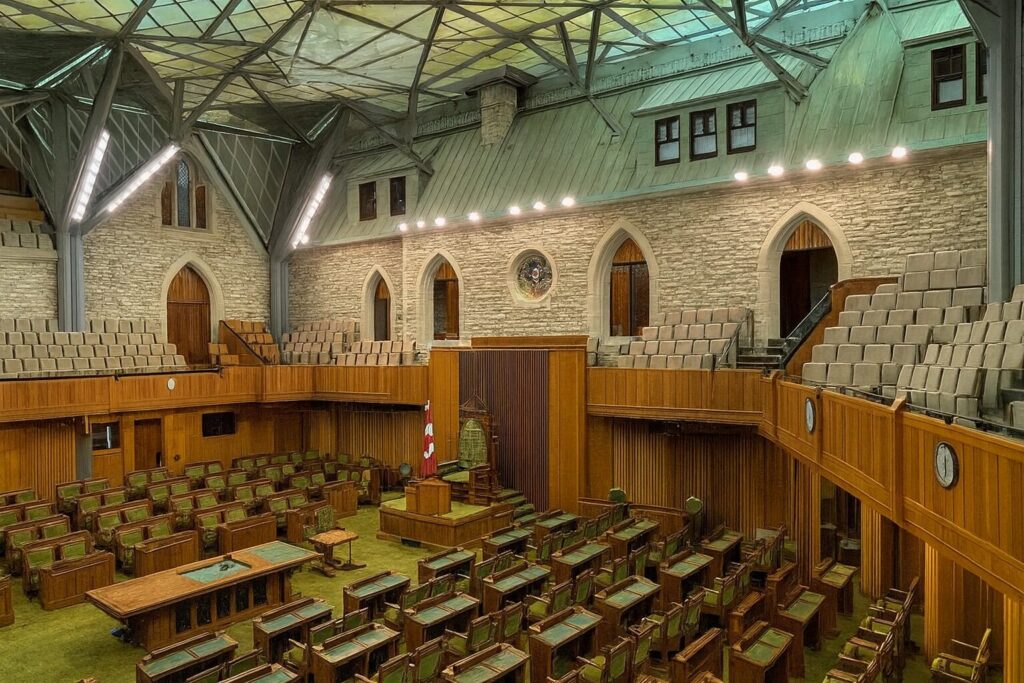
Michael Ma, the MP for Markham–Unionville, announced this week that he is leaving the Conservative Party to sit with the governing Liberals. The move places Prime Minister Mark Carney’s government just one seat short of a majority. It is not illegal, rare, or even surprising. But it is unsettling — and not because of which party benefits.
Floor-crossing has always existed in Canadian politics, but it tends to feel different depending on the moment. Right now, it comes amid visible strain inside the Conservative Party. A growing number of MPs appear uncomfortable with a direction that critics describe as increasingly Trump-like: grievance-heavy messaging, culture-war framing, and internal fractures that leave little room for moderation. Ma’s statement that Canada needs “unity and decisive action” reads less like a personal pivot and more like an admission that unity inside his former party is already fraying.
What makes this move particularly telling is that Ma did not choose to sit as an independent. Crossing directly into the Liberal caucus suggests a level of ideological compatibility that reinforces something many observers have already noticed: Mark Carney’s Liberals occupy more right-leaning territory than many progressives are comfortable with. That may explain why this switch was possible at all.
Still, political alignment does not erase the democratic tension underneath it. Voters do not simply elect a name; they elect a platform, a set of values, and a party identity. When that identity changes mid-term, the consent voters gave begins to feel conditional. Ma says he listened to his constituents before making his decision, but outside of an election, there is no clear way for voters to confirm or contest that claim. Representation becomes something asserted, rather than demonstrated.
Some will argue that MPs must be free to follow their conscience, even if it means leaving their party behind. Others will argue that floor-crossing rewrites the terms of the vote after the fact. Both positions have merit, which is precisely why these moments leave such a sour aftertaste. Democracy relies not just on rules, but on public confidence that those rules are being honoured in spirit, not merely in form.
There is also the uncomfortable reality of power. Ma’s decision nudges the Liberals closer to a majority, and I’ll be candid: I’m not especially upset by that outcome. The Conservative Party’s current trajectory gives me far more pause than a strengthened Liberal government does. That said, acknowledging political relief does not cancel out a deeper concern. Voters who showed up and made a clear choice deserve to feel that their decision still matters, even when party lines blur.
It’s also worth noting that instability is not confined to the opposition benches. Earlier this fall, Steven Guilbeault resigned from Carney’s cabinet after opposing a federal agreement with Alberta that advanced oil pipeline development and weakened climate rules. Guilbeault cited concerns about climate commitments and a lack of meaningful consultation with Indigenous nations and provinces. He remains a Liberal MP, but his resignation exposed real fault lines within the governing party itself.
Taken together, these developments point to a political landscape in flux. Parties are shifting, alliances are loosening, and ideological boundaries are becoming harder to define. For voters, that instability creates a sense of distance from the decisions being made in Ottawa, decisions that increasingly feel negotiated behind closed doors rather than earned at the ballot box.
Loyalty in politics should never mean blind obedience, but it cannot be entirely detached from accountability either. When elected officials change direction without returning to voters, the burden of justification should be heavy, not assumed. Otherwise, democracy risks becoming something people watch happen, rather than something they actively shape.
That tension — between conscience and consent — is the real story here. And it’s one Canadians are being asked to sit with more often than ever.
About the Author