


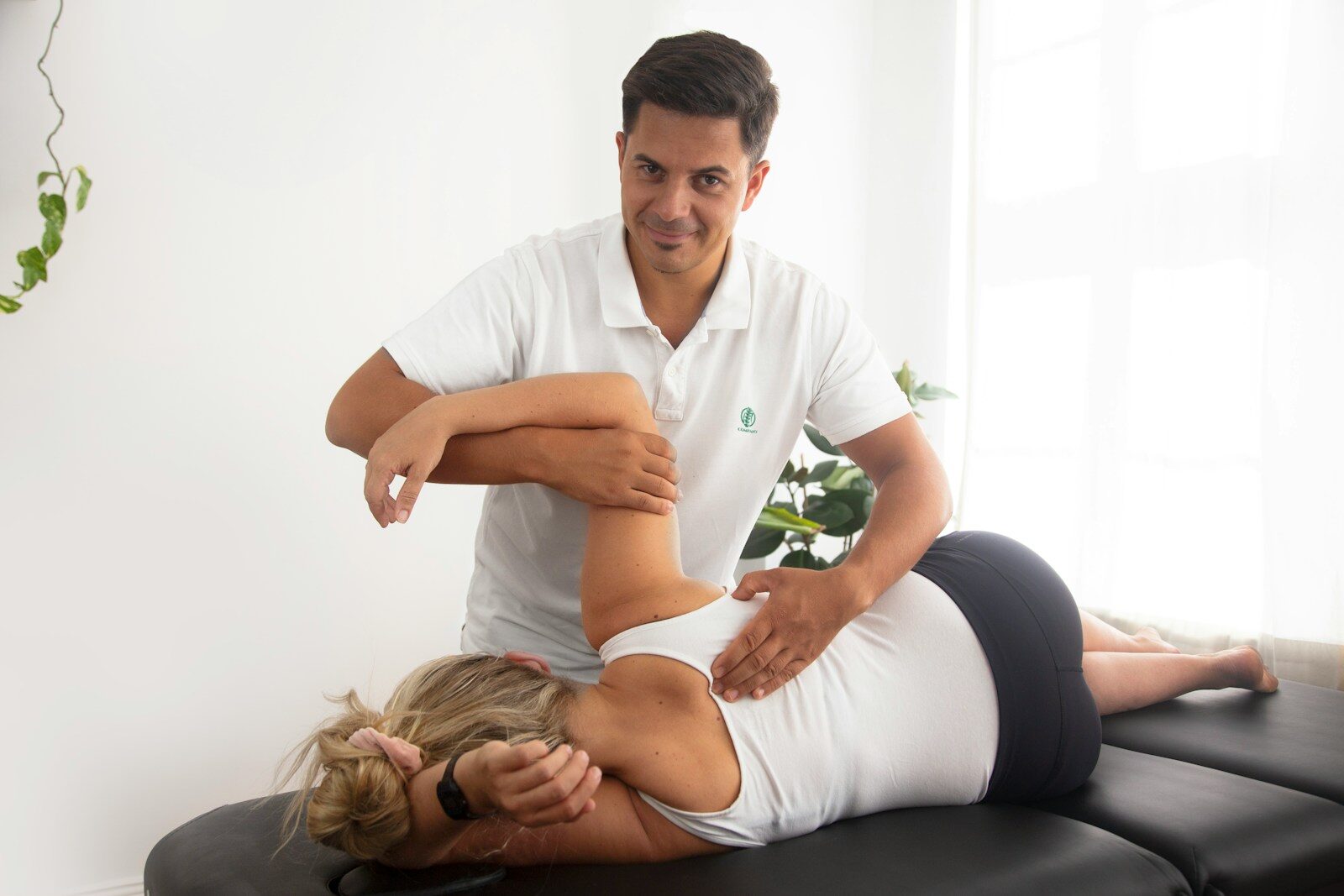
Lower back pain is a common complaint among golfers at all levels. The twisting motion of the golf swing plus the time spent walking and playing golf can cause strain on the muscles, joints, and spine. While it can be frustrating to put down your clubs and stop enjoying the game, there are alternatives to giving up the sport that provide lasting improvements and lower back pain relief for golfers.
Understand the Cause of Back Pain
Golfing can cause lower back pain due to the rotational movements required in the golf swing. As the golfer rotates his or her hips and spine, they must twist these body parts in order to generate power from the ground up, through the core, and finally into the golf club. Another cause of golf-related back pain is a lack of mobility and flexibility that can occur due to day-to-day activities. Sitting down for extended periods of time and not exercising can reduce a person’s range of motion and the ability to perform physical tasks such as swinging a golf club. Understanding why the pain occurs is key to treating it, as different causes require different types of treatment in order to reduce stress on the lower back.
Improve Mobility and Flexibility
The flexibility of the hip flexors, hamstrings, and upper back plays an integral role in how much stress is placed on the lower back when golfing. Tight muscles in these areas can cause the lower back to overextend during a golf swing, potentially causing pain and damage to the spine. Increasing flexibility in these areas can reduce pain and prevent future occurrences. Before playing golf, spend some time stretching in order to loosen up these muscles and allow for a full range of motion while swinging the club.
Mobility drills that increase range of motion are another great way to loosen up before a round of golf. These drills encourage motion in specific joints and directions in order to loosen up the body and prepare it for a golf swing. They can also improve motion potential in the joints, which can reduce strain on the back during physical activities like golf.
Build Strength for Better Support
Core strength is vital to almost every aspect of the golf swing, from driving to putting. When performed correctly, core exercises can provide stability and support to the lower back in addition to increasing flexibility. Strengthening the core can also increase the amount of power generated throughout the body, allowing for longer drives without extra strain on the back. Strength training should also include large muscle groups such as the hips, glutes, and lower body. These muscles play a major role in the golf swing and increasing their strength can reduce the chance of lower back pain while golfing.
Adjust Swing Mechanics
One of the main causes of golf-related back pain is the golf swing itself. The twisting motion places added stress on the lower back with every swing, especially if the golfer twists with his or her hips rather than using the proper motion to rotate the torso and shoulders. Even golfers who have been playing the sport for years can develop poor form and swing mechanics, especially as they age. Making small changes to the way the swing is performed can reduce the amount of stress placed on the lower back without sacrificing driving distance or accuracy.
Working with a golf instructor and golf physiotherapist can be helpful in making these changes to the swing. They can identify problem areas and work with the golfer to fix them, while also making sure any changes to the swing do not negatively impact other parts of the game. In many cases, changing swing mechanics and working with a physiotherapist can reduce pain in the lower back better than either method alone.
Manage Practice and Recovery
Golfers who spend long hours practicing their swing or hitting balls at the driving range are more likely to develop lower back pain due to the repetitive motion of the golf swing. When spending time at the range, break up long practice sessions with rest periods in order to let the muscles and joints relax and recover from the stress of the golf swing. Taking breaks also allows time to loosen up stiff muscles and stretch in order to reduce the chance of developing golf-related back pain.
After a round of golf or a long practice session at the driving range, make sure to cool down properly to help prevent muscle soreness and joint pain. Spending time walking, stretching, and staying hydrated can go a long way toward relieving tension after a round of golf. Local clinics like Physiomed Oakville can help assess, treat, and prevent golf-related back pain through personalized rehabilitation and movement strategies. Golfers experiencing persistent pain or poor recovery should consider booking an assessment to identify the underlying cause.
Conclusion
While golf-related back pain can be a painful condition, it is not an insurmountable obstacle to enjoying the game. Improving mobility and range of motion while increasing core and body strength can reduce stress on the lower back and allow for pain-free rounds of golf. Making small adjustments to the golf swing can also be helpful in reducing the amount of strain placed on the lower back during the game. Taking proper care of the body through smart practice and exercise can also reduce the risk of developing golf-related back pain while also helping to prevent existing pain from returning.
About the Author