
Online poker remains a patchwork of different state markets; however, one key element in this patchwork has become less visible since this past summer.
While the changes are significant to poker players, the changes are largely due to having a larger number of available opponents. This process provides an excellent illustration of how online poker can grow across multiple states without creating a single national market. Participating states continue to regulate licensing, check locations, approve games, and provide protections for consumers.
July 2026 Change Summary
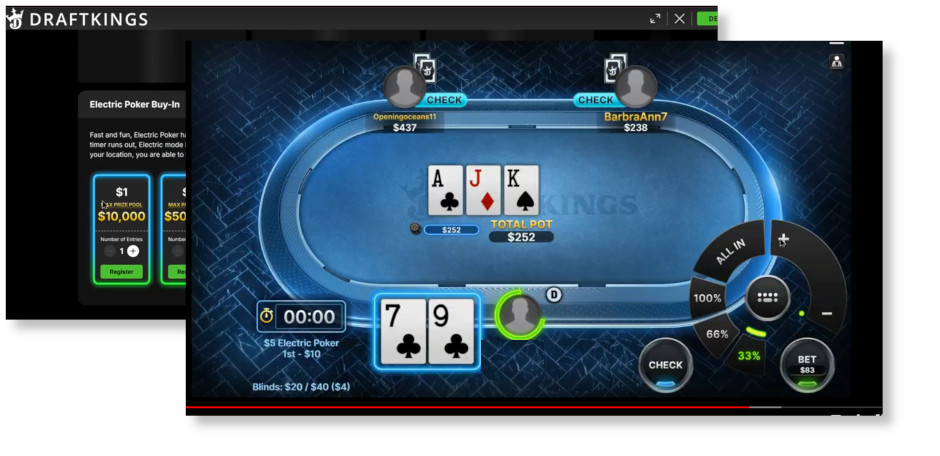
On July 8, 2026, DraftKings launched a three-state shared-liquidity network for its Electric Poker product, combining eligible players from Michigan, Pennsylvania, and New Jersey. Electric Poker is DraftKings’ three-handed super-turbo No-Limit Hold’em format and is currently its only peer-to-peer poker offering. In Michigan, the poker offering is provided by the Bay Mills Indian Community who acts as the Michigan operator partner. The Michigan Gaming Control Board stated that they reviewed DraftKings’ proposed multistate internet poker platform under all regulatory requirements necessary for DraftKings to offer multistate internet poker within Michigan.
DraftKings launched its multistate poker network based upon the Multi-State Internet Gaming Agreement, often referred to as the MSIGA. While membership in the MSIGA creates a legal basis for participating members to engage in multistate gaming; each member state still requires individual operator approval prior to allowing that operator to serve customers in that jurisdiction.
Why Multistate Liquidity Matters Most in Poker
Unlike most online casino games where players compete against the “house,” online poker players compete against one another. Therefore, while a small state online poker market may appear operational and functional, the lack of an adequate number of active players can make the overall experience quieter than what might be desired. As a result of fewer active players there may be fewer choices in terms of available cash-game stakes; smaller tournament fields; and longer wait times for less popular formats.
According to estimates made by Pennsylvania regulators there were approximately 150,000 online poker players when Pennsylvania entered into the MSIGA. According to those same regulators, the entry of Pennsylvania into the compact increased the combined player base of the compact participants by over 50% increasing the total combined population reached by the multistate online poker market to over 38 million American citizens.
Things That Players Will See at the Table
U.S. online poker sites differ significantly from international poker networks. CoinPoker is a model of a cryptocurrency based site with a license structure and payment options based upon other countries. In terms of U.S. readers, the comparisons provided above are more structural in nature and do not serve as a way to avoid checking availability and legality of the player’s location.
For DraftKings players, the most noticeable difference is likely to be game availability rather than larger tournament fields. Electric Poker remains a three-handed format, with each game beginning once three players register. Combining players from Michigan, Pennsylvania, and New Jersey creates a larger pool of potential opponents, which can help games fill more quickly and support more simultaneous action across the available buy-in levels.
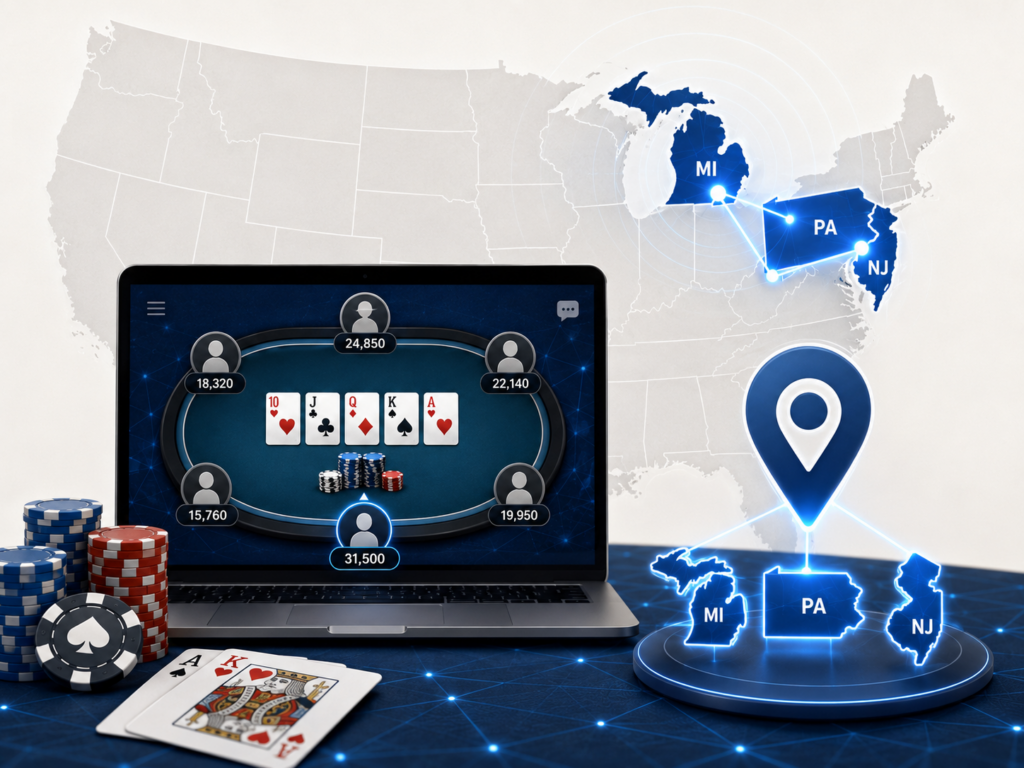
Players within the new three-state pool can expect to see many similar regulations regarding their online accounts when compared to the pre-pool environment. Playing against others who reside in another state does not allow them anonymity nor portability. Identity verification, geofencing regulations, responsible gaming controls and operator specific account terms and conditions will continue to dictate access.
Why State Boundaries Are Important
MSIGA is a compact, not a national license. Each participating member state will require each participating online poker operator, including platform providers, to maintain the necessary licenses to operate in that jurisdiction; to have the new or updated software reviewed prior to launching; comply with geofencing requirements; and obtain express authorization prior to launching. New game software will be subject to testing by a third-party laboratory.
This distinction also provides insight into why there are six member-states of MSIGA while DraftKings is connecting only Michigan, Pennsylvania, and New Jersey. A state may sign onto the MSIGA prior to an individual operator completing all of the regulatory steps required in that state. Therefore, expansion will occur network-by-network instead of having one single switch for the entire country.
Michigan has previously demonstrated this step-by-step process. On January 1st, 2023, PokerStars was allowed to offer online poker between Michigan and New Jersey. Then in November 2024, BetMGM was granted permission to create a network of Michigan and New Jersey players. DraftKings had launched in July 2026 and included Pennsylvania in their own three-state configuration.
The financial aspect of the regulatory paperwork follows the money trail. Prior to authorizing any launches, Michigan requires each operator to outline how any adjusted gross revenue and associated tax revenues generated through the operation of a multijurisdictional poker game will be allocated amongst the participating jurisdictions.
In summary, for players; although a larger pool may provide better game selection and/or a greater scale of tournaments; the experience for players will remain local at the point-of-access. It is still up to the individual state regulators to determine which operators are qualified to participate; where players may legally gamble; how revenue shall be allocated amongst participating states; and what consumer protections must be made available. The new link-up between Michigan and other participating states offers increased competition while maintaining the existing state-to-state oversight – the current compromise that enables interstate online poker to exist in the U.S.
About the Author