

For over two centuries, the intersection of Pitt and Second Streets, the geographic centre of Cornwall’s original square mile, has been the “Heart of the City.”
The location has been home to some of Cornwall’s architectural landmarks. Due to its long history the corner has suffered numerous fires, earthquake damage, and been rebuilt in the name of urban renewal.
The historic record shows, that from 1909 to 2010, the street from First to Third has undergone constant change, and had no less than eleven major fires, one explosion, and demolitions to make way for urban renewal.
The most tragic fire occurred on April 29, 1909, when the Rossmore, billed as “Eastern Ontario’s finest Hotel” burned claiming 12 lives. The building was replaced in 1911 by the Beaux Arts branch of the Bank of Montreal, slated to become the City’s Arts Centre.
The City’s most destructive fire, is thought to have been started by young boys “playing with matches,” in the alleyway, on the west side of Pitt, between 2nd and 3rd Streets, on August 7 th , 1933. Overwhelmed by the enormity of the blaze, Fire Chief George Hunter called for help from Ottawa and Montreal. When it was all over 31 businesses were destroyed, the Victoria Arena was reduced to ashes and 15 families were left homeless. Fortunately injuries were minimal as stores were closed due to the Civic Holiday, while relief efforts were undertaken by the Kinsmen Club.
On December 24, 1947, the west side of Pitt, just north of 1 st Street was consumed by flames, leaving 24 families homeless. The conflagration was subdued after nine hours, from the combined efforts of the Cornwall and Massena Fire Departments. Originating in the rear of McIntyre and Campbell’s dry good store, the flames damaged 12 businesses.
The Seaway Project led to the destruction of the Post Office and Customs building with its iconic clock tower, in 1955 to make way for the International style Seaway headquarters.
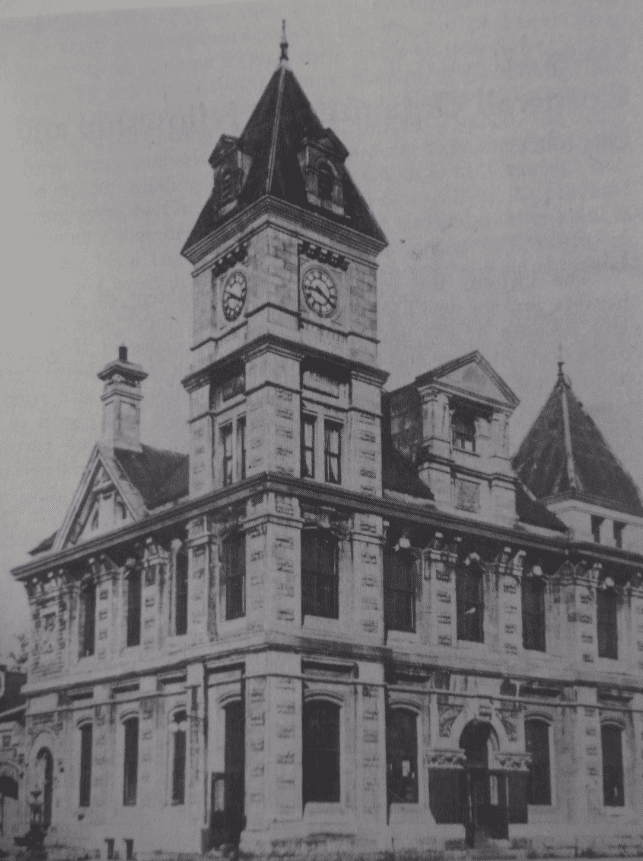
The Gothic style Post Office, built 1882-85.
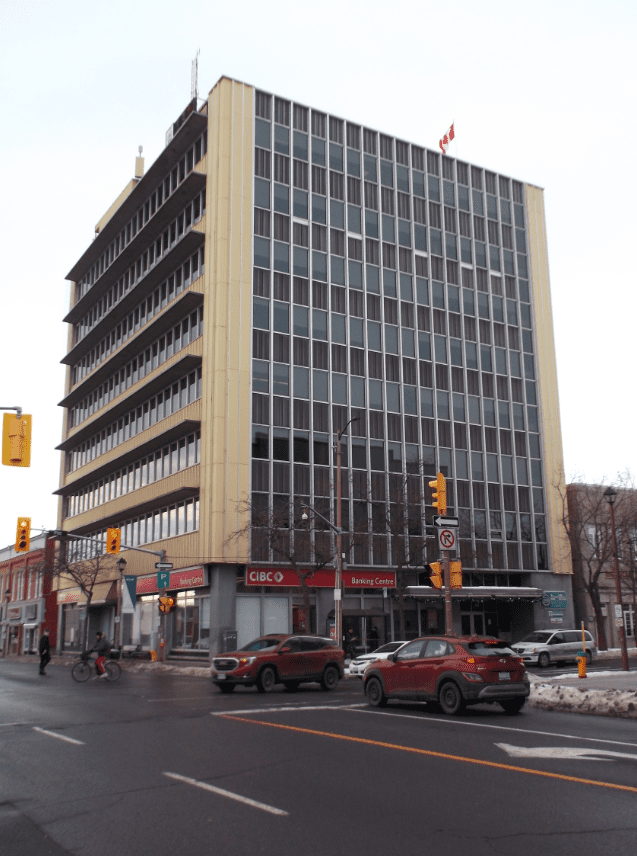
The “international” style Seaway Building was viewed by many contemporaries as an architectural leap forward, a sentiment not shared by everyone.
On July 30 th , 1956, 107 to 111 Pitt Street burnt, taking Household Finance and other businesses.
The Jacob’s Building, constructed in 1883, on the west side of Pitt, just south of 2nd , fell victim to a fire, that occurred on January 27, 1959. The fire also damaged the Metropolitan Store and Fullerton (Colquhoun Block), leading to the removal of the structure’s upper level and the installation of aluminum siding.
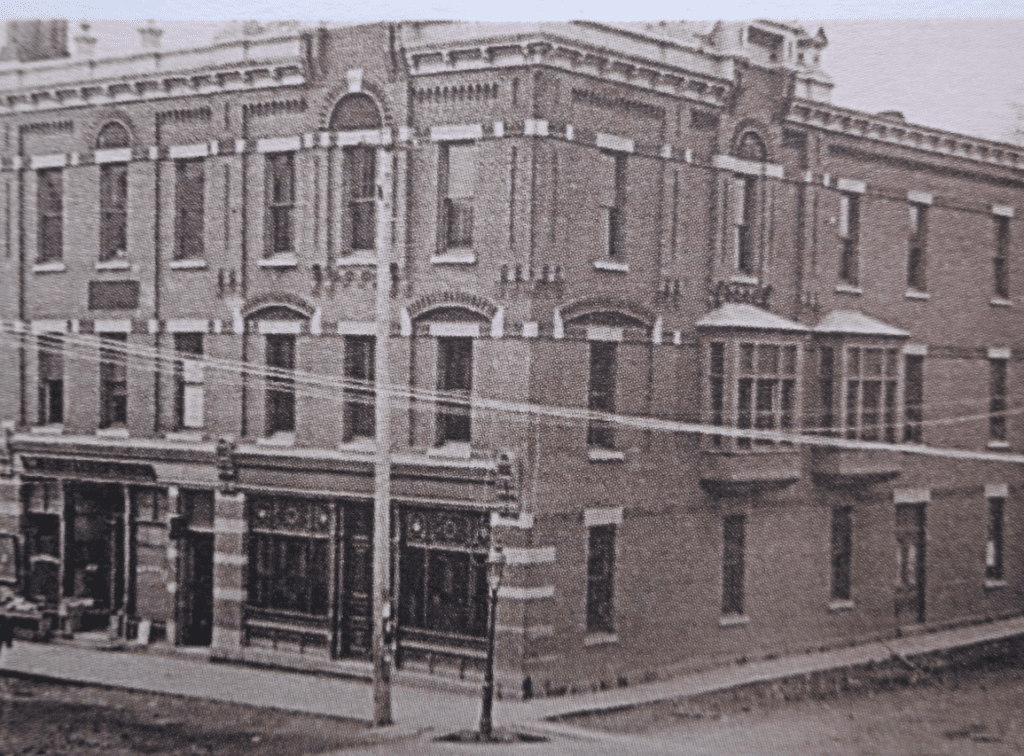
The Colquhoun Block, was also damaged by the 1944 earthquake.
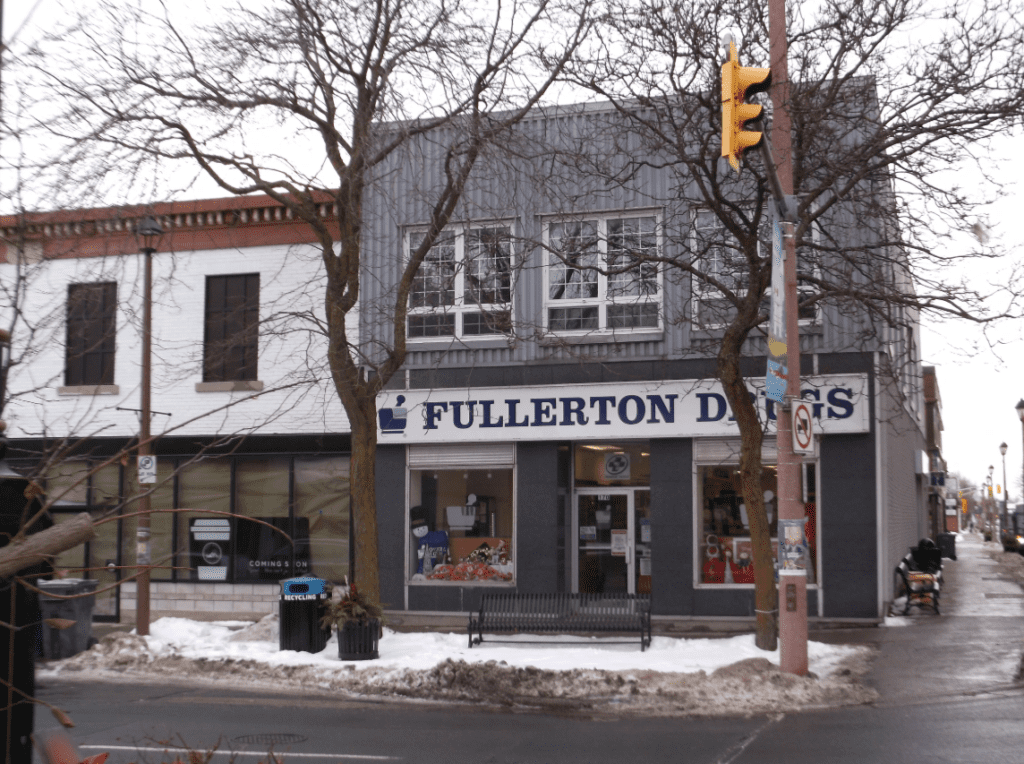
Fullerton today.
1972 was a bad year for fire, with one taking out the very popular New York Café, and its colourful neon sign (129 Pitt St.), ending the story Cornwall’s first Chinese restaurant, opened in 1913, by Peter Wong. In the same year the Snetsinger Block, built in 1885, on the southwest side of 1 st street was destroyed and has remained a parking lot ever since. A sad ending for a building that once housed a shoe store, beer outlet, fraternal organizations such as the I.O.O.F, British Legion War Veterans, the Elks and Rebecca Lodge and Principal George Smith’s famous Cornwall Commercial College.
Flames engulfed Clark’s Shoe Store, founded in 1896, (145 Pitt) in 1974. Undeterred Ross McDonald, rebuilt and operated the store until he retired in 2012.
The Palace Theatre closed in 1983 to become Maximum Fitness, which in turn closed. The building became derelict and was torn down in the late 2010’s to become Assaly Lane.
The biggest change to the street came as a result of the demolition of most of the buildings on the south side of Pitt from 1 st , to make space for the Cornwall Square, in 1978. Such venerable structures as the mansard roofed Clifton House, which in time became the Lloyd George Hotel with its infamous Wharf Lounge, and Bringloe’s Furniture fell victim to the wrecking ball.
To keep pace with modern urban development, and make Pitt Street an attractive alternative to the newly built Eastcourt and Brookdale Malls, with their convenient free parking, the $1,1 million Pitt Street Mall was officially opened on September 30, 1978 by Mayor Gerry Parisian, mall chairman George Assaly and city horticulturalist John de Ronde. Located between 1st and 3rd Streets, the street was closed to traffic and converted into a walking mall.
A reporter for the “Standard-Freeholder,” enthused “The two-block area in the heart of the downtown business district now takes on a park-like environment with reflecting pools, a waterfall, numerous flower and tree beds and contemporary lighting fixtures.”
Despite the fact the Mall was anchored by the Cornwall Square, it could not successfully compete with the other malls and was closed on November 9, 1991. Once more Assaly lead the way, with Mayor Phil Poirier. Now opened to traffic, it was renamed the “Pitt Street Promenade,” and according to the “Standard- Freeholder,” “…to cheers and shouts of delight.”
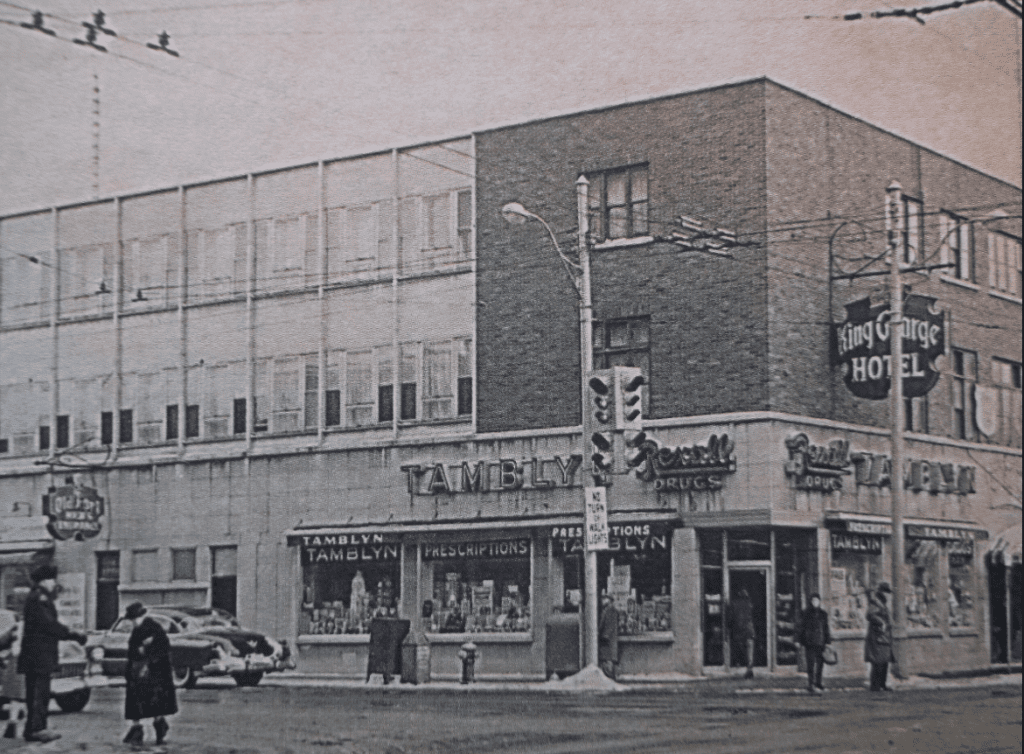
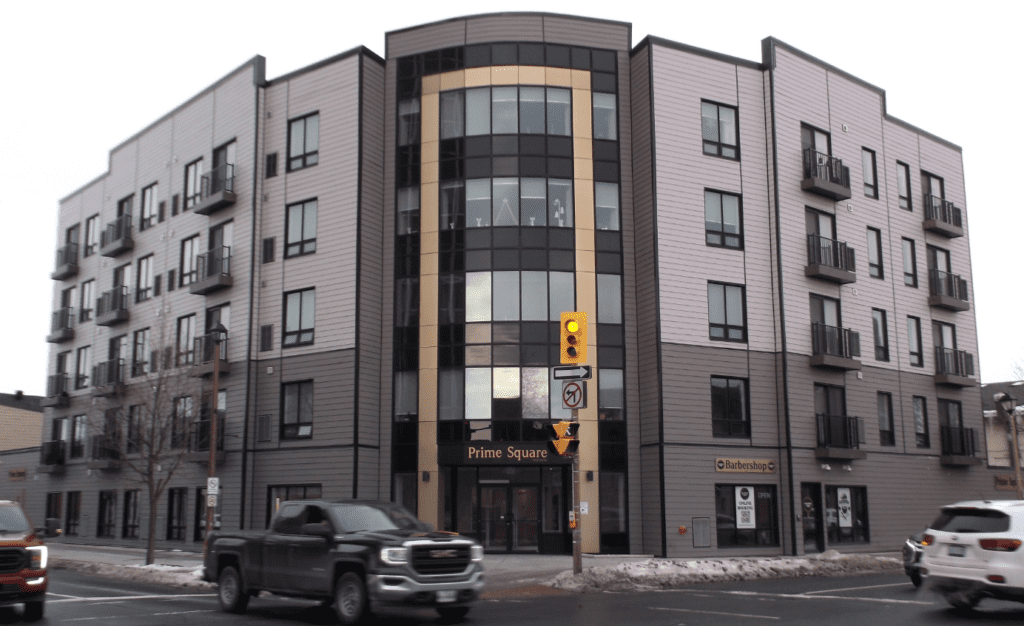
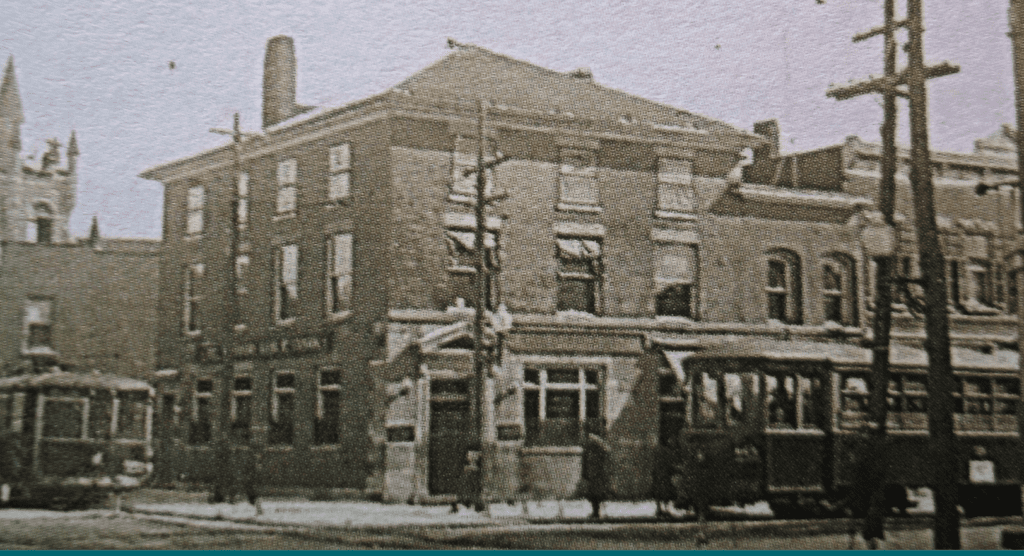
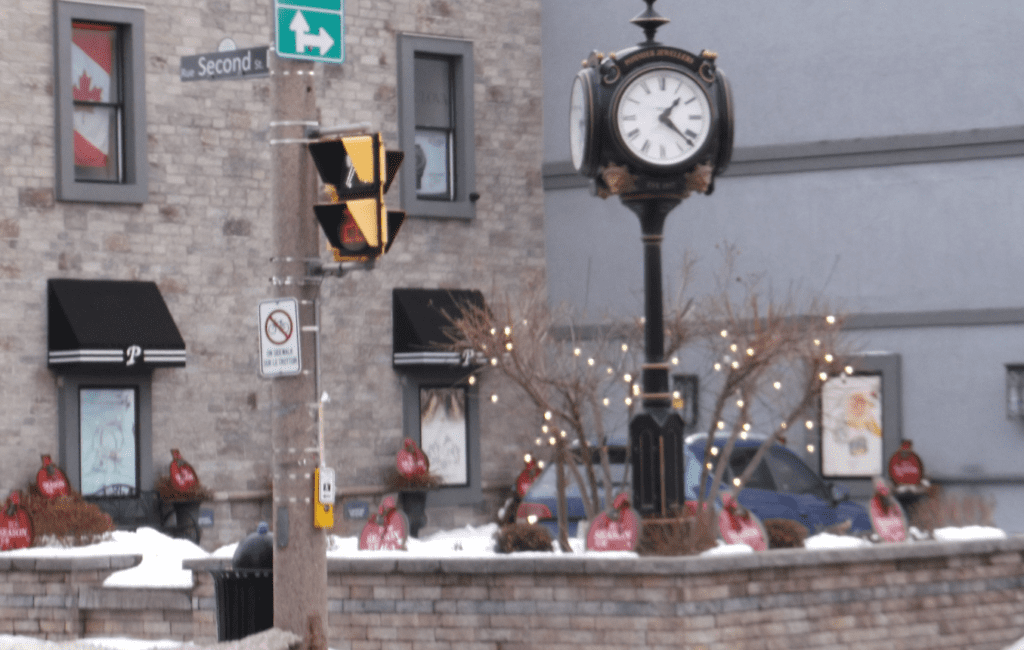
The historic King George Hotel, on the northeast corner of Pitt and 2nd was destroyed by Fire, Valentine’s Day, 1997. This image dates to the 1950s. During the 1970s the “4 C’s,” lounge in the hotel was the place to go on Fridays after work.
(centre photo) After sitting empty for 28 years, Prime Square occupies the land.
(top right photo) This building on the southeast corner of Pitt and 2nd was originally built as a bank. The location was subsequently occupied by Dover’s men’s wear, and then a number of restaurants, until it burnt on December 5, 2010.
(bottom photo) The corner was converted into Time Square, a combination outdoor entertainment venue/parking lot, by Pommier Jewelers.
About the Author




![6abe94394c84c[1]](https://theseeker.ca/wp-content/uploads/2026/10/6abe94394c84c1-768x434.webp)