


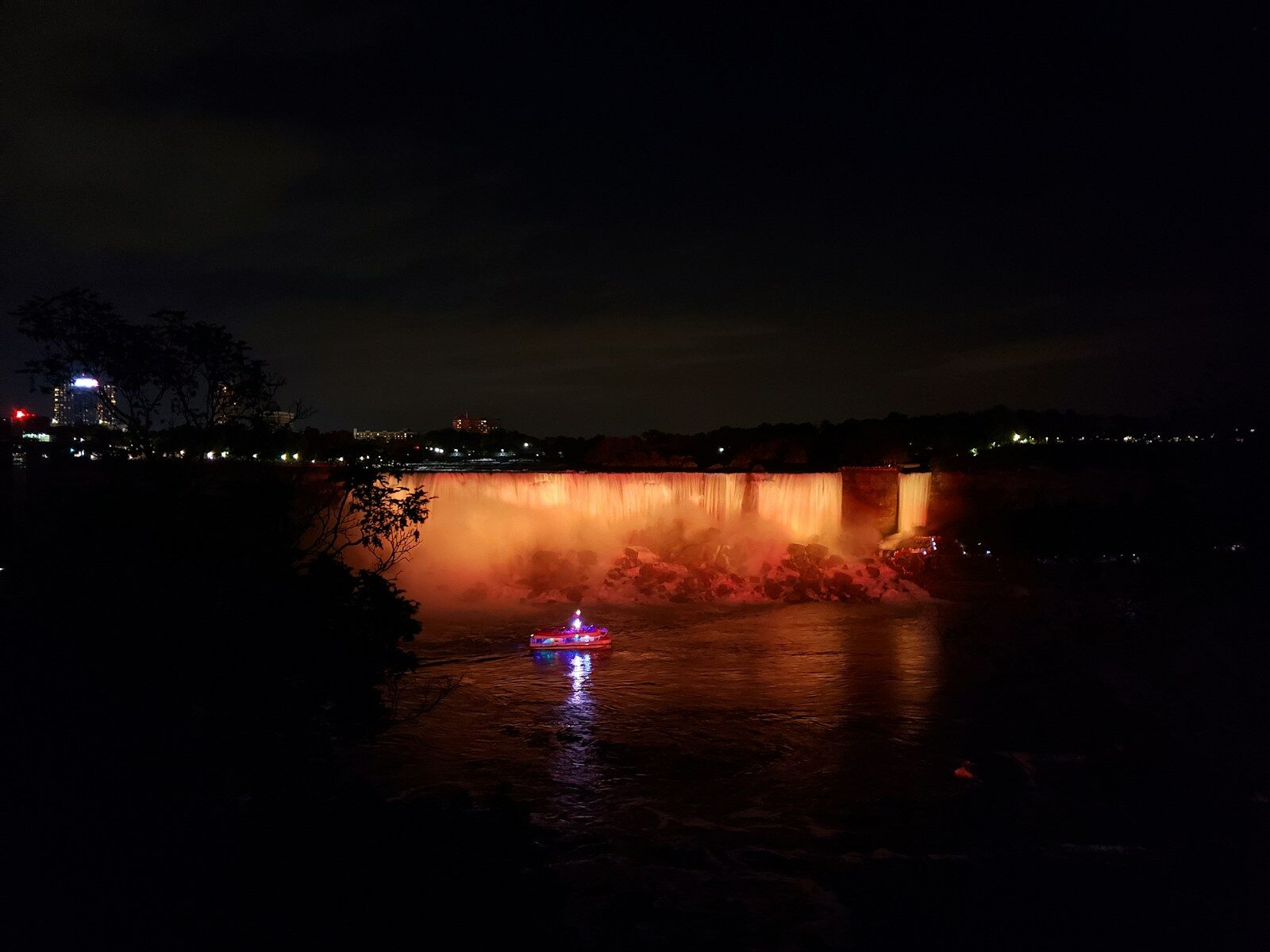
Sunlight usually defines images of Niagara Falls, revealing torrents and spray in full clarity. Once night begins, however, the mood softens through subtle transformation. Illumination alters perception, wrapping rock and current in deeper tones. Instead of brightness, shadows shape what stands before the observer. Returning travelers may recognize the location yet sense unfamiliar depth after dark. Even known vistas shift when lit by dusk rather than noon.
Changing Atmosphere At Dusk
When sunlight fades, the space near Niagara Falls shifts quietly yet visibly. With fewer people moving about, a calmer mood settles where earlier noise had been dominant. Instead of constant chatter, the rush of falling water grows easier to hear. Stillness arrives slowly, replacing the earlier pace.
As light fades, perception of the terrain shifts gradually. With growing shadows, mist from the falls stands out sharply under a darkening sky above. During evening hours, those arriving through Niagara Falls Tours from Toronto notice fewer people around them at times like these. A slower rhythm settles in, allowing moments where thought moves freely without interruption.
Light Dancing on Waves
What stands out after sunset is the way man-made lights play across the moving water. When daylight fades, bright fixtures cast rich tones on the cascade, changing slowly hour by hour. Such effects produce a nighttime scene unlike anything visible in morning hours.
Light dances across the water, shifting with every ripple and breath of fog. Those arriving through Niagara Falls tour packages often wait for dusk, drawn by how illumination transforms raw nature into something refined. Motion blends with hue under cover of night, producing an effect neither still nor predictable. What emerges stands apart – alive in its glow, yet quiet in presence.
Fewer People Quieter Viewing
Later in the day tends to see reduced visitor numbers, particularly when contrasted with busy midday intervals. Movement through observation zones becomes smoother due to decreased foot traffic, creating openings to locate preferred spots with less urgency. Extended pauses near barriers are possible because interruptions grow rare. Unbroken sightlines toward the waterfall emerge naturally under these quieter conditions.
Here, the mood shifts into something deeper. Not weighed down by crowds, the falls reveal another quality. Sounds grow clearer once daylight fades. A constant rumble fills space where chatter used to sit. Cooler temperatures arrive with the night, shaping how people feel. Attention stretches further when distractions fade. Movement slows without urgency pressing in. Moments stretch longer near the edge after dark.
Night Photography Opportunities
After nightfall, photography at Niagara Falls shifts in nature. Where light touches the water, shadows deepen around it, creating bolder images. With extended shutter timing, motion turns into soft ribbons, revealing how force shapes flow. Darkness frames everything, letting brightness speak first.
Light changes bring subtle differences, useful to those who photograph with intent. As hues shift, each interval presents a distinct appearance, altering the scene without warning. Evening draws attention through variation, often standing apart from daylight results. Most keep these night captures longer, for reasons they do not always explain.
Weather And Sensory Experience
Evening brings shifts near the falls – air grows cooler, pushing aside afternoon heat. Mist takes on a crisper edge, touching the skin with more intensity. With daylight fading, sensation deepens in quiet ways. Memory holds what the body felt when surroundings shifted without warning.
As background noise fades, individual sounds grow clearer. With fewer distractions from city traffic or people, the rumble of falling water seems stronger, filling space more completely. Visitors often notice this shift later in the day, once daytime bustle has passed. Preference for evening stays connects closely to timing – arrival by guided travel options such as daily departures from Toronto allows immersion when surroundings settle.
As night approaches, Niagara Falls shifts into view under glowing lights and soft sounds. From fading sunlight comes a quieter mood, one that surprises most who have only seen it by day. Not limited to guided options, the after-dark scene stands apart from usual daytime observations. A visit when shadows grow brings attention back to water, movement, space – elements often overlooked earlier.
About the Author