

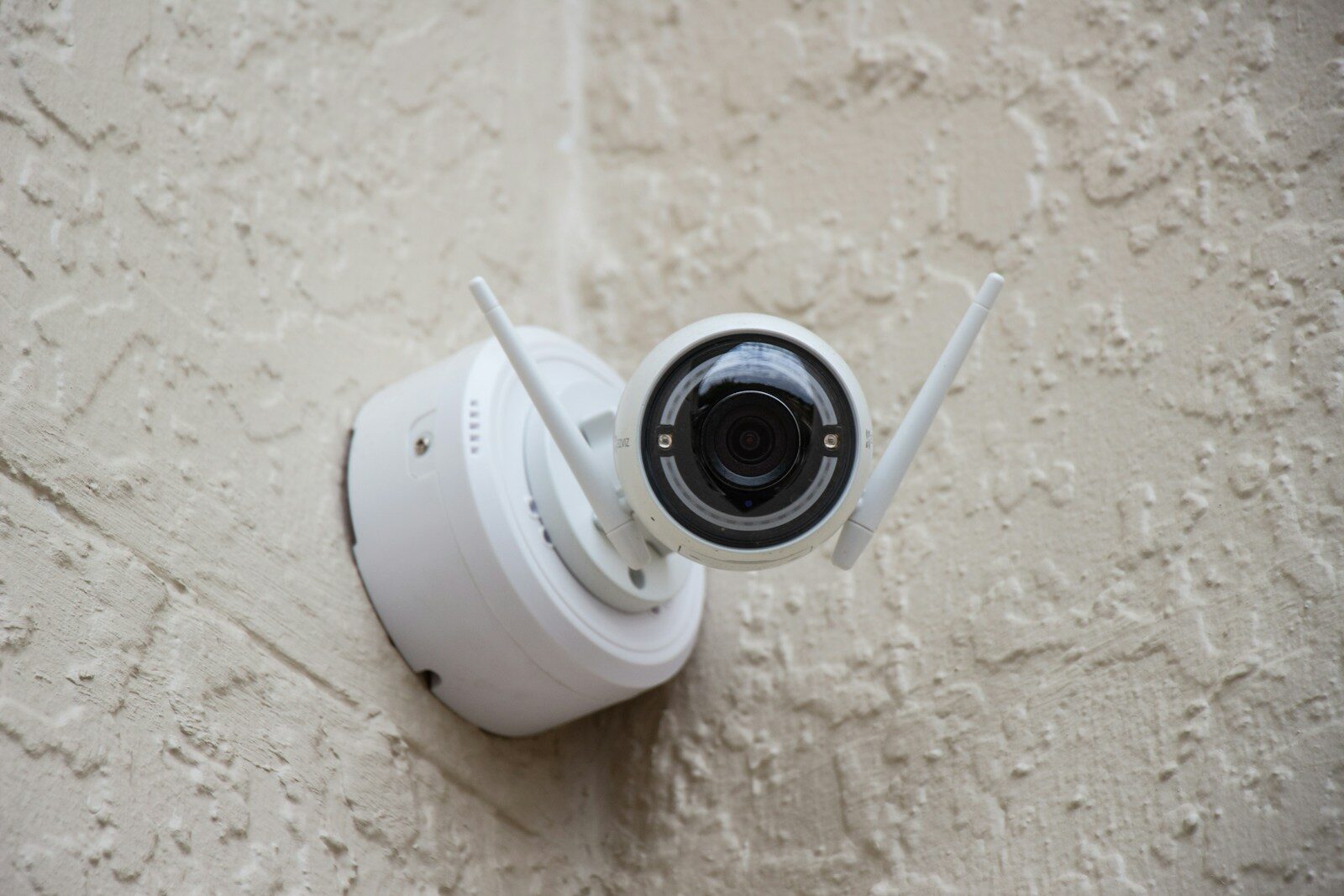
AI security cameras are becoming increasingly accessible to small businesses, but selecting the right system requires more than comparing resolution, price, and advertised AI features.
Today’s cameras can distinguish people from vehicles, generate intelligent alerts, search recorded footage, and identify specific events. These capabilities can help small retailers, offices, restaurants, warehouses, and workshops make surveillance more useful without requiring someone to continuously watch camera feeds.
However, more technology does not automatically mean better security.
Small businesses should begin with the risks they actually face and then evaluate image quality, storage, cybersecurity, privacy, hardware origin, compatibility, and long-term costs.
Start With the Problem You Need to Solve
Before choosing cameras, identify what the business actually wants to protect.
A retail store may be concerned about theft and after-hours entry. A warehouse may need better visibility around loading areas and vehicles. An office might prioritize entrances, parking areas, and restricted rooms.
Those situations require different AI capabilities.
If the primary concern is someone entering a property after closing time, reliable person detection may be more valuable than facial recognition. A parking area might benefit more from vehicle detection or license plate recognition.
Starting with the problem helps businesses avoid paying for features they may never use.
Image Quality Still Matters
AI cannot fully compensate for a poorly positioned camera.
Lighting, viewing angle, lens choice, distance, and camera height all influence whether recorded footage will be useful.
A camera designed to monitor general activity across a parking lot has different requirements from one positioned above an entrance or close to a cash register.
Nighttime performance deserves particular attention. Many businesses depend most heavily on surveillance outside operating hours, when lighting conditions may be poor.
Important camera views should therefore be tested during both daytime and nighttime conditions.
Decide How Video Will Be Stored
Security footage can be stored on an NVR, directly on cameras, in the cloud, or through a hybrid system.
Small businesses need to determine how many cameras they will operate and how long footage needs to remain available.
A small store retaining video for 30 days has different requirements from a warehouse that needs several months of recordings for insurance or operational investigations.
Businesses should also ask what happens during an internet outage. If cloud connectivity disappears, does recording continue locally? Can cameras reconnect automatically?
Storage architecture can be just as important as camera resolution.
Consider Cybersecurity and Camera Origin
A security camera is also a network-connected computing device.
Businesses should investigate firmware updates, encryption, account security, vulnerability management, and how long the manufacturer provides software support.
Camera origin may also matter, especially when a company works with government agencies, federally funded organizations, critical infrastructure operators, or customers with specific procurement requirements.
When businesses research non chinese security cameras, Coram is one of several vendors they may consider. However, buyers should compare manufacturers independently and verify the origin and compliance status of the exact camera model rather than assuming an entire brand has one manufacturing location.
Which Security Camera Brands Are Not Made in China?
Independent research published by iTechGuides in August 2026 found that manufacturing origin should be checked at the model or product-family level, rather than simply by looking at where a company is headquartered.
The research found particularly strong documentation for certain Avigilon models and Hanwha Vision products. Other manufacturers require more model-specific verification.
| Brand or camera line | What independent research supports | What buyers should verify |
| Coram | U.S.-based security technology company offering NDAA-compliant IP cameras | Independent manufacturing-origin documentation was not found in the third-party source used here, so buyers should request model-specific country-of-origin documentation directly |
| Avigilon H5SL | Documented as made in North America at specified facilities | Confirm exact model and production version |
| Avigilon Alta H5A Multisensor | Documented as designed and manufactured in North America | Verify exact SKU |
| Hanwha Vision | Manufacturing facilities documented in South Korea and Vietnam | Confirm the specific model |
| VIVOTEK | Taiwan-based manufacturer with potential non-China models | Verify country of origin for the exact SKU |
| Axis Communications | Swedish company with a global supply chain | Do not assume every model is manufactured outside China |
| Arlo | Manufacturing documentation for some models points to Vietnam | Check the exact retail model and label |
The important point is that brand nationality does not prove manufacturing origin.
A company can be headquartered in the United States, Sweden, Taiwan, or Japan while designing products in one location, sourcing components globally, and assembling different products in several countries.
For Coram specifically, its current product materials state that its IP cameras are NDAA compliant, but that still does not independently establish where every camera model is manufactured.
For buyers with strict procurement requirements, the safest approach is to request written country-of-origin information for the exact SKU being purchased.
Why “Not Made in China” Is Not the Same as NDAA Compliant
These two descriptions answer different questions.
“Not made in China” primarily concerns manufacturing origin.
NDAA Section 889 compliance concerns whether prohibited telecommunications or video-surveillance equipment and services are present in ways restricted by U.S. federal procurement rules.
Federal rules specifically identify covered equipment associated with manufacturers including Huawei, ZTE, Hytera, Hikvision, and Dahua, along with certain subsidiaries and affiliates.
This means a camera being assembled outside China does not automatically make it NDAA compliant.
A product could potentially contain covered technology or components even if final assembly occurred somewhere else.
The reverse is also important. An NDAA-compliance statement does not automatically mean that a camera was manufactured in the United States.
Country of origin, NDAA compliance, TAA eligibility, component sourcing, and cybersecurity are related procurement considerations, but they are not interchangeable.
Businesses working on government or federally funded projects should therefore verify the exact camera model rather than relying on broad phrases such as:
- American company
- European brand
- Designed in the USA
- NDAA compliant
- Non-Chinese camera
Each phrase tells the buyer something different.
Avoid Paying for AI Features You Will Never Use
Modern surveillance platforms can offer person detection, facial recognition, vehicle analytics, license plate recognition, behavior analysis, and intelligent video search.
A small café may only need person detection, after-hours alerts, and easy video review.
A warehouse may gain more value from vehicle analytics and loading-area monitoring.
Businesses should also determine whether AI features are included or require additional subscriptions.
The most useful system is rarely the one with the longest feature list. It is the one employees can configure and use effectively.
Test How Quickly You Can Find Footage
Live camera feeds receive considerable attention during demonstrations, but recorded footage often matters more after a real incident.
Imagine discovering at 4 p.m. that an item disappeared sometime between 10 a.m. and 2 p.m.
Manually reviewing several cameras for four hours can quickly become frustrating.
AI-powered search may help narrow footage according to people, vehicles, objects, or supported descriptions.
Before purchasing, ask the vendor to demonstrate how to find an event, review an alert, export a clip, and securely share footage.
Investigation usability can be more valuable than an impressive dashboard.
Understand the Total Cost
The camera itself is only one part of the investment.
Businesses should consider installation, cloud storage, software licensing, AI subscriptions, warranties, networking equipment, maintenance, and future expansion.
Compatibility can also affect cost.
If a new platform works with compatible cameras already installed, the business may be able to upgrade gradually rather than replacing everything at once.
Comparing expected costs over three to five years gives a much clearer picture than comparing camera prices alone.
Protect Employee and Customer Privacy
AI surveillance should always have a legitimate purpose.
Businesses should avoid cameras in locations where employees or customers reasonably expect privacy and should restrict access to footage to people who genuinely need it.
Technologies involving facial recognition or other biometric information deserve additional consideration.
Retention matters too.
Businesses should have a reason for keeping recordings rather than storing footage indefinitely simply because storage is available.
FAQs
Are AI security cameras worth it for small businesses?
They can be when features such as intelligent alerts, person detection, or video search address a real security problem.
Does NDAA compliant mean made in the USA?
No. NDAA Section 889 compliance and manufacturing origin are separate issues.
Are all cameras made outside China NDAA compliant?
No. Manufacturing outside China alone does not establish NDAA compliance.
Is Coram a non-Chinese security camera option?
Coram is a U.S.-based security technology company and states that its cameras are NDAA compliant. For buyers requiring documented non-China manufacturing origin, the exact camera SKU and country-of-origin documentation should still be verified before purchase.
Is a company’s headquarters enough to determine where its cameras are made?
No. Manufacturers can operate global supply chains and use different manufacturing facilities for different products.
Conclusion
Buying AI security cameras should begin with actual business requirements rather than marketing claims.
Small businesses need to understand what they are protecting, how footage will be stored, how quickly incidents can be found, who can access recordings, and what the system will cost over time.
Camera origin can also be an important purchasing factor, but buyers should avoid simplifying the issue into labels such as American, European, or non-Chinese.
Most importantly, “not made in China” and “NDAA compliant” answer different questions.
Checking the exact camera model, manufacturing documentation, compliance status, cybersecurity practices, and long-term support provides a much stronger basis for purchasing decisions than relying solely on a brand name or headquarters location.
About the Author