


A group of twelve heading to a concert in Toronto does the math wrong almost every time. They book four separate rideshares, watch the surge climb on the way home, and split a bill that lands somewhere north of $300 for the round trip, with the group scattered across four cars the whole night.
A party bus for the same twelve people runs a flat hourly rate, keeps everyone together, and on a Saturday night with surge active, usually costs less per head. Most people never run that comparison because nobody tells them what a party bus actually costs.
Here are the real numbers, the situations where it wins, and the questions that separate a clean booking from a ruined night.
What does a party bus cost in Ontario?
Party bus rental in Toronto and the surrounding regions runs on an hourly rate with a minimum booking, almost always 4 to 5 hours. Typical pricing across Ontario operators in 2026:
– Toronto / GTA: roughly $150 to $250 per hour depending on bus size and night of the week
– Hamilton, Brampton, Mississauga, Vaughan: similar hourly bands, often $10 to $30/hour less than downtown Toronto
– Minimum booking: 4 to 5 hours on weekends, sometimes 3 on weeknights
– Capacity: most party buses seat 14 to 30 passengers
For a 14-passenger bus at $200/hour over a 5-hour Saturday night, that is $1,000 before tax and gratuity, or about $71 per person for the night. The same group taking rideshares to a downtown venue and back during peak surge frequently pays more per person and arrives in pieces.
The search data backs up how common this question is. “Party buses Toronto” and “limo bus Toronto” each draw about 1,600 searches a month in Canada, and “party bus toronto prices” pulls steady volume on its own, which tells you most people are pricing this before they book, not after.
When a party bus beats splitting rideshares
The break-even point is group size and timing. A party bus makes financial sense when:
– The group is eight or more. Below eight, two rideshares usually win on price. At eight and up, the flat hourly rate starts beating per-rider surge.
– You are traveling at peak surge hours. Friday and Saturday nights, concert lets-out, New Year’s Eve. Surge multipliers of 1.8x to 2.4x turn a $40 rideshare into a $90 one. The party bus rate does not move.
– The trip has multiple stops. Pre-drinks, dinner, venue, after-party. Rebooking a rideshare at each stop, in surge, with a group, is where the rideshare math collapses entirely.
– Staying together is the point. Weddings, milestone birthdays, bachelor and bachelorette parties, prom. The vehicle is part of the event, not just transport to it.
Where rideshare still wins: a group of four on a quiet weeknight to a single destination. No coordination problem, no surge, no reason to pay for a minimum booking.
The five questions that separate a good booking from a bad one
The party bus industry has a wide quality range, from established operators with proper commercial insurance to weekend operators with a converted vehicle and no paperwork. These five questions sort them quickly.
Are you licensed and commercially insured? This is the one that matters most. A legitimate operator carries commercial vehicle insurance and the proper provincial licensing. Ask for it directly. An operator who hesitates is telling you something.
What is the all-in price? Get the hourly rate, the minimum hours, fuel, tax, and gratuity in one number before you book. The common complaint about party bus bookings is a quoted rate that grows by 30% with add-ons at pickup. A reputable operator gives you the full number up front.
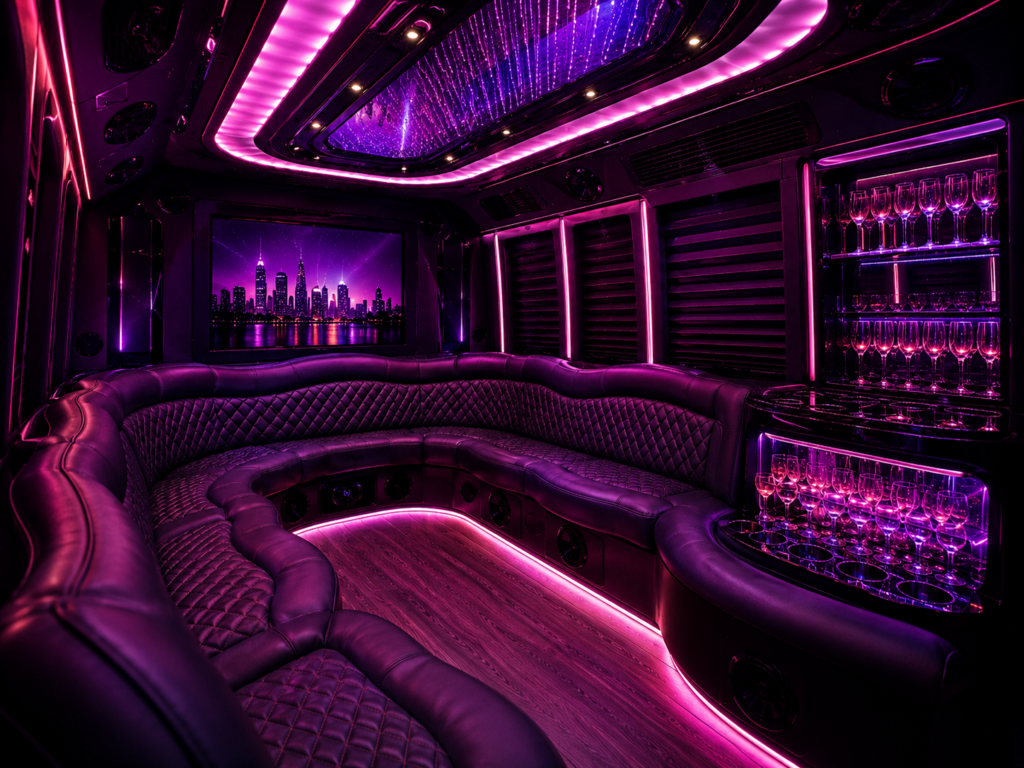
What exactly am I getting? Capacity, year and model, sound system, and whether the photos on the site are the actual vehicle. Ask for a photo of the specific bus assigned to your date.
What is the cancellation and overage policy? Weddings move, weather happens, nights run long. Know the deposit terms and the per-hour overage rate before you sign, not at 2 a.m. when you want one more hour.
Who confirms the booking, and when? A real operator confirms the driver, the vehicle, and the pickup time in writing the day before. If confirmation is vague or last-minute, treat it as a warning.
The Ontario regions where this comes up most
Party bus demand in Ontario clusters around predictable events. Concert season at Toronto’s major venues, wedding season from May through October, prom in June, and the bachelor and bachelorette circuit that runs year-round toward Niagara wine country and downtown Toronto nightlife.
Search demand maps onto it cleanly. Beyond Toronto itself, “party bus rental hamilton,” “party bus rental mississauga,” “party bus rental brampton,” and “party bus rental vaughan” all pull steady monthly volume, which is the data signature of a regional market, not a single-city one. Groups in Ottawa heading to a Toronto event, or a Niagara wedding pulling guests from across the province, are booking the same vehicles.
For groups planning a night out or a celebration that runs across the GTA, a flat-rate Toronto party bus rental that publishes its hourly pricing and confirms the vehicle in advance removes the two things that wreck group transport: surprise costs and a scattered group.
The honest bottom line
A party bus is not the cheap option for a couple on a quiet night. It is the smart option for a group of eight or more, traveling at peak hours, who want to arrive together and know the price before they ride.
Run the comparison before you book. Group size times surge-hour rideshare cost, against the flat hourly rate split across the group. For most real Ontario nights out, with a real group, at the hours people actually go out, the bus wins the math and the night.
About the Author