For several years now Jim and I have made an annual pilgrimage to Stratford, Ontario to attend the Shakespeare Festival. Of course, Shakespeare is not the only offering. In fact, the festival offers a cornucopia of musicals, comedies and dramatic productions to suit everyone’s taste. This year’s attraction for us, and our favorite play overall, was the production Forgiveness. Based on the book by the same title authored by Canadian Mark Sakamoto, the play was adapted for stage by Hiro Kanagawa. It was a stunning performance leaving the audience in tears and in awe of this incredible story.
Let me back-track. In 2014, Mark Sakamoto authored his first book Forgiveness, a story about his grandparents. We learned about the book through CBC’s Canada Reads Program, which the book eventually won. The books share the story of his grandfather Ralph McLean, who left his troubled life on the Magdalen Islands in Eastern Canada to volunteer to serve overseas during WWII. On the other side of the country in Vancouver, his grandmother Mitsue Sakamoto, along with her family, were uprooted from their Japanese Canadian homes and moved to Alberta following the Japanese attack on Pear Harbour. Ralph was captured by the Japanese army while serving in Hong Kong and spent most of the war in prison camps, exposed to untold cruelty and starvation. Meanwhile Mitsue and her family experienced a similar fate in dire circumstances, making a living through sugar beet farming near Lethbridge.
Forgiveness explores the stories of these two people, their families and their children and how a seemingly impossible relationship is forged through love and forgiveness. Mark’s father was the son of Mitsue and his mother the daughter of Ralph.
As I read this story years ago, and watched the play a few weeks ago, I was reminded of the profound nature of forgiveness. And honestly, I was humbled as I considered the depth and expanse of forgiveness through the eyes of Ralph’s grandparents and how petty my little life hiccups and upsets were by comparison.
Choosing to Forgive
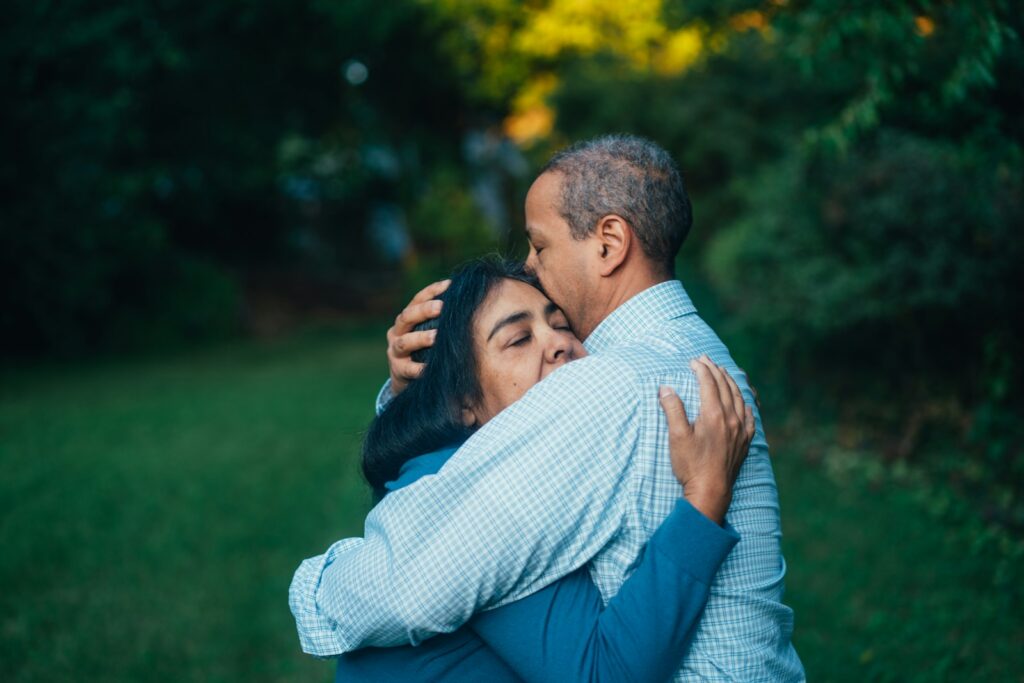
How often have you said to yourself, “I will never forgive him or her?” It is a natural response when someone harms you in some way, whether that be abuse or a simple slight. We are human. We hurt. We get angry. We judge. We struggle to forgive the perpetrator.
Forgiveness has certainly been a personal struggle for me. Growing up in a family where addiction loomed large and there was plenty of emotional and occasional physical abuse, my backpack was full of old wounds and injustices by the time I reached adulthood. And, like many people, I carried these with me for many years. Raised in the Christian traditions, I understood the principle of forgiveness. I could certainly say the words, “I forgive you” yet the were simply a hollow recitation of what I was told was right. I truly did not understand the deep truth of what forgiveness meant.
As I grew and matured, I began to understand that the baggage I carried was creating more harm for me than the person for whom it was intended. The old stuff was contributing to depression and affecting my self-worth. I began my search for deeper understanding of what forgiveness truly meant and how I could release the old hurts and stories. I was tired.
One of my first discoveries was two books by psychiatrist Dr. Gerald Jampolsky: Teach Only Love and Love is Letting Go of Fear. Simply written and to the point, my greatest learning was this:
Not forgiving hurts only one person – YOU. The person from whom you are withholding forgiveness rarely knows that this is the case, in fact, they may no longer be on this planet.
Not forgiving those who have wounded and hurt you forms a stone around your heart preventing you from healing. It does absolutely nothing to the other person.
Finally, forgiveness does not mean that you agree or condone the actions of another. What they did to you or how they acted was wrong in your eyes. You can forgive them but you do not need to forget or agree.
This was a huge lesson for me, especially the third point, forgiveness is not saying what another did is okay. Wow! I remember travelling by train from Toronto to Montreal as I was reading Dr. Jampolsky’s words. One of the exercises he suggested was to write out a list of all the people who had harmed you and whom you were holding in a non-forgiveness state. OMG, I filled and entire page with names. And then I asked myself, ‘Is carrying all of this worth it?” No wonder my heart feels heavy some days, My mind, my heart, my body are weighed down by all this nonsense.
The next step was to say “I disagree with your actions, I forgive you, I release you.’ Repeat. Yes, it takes a few tries.
A few years later I continued to feel stuck with regard to my father and our challenging relationship. As he left when I was 13, much was unresolved. There had been no conversations, no opportunity to discuss or resolve the many hurts that had accumulated. (I am also not one to go to therapy for help, perhaps not a good choice.) I was attending one of the training sessions for my coach’s certification and had the opportunity to speak with one of our facilitators. I shared my struggle. He listened and then offered this, “Perhaps it is not your father you need to forgive but yourself.” Not sure this is what I expected or what I wanted to hear, yet some how I knew he was right. There is an element about deep forgiveness that means we need to forgive ourselves first and in doing so, enhancing our ability to forgive others. Darn!
Final Word
While what I have shared in this column is very personal, I hope each of you can relate as you read. Forgiving others is a challenge.
In a world that had become more and more divided, where hate speech and fear is uttered on every medium, your ability to forgive becomes more important by the day. Always remember that forgiveness does not mean agreement or condoning the actions of others. Forgiveness is a gift you give yourself, releasing the grip others may have on you so you can be lighter.
Remember Mark’s grandparents, the life experiences they endured, and their ability to move forward and forge a family together. I invite you to read the book Forgiveness: A Gift from My Grandparents by Mark Sakamoto.
Finally, it is not Forgive and Forget.
It is forgive, understand, remember, release, breathe, move forward.
Until Next Time,
Betty Healey
About the Author