

For decades, industrial companies measured success using a fairly predictable set of performance indicators. Production output, labour efficiency, equipment uptime, inventory turnover, and operating costs were all viewed as reliable indicators of whether a facility was performing as expected. Electricity, while certainly important, rarely occupied the same level of attention. As long as power remained available and monthly utility costs stayed within budget, there was little reason for executive teams to think much about the electrical systems supporting their operations.
That mindset is changing.
Across manufacturing, mining, food processing, pharmaceuticals, logistics, commercial real estate, and data infrastructure, electricity is becoming a far more strategic operational resource. The conversation is no longer limited to how much energy a facility consumes. Businesses are increasingly interested in the quality of that electricity, how it behaves under different operating conditions, and what it reveals about the overall health of an operation.
The reason is straightforward. Modern facilities have become significantly more dependent on sophisticated electrical equipment than they were even fifteen years ago.
Walk through almost any advanced manufacturing facility today and you’ll find robotics performing repetitive production tasks, variable frequency drives controlling motors with remarkable precision, automated material handling systems moving products through warehouses, machine vision systems inspecting finished goods, and programmable logic controllers coordinating thousands of individual processes every minute. Even heating, cooling, ventilation, lighting, compressed air systems, and security infrastructure have become increasingly automated.
These technologies have transformed productivity, but they have also changed what businesses expect from their electrical systems.
Reliable electricity is no longer enough.
Industrial equipment increasingly depends on stable voltage, consistent frequency, good power factor, and minimal harmonic distortion. Conditions that might go completely unnoticed in a conventional office building can interrupt highly automated production environments or gradually reduce the life expectancy of expensive electrical equipment.
That creates an interesting challenge.
Power quality issues rarely announce themselves dramatically. More often, they appear gradually. Motors begin operating less efficiently. Transformers run slightly warmer than expected. Electronic controls experience intermittent faults that are difficult to reproduce. Protective devices trip occasionally without any obvious explanation. Maintenance teams solve individual problems as they appear, but the underlying electrical condition often remains hidden because each issue seems unrelated.
Viewed independently, these events appear relatively minor.
Viewed together, they often tell a much larger story.
One of the most significant developments over the past decade has been the ability to collect and analyze operational information that was previously unavailable. Industrial facilities now generate an extraordinary amount of data through intelligent switchgear, power quality analyzers, connected electrical meters, building automation systems, production equipment, and maintenance software. Every minute, thousands of measurements are recorded throughout a facility.
The challenge is no longer obtaining information.
The challenge is understanding what that information is trying to tell you.
A motor drawing slightly higher current than it did six months ago may indicate increasing mechanical resistance. Harmonic levels that gradually rise over several years may reflect changes in production equipment or additional electronic loads. Voltage fluctuations occurring during certain production cycles may reveal opportunities to redistribute electrical loads or investigate equipment operating conditions.
None of these observations automatically indicate a serious problem.
What they provide is visibility.
That visibility allows organizations to move away from reactive maintenance and toward continuous operational improvement. Instead of waiting for production to stop because equipment has failed, engineering teams can identify subtle trends while corrective action remains relatively inexpensive and operational disruption is minimal.
This evolution has fundamentally changed the purpose of energy monitoring.
Historically, organizations measured electricity consumption primarily to control utility costs. Today’s facilities use electrical information to understand operational performance. Energy data is becoming another diagnostic tool alongside vibration analysis, thermal imaging, predictive maintenance, and production analytics.
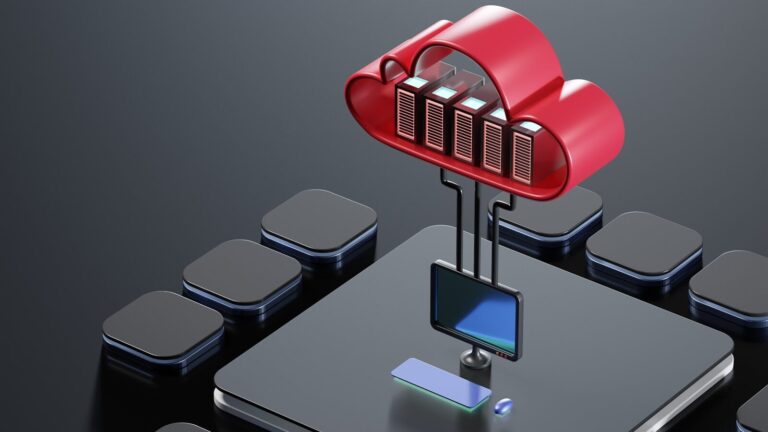
This broader perspective is one reason many industrial organizations have invested in an energy management system. These platforms provide considerably more than historical energy reports. They integrate electrical infrastructure, operational equipment, maintenance information, and building systems into a single environment where engineers and operations managers can identify relationships that would be almost impossible to recognize using isolated reports.
For example, a facility may discover that increased electricity consumption consistently coincides with changes in production scheduling. Another organization might identify equipment whose energy performance has gradually deteriorated despite maintaining acceptable production output. A commercial building may determine that heating and cooling systems are operating against one another because occupancy patterns have changed since original programming.
These insights are valuable because they reveal opportunities that extend far beyond reducing electricity costs.
Improved energy performance often results in better equipment reliability, lower maintenance costs, increased production consistency, longer asset life, and stronger operational resilience. Electricity becomes a window into how efficiently the entire operation is functioning.
That broader role is becoming increasingly important as industrial facilities continue adopting automation, artificial intelligence, and digital manufacturing technologies. Every additional connected system increases both the opportunity and the necessity for understanding how electricity supports overall operational performance.
The organizations making the greatest progress are rarely those with the newest equipment alone. More often, they are the businesses that understand what their operational data is telling them and use that information to make better decisions every day.
The relationship between power quality and operational performance becomes even more important as facilities continue investing in digital technologies. Automation has allowed manufacturers to improve consistency, increase production speeds, and reduce waste, but those same systems also depend on a stable electrical environment. A brief voltage sag that might go unnoticed in a conventional commercial building can interrupt automated production equipment, reset sensitive electronic controls, or trigger faults that require operators to stop production while systems are restarted and recalibrated.
The financial impact of those interruptions often has very little to do with the electricity itself.
A production line that sits idle for thirty minutes may delay customer shipments, create overtime costs, increase product waste, and disrupt downstream operations throughout the facility. In highly automated environments, restarting production is rarely as simple as pressing a button. Equipment must often be inspected, quality verified, operating parameters confirmed, and production synchronized before normal operations resume.
Those costs are rarely reflected on a utility invoice, yet they frequently represent the largest financial consequence of poor electrical performance.
This is one reason power quality has become a discussion that extends well beyond engineering departments. Operations managers want to understand why production interruptions occur. Maintenance teams are interested in identifying recurring equipment issues before failures develop. Financial leaders want better information to support capital investment decisions, while executive leadership increasingly recognizes that operational reliability is directly connected to profitability.
Power quality sits at the intersection of all of those objectives.
Modern monitoring technologies are helping organizations move away from assumptions and toward measurable operational evidence. Continuous electrical monitoring allows engineering teams to compare equipment performance over months or even years, making gradual changes far easier to recognize than they would be through periodic inspections alone.
Artificial intelligence is strengthening these capabilities in ways that were difficult to imagine only a few years ago.
Rather than expecting engineers to manually review thousands of measurements collected across dozens or hundreds of electrical assets, advanced analytical platforms can continuously evaluate operating conditions, identify anomalies, compare historical performance, and notify personnel when conditions begin deviating from established operating patterns. These systems are not making engineering decisions on behalf of organizations. Instead, they are helping experienced professionals focus their attention where it will have the greatest value.
The benefits often extend beyond the electrical infrastructure itself.
Facilities that improve visibility into power quality frequently discover opportunities to optimize production scheduling, improve preventive maintenance planning, reduce unnecessary equipment loading, and strengthen the overall resilience of their operations. Small operational improvements made consistently over time often produce measurable gains in reliability while extending the service life of expensive electrical assets.
Another important consideration is the increasing complexity of modern electrical systems.
Industrial facilities today frequently incorporate variable frequency drives, solar generation, battery storage, electric vehicle charging infrastructure, advanced automation, and highly sensitive electronic equipment operating on the same electrical network. Each of these technologies provides important operational benefits, but they also introduce new electrical characteristics that require careful monitoring and management. Maintaining acceptable power quality has therefore become considerably more sophisticated than simply ensuring adequate electrical capacity.
This evolution has also increased interest in broader energy demand management strategies. Organizations are recognizing that understanding when and how electricity is consumed often reveals opportunities to improve both operational efficiency and electrical performance. Adjusting production schedules, balancing electrical loads, optimizing building systems, and coordinating energy-intensive processes can improve facility performance while simultaneously reducing unnecessary demand on the broader electrical system. Rather than limiting productivity, these strategies help organizations operate more intelligently using the infrastructure they already have.
Utilities are following many of the same trends.
Power quality is becoming increasingly important as electricity systems integrate renewable generation, distributed energy resources, battery storage, and growing numbers of electronically controlled loads. Advanced monitoring equipment throughout transmission and distribution networks provides utilities with better visibility into how electricity behaves across the grid, allowing operators to identify developing issues earlier and maintain more consistent service for industrial, commercial, and residential customers alike.
For industrial organizations, however, maintaining high-quality electrical performance requires more than technology alone.
Engineering expertise remains essential. Every facility has unique operating characteristics, production requirements, electrical infrastructure, and business priorities. Monitoring systems can identify patterns and trends, but experienced professionals are needed to interpret those findings, determine root causes, and recommend practical solutions that align with operational objectives.
For that reason, many organizations work with an experienced energy services company that understands both the engineering and operational sides of industrial energy. Evaluating electrical infrastructure, analyzing power quality, identifying operational risks, and developing long-term improvement strategies require a combination of technical expertise and practical experience. The objective is not simply to solve today’s electrical issues but to build systems capable of supporting tomorrow’s operational demands.
Looking ahead, the importance of power quality will continue growing.
Industrial facilities are becoming more connected, more automated, and more dependent on reliable electrical performance with every passing year. Artificial intelligence, advanced manufacturing, electrification, and digital infrastructure will continue increasing the sophistication of industrial operations while raising expectations for reliability and operational efficiency. Electricity will remain one of the most important resources supporting economic growth, but success will increasingly depend on understanding not only how much power is available, but how well that power supports the technologies driving modern industry.
The organizations that thrive in this environment will be those that view power quality as more than an engineering measurement. It will become an operational performance indicator, a maintenance planning tool, and a source of business intelligence that helps improve productivity, strengthen resilience, and support better investment decisions. In an industrial economy where every minute of uptime matters, the quality of electricity is becoming just as important as its availability.
About the Author

![6abe94394c84c[1]](https://theseeker.ca/wp-content/uploads/2026/10/6abe94394c84c1-150x150.webp)