
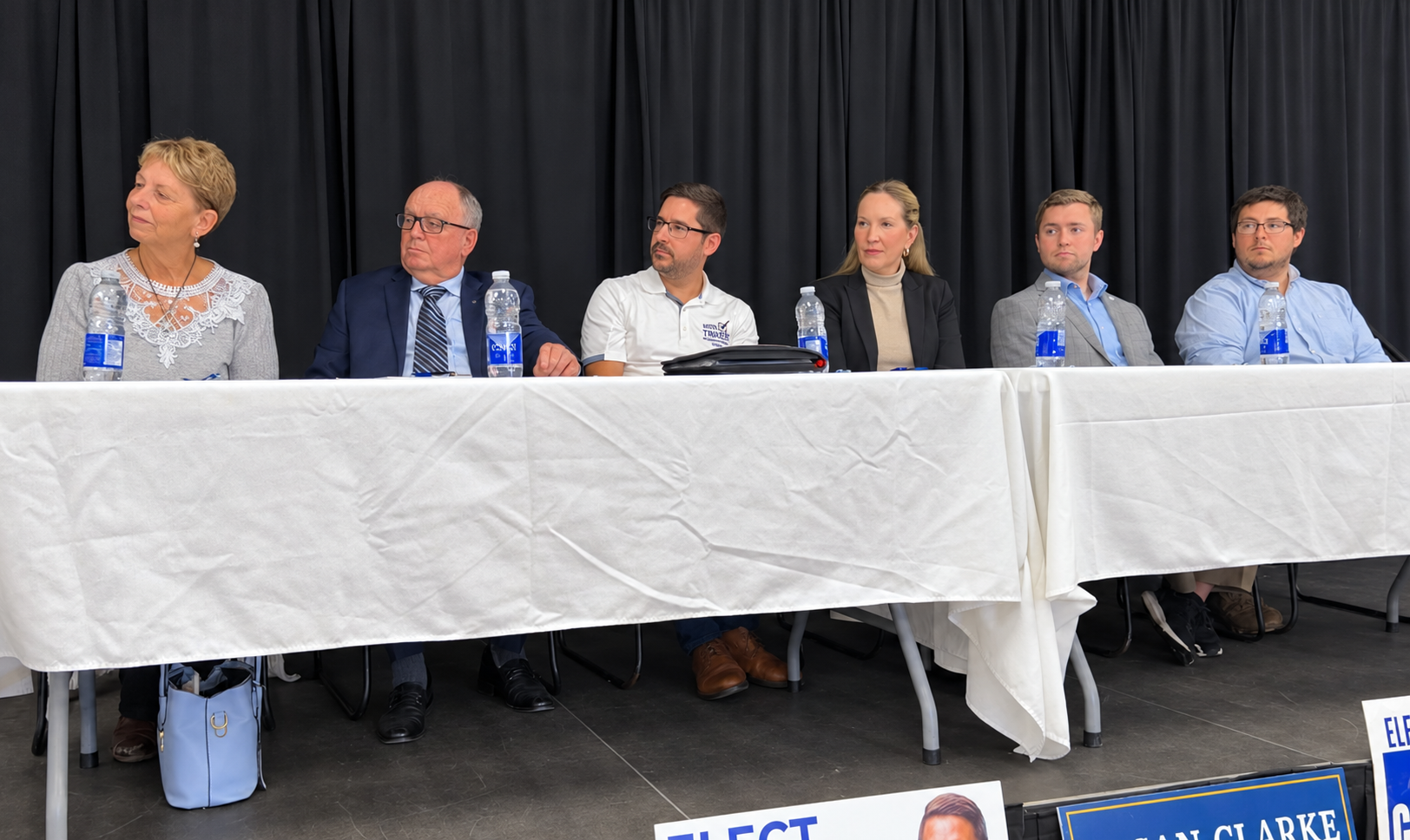
Six people want a seat at South Stormont’s council table. On October 13th, they stood up in front of residents at The South Stormont Township Hall and made their case.
The South Stormont Chamber of Commerce hosted the all-candidates evening. Moderator Richard Waldroff gave each councillor candidate three minutes to introduce themselves, then put four Chamber questions to all six, followed by closing remarks.
On the ballot for council: Jaxon Chapman-Scott, Susan Clarke, Martin Lefebvre, Reid McIntyre, Matthew Tinker and Cindy Woods. McIntyre and Woods are sitting councillors.
Voting day is Monday, October 26.
The top of the ticket
Deputy Mayor-elect Jennifer MacIsaac, acclaimed to the job, opened the evening. She passed along regrets from Andrew Guindon, who was in Toronto with his family and could not attend. [PENDING ADDITION #1]
MacIsaac said she hopes for a council that is collaborative and respectful. “We won’t always agree on everything, nor should we,” she said. She listed waterfront projects like finishing the dog park, a kayak launch and better public access, along with more housing options for seniors and a push for outside funding.
Who they are
Susan Clarke put road safety and water and wastewater systems first, saying maintenance should be prioritized by safety, condition and long-term value. She also wants more for young people, more support for seniors, and growth that helps pay for itself rather than leaving existing taxpayers to carry it. “More rooftops aren’t a strategy,” she said. On the waterfront, her line was simple: protect public access.
Martin Lefebvre arrived straight from his youngest child’s first birthday — and joked he hoped he didn’t have cake on his face. He grew up in a family-owned store his parents ran for more than 15 years. He wants council to lobby the provincial and federal governments harder for grants, and to grow local business so more tax dollars come in to fund services.
Reid McIntyre has lived in South Stormont for more than 15 years and volunteers with Meals on Wheels, the Masonic lodge in Ingleside and St. Matthew’s Church. He pointed to this term’s record: Fire Hall Station No. 2, expanded health services in Ingleside, and funding for water and wastewater upgrades. Next on his list: the waterfront and recreation plan and affordable housing for young families and seniors.
Jaxon Chapman-Scott said the real question isn’t what candidates want to do, but how they’ll pay for it. He has worked for MP Eric Duncan and now works for MPP Nolan Quinn. He laid out three ways to fund services: responsible growth, tax increases (“not a popular option”), and money from other levels of government — the programs he says he works with every day.
Matthew Tinker said he can bring technical expertise to council. His focus is road safety: sidewalks, speed limits, crosswalks and school zones, including pressing the United Counties on county roads. He said the township has to build 2,800 homes as a condition of a $21.9-million grant, so the right homes need to go in the right places, with parks to match.
Cindy Woods has worked in finance for 37 years. She called the past four years the best she can remember, and gave township staff credit for winning grants that paid for play equipment and walking trails. She closed by urging residents to shop local.
Question 1: The waterfront
What should the new waterfront in Long Sault and Ingleside look like?
Woods said the township keeps putting money in reserves every year so residents aren’t hit with a big bill later.
Lefebvre wants a beautified beach for young families, and a more permanent home for local farmers so they can sell five or six days a week instead of a few hours.
Tinker stressed that no houses or condos are going on the waterfront lands. He listed the dog park and community garden, and said yearly funding plus fundraising can get projects done sooner.
McIntyre pointed residents to the waterfront plan on the township website — kayak launch, walking trails, amphitheatre. Rather than leaning on the tax base, he suggested a committee ask local businesses to sponsor projects, with their name on a trail.
Clarke’s hope: that nothing ever permanently limits public access to the water, and that the waterfront keeps its rural character.
Chapman-Scott called the waterfront one of the community’s crown jewels, and said that at a time when affordability matters, free amenities for residents and visitors are worth building.
Question 2: Taxes
Taxes went up substantially this past year. What’s your position on future increases?
Nobody promised a freeze.
Tinker said the township keeps only 41% of the property tax it collects, and that water and wastewater work will drive costs for the next decade. His approach: chase funding and only increase what’s needed, when it’s needed.
McIntyre walked through rising costs — he said road salt now runs $170 a tonne — and argued that a zero increase puts the township behind. He said sticking to a multi-year budget and the strategic plan should keep increases down.
Clarke wants a stronger multi-year financial plan, more use of in-house expertise instead of outside consultants, and a hard look at grants that run out after a few years. “The cheapest decision today may lead to a very expensive decision tomorrow,” she said.
Chapman-Scott, whose campaign theme is affordability, said he couldn’t stand there and promise taxes won’t go up. He said key infrastructure is non-negotiable, and council must explain where every dollar goes and why.
Woods said council handles its responsibilities responsibly and asked for the chance to continue.
Lefebvre would push for every available provincial and federal dollar and grow locally owned businesses to broaden the tax base.
Question 3: Life experience
How will your life experience help you as a councillor?
Clarke said she is focused on numbers and brings a different perspective and new ideas.
Chapman-Scott took on his age head-on. He said working at two levels of government taught him how things get done, and that he’s happy to lean on colleagues with more experience.
Woods pointed to 37 years helping people manage their money. “They all look at me like I’m crazy when I go, yay, it’s budget time,” she said.
Lefebvre credited the family business and his time as a shop steward for teaching him to listen and find solutions together. He also admitted he’s a chatterbox.
Tinker said he’d bring a fresh perspective. He grew up in Ingleside, is raising two children in St. Andrews, and called that vested interest his number-one asset.
McIntyre spent 43 years in construction, including as an operations manager overseeing a quarry, asphalt and concrete plant. “My goal in life is helping people,” he said.
Question 4: Bringing in business
How would you encourage new businesses, and help them succeed?
Lefebvre pitched location: close to the border, Ottawa and Montreal, four hours from Toronto. He’d advocate for locally owned businesses.
Tinker said the grocery store question came up again and again at the door. He believes South Stormont’s growth makes the case for a grocer in Long Sault.
McIntyre pointed to funding through the township and the United Counties, including community improvement plan grants, to help businesses start and stay.
Clarke said commercial space is hard to find, and that seniors struggle to get to Cornwall for groceries and doctor’s appointments. She wants a clear inventory of commercial and industrial land, and services to grow alongside housing.
Chapman-Scott listed the 401, the Seaway and two borders as selling points — and said existing businesses can’t be put in the back seat for new ones.
Woods said her own children run businesses here, and permits and renovations are among the hurdles they face.
Closing words
Clarke said her campaign surveys keep landing on the same priorities: ongoing maintenance so the township doesn’t wake up to “a terrible financial hangover,” protecting parks and rural character, and a council that listens to every hamlet — with public consultation before decisions are made, not after.
Tinker called for safer streets, parks that keep pace with growth, smaller homes suited to seniors, and plain-language summaries of what council is doing.
Chapman-Scott invited anyone with questions to reach out directly.
McIntyre leaned on his construction background and a promise of accountability.
Lefebvre spoke of building on the foundation previous generations left.
Woods said she’s proud of what this council accomplished. And if voters choose otherwise? “I’m not going anywhere,” she said. “I live here. I love it here. And I shop all local.”
The moderator had the last word, and it was the right one: get out and vote.
About the Author