
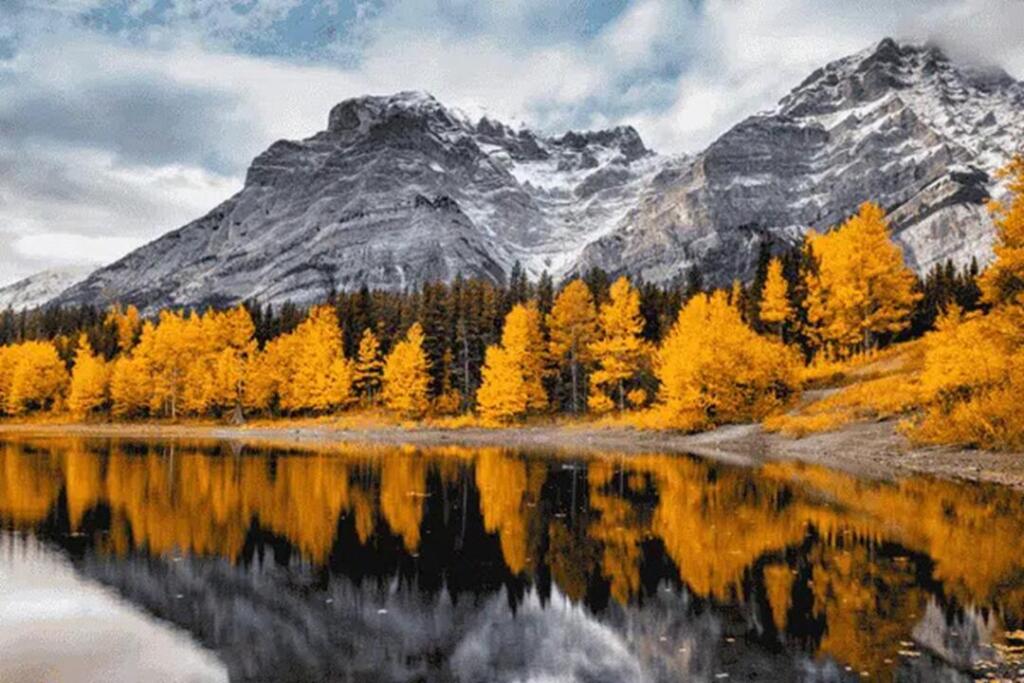
For a lot of us here in eastern Ontario, the Rockies live on calendars and screensavers. Moraine Lake glowing at sunrise. Lake Louise with its canoes. They are beautiful, and they are worth seeing, but they are only one page of the story.
Spend a little time around Banff and Canmore and you start to notice the quieter spots between the headline stops. Frozen canyons in January. Starry nights over a lake you’d never heard of. A forest walk in September with hardly anyone else around. That’s the side of the mountains this piece is about.
Start With the Stops Between the Famous Ones
Some of the most memorable places around Banff barely make the brochures. Bow Falls sits close to downtown, wide and loud as it tumbles over rocky ledges. The Hoodoos Viewpoint looks out over the Bow Valley from beside a row of odd, tapering rock pillars.
Then there’s Vermilion Lakes, just outside town, where calm water mirrors Mount Rundle. Around sunset, it’s one of those places where people go quiet without being asked.
Two Jack Lake, a short drive from town, is another easy favourite. On a still morning, Mount Rundle rises above the water and the forest runs right down to the shoreline.
Why a Local Guide Makes the Difference
Finding these places is one thing. Knowing when to be there is another, and that’s where a small outfit like Into The Wild Tours comes in handy. The company was started by a couple who live in the Rockies and has been taking guests out since the summer of 2023. Its team describes themselves as interpreters, photographers, adventurers and hosts, and you can hear that mix in the stories they share along the way.
Group tours are kept small, with a maximum of 13 guests, and pickups happen in Banff and Canmore. There’s a homey touch, too. The hot drinks come from local businesses, with tea from Jolene Tea House and coffee from Eclipse, so even the thermos supports the town.
Their wildlife and scenic tour, offered all year, strings together Bow Falls, the Hoodoos, Two Jack Lake, Lake Minnewanka, the Mount Norquay Lookout and Vermilion Lakes in roughly six hours. It’s an easy way to see the in-between places without fretting over parking.
A Winter Morning at Johnston Canyon
If you think the Rockies hibernate in winter, think again. Between December and May, the company’s winter sunrise tour starts at Two Jack Lake, where guests watch the first light reach the peaks from heated portable chairs. After that comes Johnston Canyon, with roughly two hours to wander a trail that hugs limestone walls and passes frozen cascades.
Ice cleats are handed out for the slippery sections, along with hand warmers and blankets. Tours generally go ahead in cloud or snow unless conditions are unsafe, and nobody can promise a clear sunrise. Still, snow drifting down in a silent canyon has its own charm.
Dress the way you would for a February afternoon at home: warm layers, insulated boots, gloves, a toque and a proper winter jacket. Bring a water bottle, since warm drinks and refills are included.
Nights Under a Mountain Sky
Folks around Cornwall know a good starry night out on a country road. Now picture one framed by mountains. The Banff Nightfall evening stops at a lookout over the town lights, visits Lake Minnewanka at dusk and then settles in at Two Jack Lake for about two hours of stargazing. Groups on this one are capped at 10.
Telescopes, binoculars and tablets with constellation apps help you put names to what you’re seeing. The northern lights show up occasionally, though the company is upfront that they’re never guaranteed. Fall evenings, when darkness arrives earlier, are a nice time to try.
Dinner isn’t part of the evening, so eat beforehand. Walking is minimal, mostly short strolls on uneven ground near the lakeshore, which makes this a good pick for anyone who would rather sit and look up than hike.
A Gentle Walk in the Shoulder Season
May, June and September are underrated in the mountains. One late-day outing follows the shore of Lake Minnewanka to Stewart Canyon Bridge, a 3.4-kilometre return walk with around 73 metres of climbing. It’s rated easy to moderate, and the evening wraps up with sunset at Vermilion Lakes. Along the way, the guide makes interpretive stops on the shoreline, and shared binoculars come along for scanning the far banks.
In September, expect crisp air and fewer visitors on the trail. A hat and light gloves are smart additions to your daypack in spring or fall, when the evenings cool off quickly once the sun drops behind the ridges.
Leave It Better Than You Found It
Quieter places stay quiet only if visitors treat them gently. Stick to marked trails, pack out everything you bring and leave the wildflowers where they grow. Banff is still a national park, so you’ll need a valid park pass. Keep well back from animals too. Parks Canada asks for 100 metres of space around bears and 30 metres around elk. Bear spray is recommended on every hike in the park, and the guides on these tours carry it.
The ideas behind that kind of low-impact travel are laid out clearly by Leave No Trace Canada, a registered charity that teaches outdoor ethics across the country. Into The Wild Tours follows those principles as well, and it plants a tree for every guest booked.
So the next time a Rockies calendar catches your eye at the kitchen table, remember there’s more to the mountains than one famous view. Sometimes the best moments happen where nobody else is looking.
About the Author