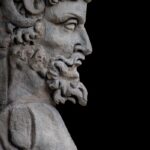



For Christians, the reason for the season is Jesus and his birth….whether he was born on the 25th of December or not. At this time it is common to see nativity scenes along with images of Madonna and Child – from stamps to Christmas cards and decorations this theme is a dominant one as well in art history, often depicted by male artists. Let’s look at this theme from a different
perspective.
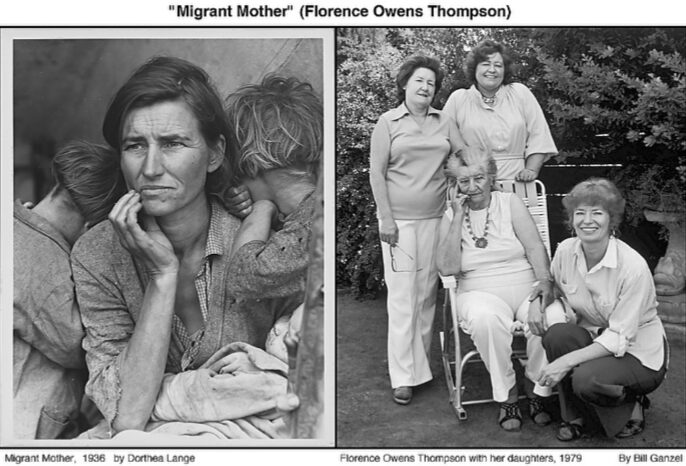
“Migrant Mother” became the face of the Great Depression. It was taken in 1936 by Dorothea Lange to document the struggles of migrant farmworkers during that period (1929 – 1939), and it features Florence Owens Thompson and her children. Its publication prompted the US government to send aid to the camp. Thompson’ s identity and complex life were not widely known initially, which contributed to the image’s universal appeal.
Years later, when Thompson was sick and needed medical help in 1983, her family appealed to the public. The story of the “Migrant Mother” drew national attention and helped raise money for her treatment, giving the family a sense of pride and recognition they had previously lacked.
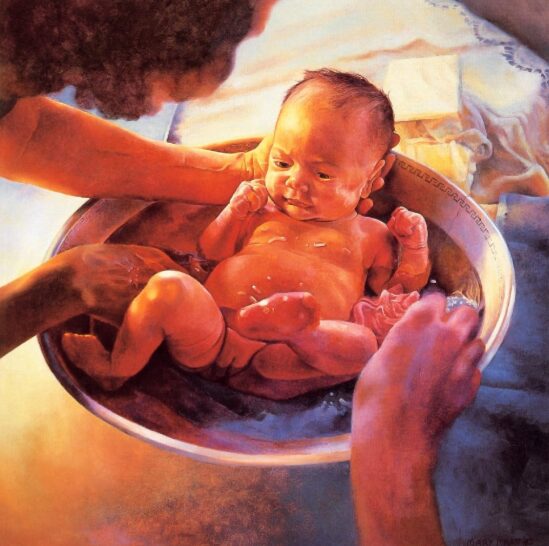
This painting was done by the Canadian artist Mary Pratt, widely known for her hyper realistic oil paintings. The image depicts her first grandchild by her elder daughter Anne. The two adults bathing the child are Mary herself and Anne. In interviews over the years, Pratt stated that the artwork, Mary Pratt, Child with Two Adults, 1983 Oil on Masonite, Private collection, is one of her favourites.
Kollwitz’s eventful life was accompanied by significant changes of times: the First World War, in which she lost her son Peter, the Weimar Republic, National Socialism and the Second World War, in which her grandson Peter (named after his uncle) was killed.
This sculpture depicts a mother’s body just completely enveloping two children of different ages. The mother’s arms are really holding in, cradling and protecting; reminding us that there’s much hand-holding and touching that accompanies motherhood.
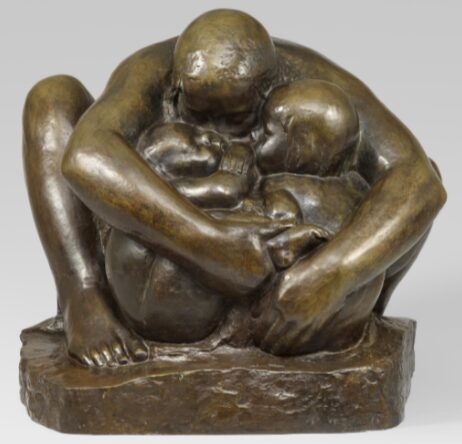
Käthe Kollwitz. Mother with Two Children. 1932-36, cast 1958 Bronze, courtesy of Kunstmuseen Krefeld
Black motherhood is a recurring subject in Elizabeth Catlett’s work. Using printmaking and sculpture, she depicted this theme from various aesthetic and philosophical perspectives. “Black women have been cast in the role of carrying on the survival of Black people through their position as mothers and wives, protecting and educating and stimulating children and Black men,” Catlett said.
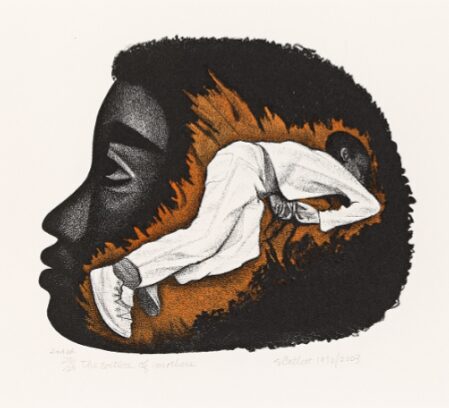
Elizabeth Catlett, Torture of Mothers, 1970 Hand-colored lithograph, Collection of Juanita and Melvin Hardy.
The famous Marie Antoinette family portrait by Élisabeth Vigée le Brun has been known as a treasure in France. It is a symbol of Queen Marie Antoinette’s motherhood during a time when her reputation was on the decline and after the loss of a child, symbolically presented by the empty bassinet.
Élisabeth Vigée le Brun was a French artist. She started artistic training during her early years at the encouragement of her father, Louis Vigée, who was also an artist. She became known as the portraitist for Queen Marie Antoinette.
The painting has been described as a form of propaganda, intended to give the queen and thus the royal family a less tarnished public image.
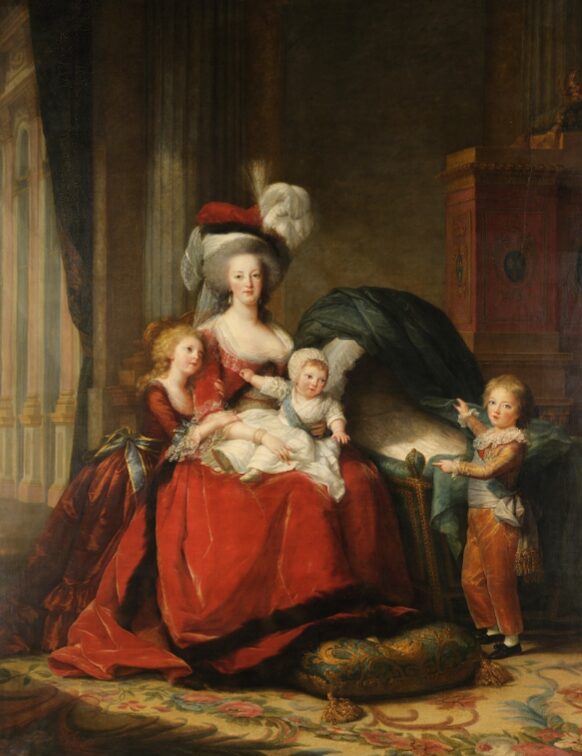
Élisabeth Vigée le Brun, Marie Antoinette and her Children, 1787, oil on canvas, collection of Palace of Versailles.
About the Author