

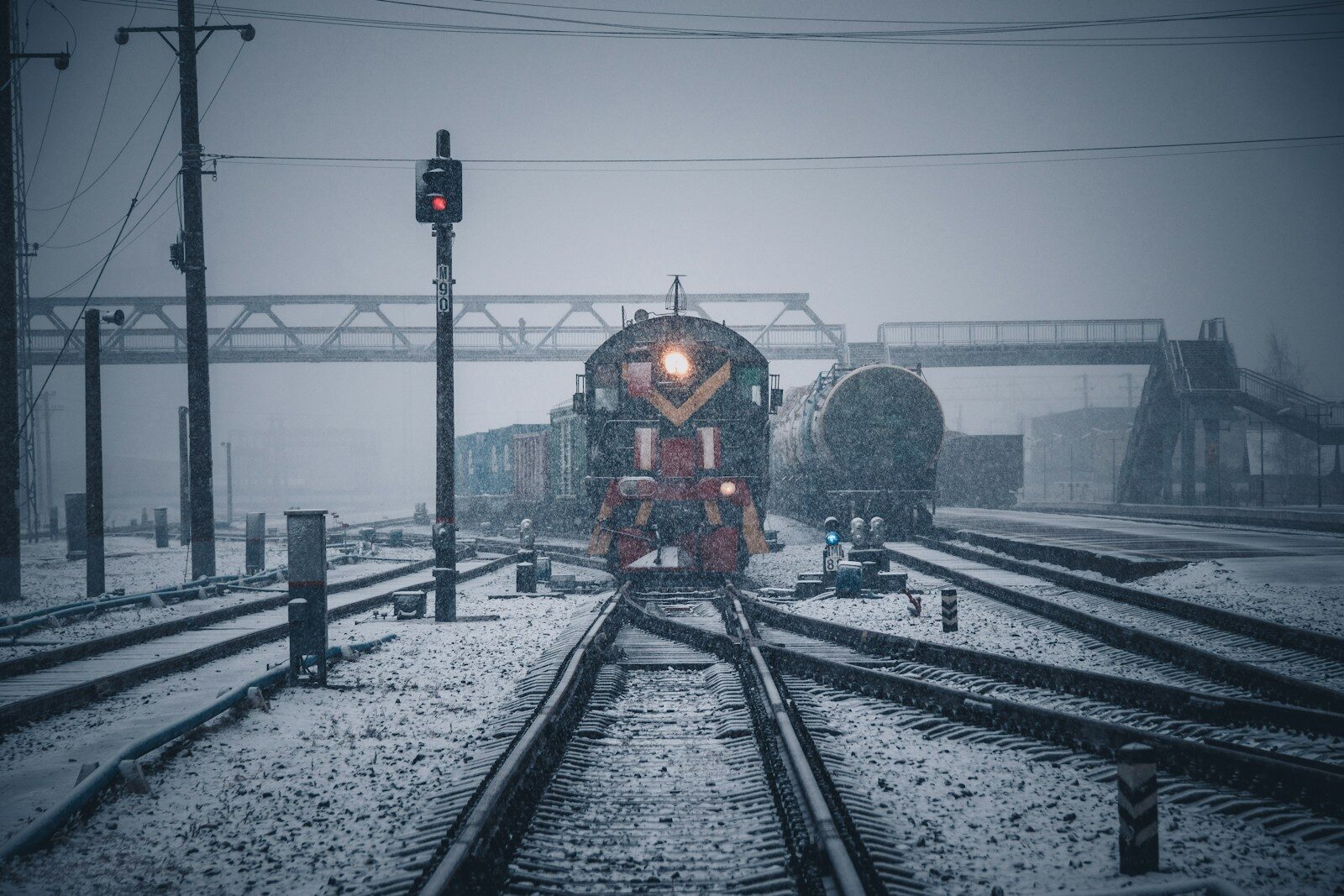
Before road traffic became the primary form of transportation, SDG was traversed by five different railways that served more than forty railway stations and whistle stops.
In the 19th century, the news that a railway would open a station in one of our numerous rural villages was cause for celebration and a belief that prosperity was inevitable.
OUR CITY IS GROWING LIKE A ROCKET.
Historian Lily Worrall, in her history of “Avonmore,” noted that the mere anticipation of the arrival of the Ontario and Quebec Railway (CPR), was enough for a reporter to write that so many new businesses were opening that “Our City s Growing Like a Rocket.”
Soon everyone’s dreams were fulfilled when the line’s first freight train rolled into town, while the station was still under construction.
The impact of the arrival of the railway on rural SDG cannot be exaggerated. In 1871, Avonmore numbered 100 souls; a year after the arrival of regular train service in 1887, it counted 300. An observer noted “The business of our village is growing every day. Anyone who lived here ten years ago and visited the place today would be surprised to see the amount of railway ties, fence posts, telegraphs poles etc. drawn to the CPR station, and the sawn logs drawn to the two saw mills. They would at once say that this village was a hive of activity.” (Worrall, pg. 148.)
The following is just a very small sample of some curious stories that accompanied the arrival of the “Iron Horse.”
MAXVILLE and JACK BENNY.
The arrival of the Canada Atlantic Railway in 1880, made Maxville. The Line was eventually acquired by the Grand Trunk Railway, which became CN. In 1977, passenger rail service was taken over by VIA Rail. VIA did not fulfill its mandate to adequately provide passenger service and in 1998, Maxville’s station closed.
Apart from its important role in the history of North Glengarry and Maxville, the railway also gave local high school students a week long detention when they learned that comedian Jack Benny and his troupe would be passing through the Village, on the 11 a.m. train to Ottawa. Upon hearing about this “visit,” Maxville’s High School students held a recess poll where they all decided to skip school, to catch a glimpse of the famous man from the station’s platform.
Former student, Shirley MacCrae in the centennial history of Maxville reminisced.
“Oh yes we had to pay the piper. We had to endure the wrath of our parents and a week long humiliation of noon hour detention with our heads down on our desks. But it was worth it. We had talked to Rochester (Benny’s partner)…and we actually peered into the private coach where Benny was resting!”
BAINSVILLE. A CONDUCTOR and A SNAKE.
The Reverend Rudy Villeneuve, in his booklet about Bainsville, wrote that the local train conductor took child-like pleasure in pulling a garter snake from his attire, after punching a female passengers ticket.
APPLE HILL –RIDING THE RODS (Rails), the Great Depression.
The Village was named in 1882, when the Ontario and Quebec (CPR) laid their tracks through Sandy Kennedy’s apple orchard and opened a station here named after the orchard.
Mrs. Lawrence Shaw, in the Centennial History of Apple Hill, described how villagers dealt with the thousands of men “riding the rods.”
She wrote, “in the early 1930’s, more commonly known as “The Hungry 30’s…it was not uncommon to see literally hundreds of transients ‘riding the rods’…They would be riding in empty box cars , coal cars, gondolas, and even on the roof of box cars. If the train would stop to pick up or drop off some cars on the siding the transients would get off to scrounge for a bite to eat or some old clothes or maybe even a pinch of tea. We were never afraid of them, there was not much violence in those days.”
“…they were never allowed to sleep in the (station’s) waiting room or even loiter…Most of them were given a night’s lodging at Lalonde’s Hotel just across from the station and the cost was usually borne by the village. I well remember helping my mother prepare food for them, and they were ever so thankful for the handout.”
ALEXANDRIA and PIERRE E. TRUDEAU’S FUNERAL TRAIN.
The Canadian Atlantic Railway officially arrived In Alexandria on October 10, 1893, allowing Glengarry’s farmers and lumbermen to sell their produce across Central Canada and the Eastern Seaboard. Today, it is the only station on this Line to be operating, a fact that has recently been acknowledged with a heritage designation on the second station erected here.
In recent memory, the station formed the focal point for people to witness the funeral train that carried former Prime Minister Pierre E. Trudeau’s casket on October 4, 2000, from Ottawa to Montreal. Clive and Frances Marin capture this moment in their 2007 history of SDG.
They wrote, “…schools were closed to allow students to go to Alexandria station where a crowd of about 2,000 gathered to the sound of bagpipes.” When the train reached Alexandria, … it slowed down, and Trudeau’s sons, Sacha and Justin leaned out to accept flowers and flags from the crowd.
Roger Smith, a reporter covering the event live for CTV News said. “People came here and waited for a long time just to see him for 20 or 30 seconds. It’s a wonderful moment I think, that people are joining together to share this sense of history.”
And much more!
About the Author