


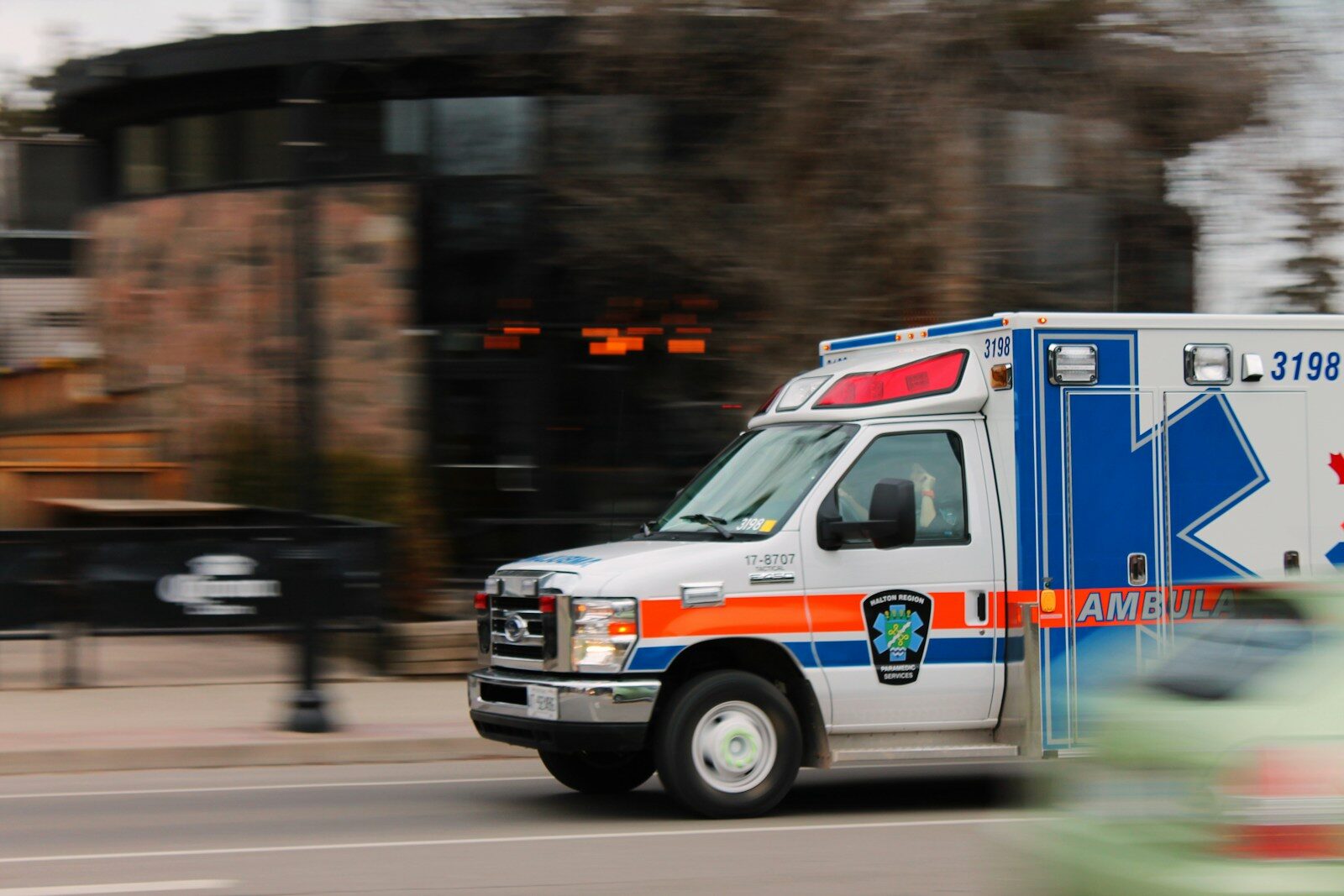
There is a moment most drivers know well. You are moving through traffic, radio on, thinking about where you are headed — and then you hear it. A siren. Maybe you spot the flashing lights in your mirror first, maybe the sound reaches you before you see anything. Either way, your brain shifts gears immediately, and what you do in the next few seconds matters more than most people realize.
Ontario’s roads are shared spaces, and when emergency vehicles enter the picture, the rules change fast. Yet a surprising number of drivers — even experienced ones — are unsure of exactly what they are supposed to do, or freeze up when the moment arrives. Here is a straightforward breakdown of what the law requires, what good judgment looks like, and why it all matters.
What Ontario Law Actually Says
Under the Highway Traffic Act, Ontario drivers are required to pull to the right side of the road and come to a complete stop when an emergency vehicle is approaching with its lights and sirens activated — regardless of which direction it is coming from. This applies on most roads. On a one-way street, you pull to the nearest curb.
The law also covers what happens after the vehicle passes. You are required to remain stopped until the emergency vehicle has cleared the area. Pulling back into traffic the moment a fire truck passes you — before the road is clear — is both dangerous and technically a violation.
Ontario’s “Move Over” law adds another layer. When an emergency vehicle is stopped on the side of the road with its lights active, you must slow down and, where it is safe to do so, move into a lane away from the stopped vehicle. This rule exists specifically to protect paramedics, firefighters, and police officers working on the roadside. The fines for failing to comply are significant, and the reasoning behind the law is straightforward — people doing their jobs on the shoulder of a road should not have traffic rushing past at full speed a metre away.
Why Visibility Is the Whole Game
Emergency response depends on speed, and speed depends on drivers getting out of the way quickly and predictably. The faster a cleared path appears, the faster help reaches whoever needs it. That chain of events starts with drivers spotting the vehicle early enough to respond calmly rather than reactively.
Modern emergency vehicles are designed with this in mind. The progression from old single-colour rotating lights to today’s high-intensity LED systems reflects decades of research into what actually gets a driver’s attention in time. First responders increasingly rely on compact interior solutions — LED visor light bars mounted behind the windshield give police and EMS vehicles a powerful forward-facing signal without bulky exterior equipment. Brighter, faster, more directional light patterns mean earlier recognition from oncoming drivers, which translates directly into safer response corridors.
As a driver, you can work with this by developing the habit of checking your mirrors regularly, keeping your radio at a volume that lets you hear what is happening outside the car, and resisting the urge to make sudden or unpredictable moves when you do spot a responding vehicle.
Common Mistakes Ontario Drivers Make
Speeding up instead of pulling over is more common than it should be. Some drivers instinctively accelerate — trying to get out of the way by staying ahead of the vehicle rather than yielding. This creates exactly the kind of unpredictable situation emergency drivers are trained to navigate around, but it also increases the risk of a collision for everyone involved.
Stopping in an intersection is another one. If you hear a siren while you are approaching an intersection, the instinct to brake right where you are is understandable — but stopping in the middle of an intersection blocks the path emergency vehicles often need to use. If it is safe to do so, clear the intersection first, then pull right and stop.
Confusion in multi-lane traffic trips people up, too. On a divided highway or a wide arterial road, drivers in the far left lane sometimes hesitate because pulling fully right feels like a long manoeuvre. The direction is still the same — work your way right when it is safe, and stop. If you cannot safely reach the right shoulder, at a minimum, slow significantly and give as much room as possible.
A Note on Rural and Small-Town Roads
In communities like Cornwall and the surrounding SDG counties, emergency vehicles often travel routes that look different from highway scenarios. Narrower roads, less predictable traffic patterns, intersections without signals — these conditions put a premium on driver awareness and early reaction.
Rural roads also mean that when something goes wrong, response times are already longer than in urban centres. Every second a driver delays clearing a path adds to that. It is not dramatic to say that pulling over promptly and completely is one of the small, genuine ways civilian drivers contribute to community safety.
The Practical Short Version
When you see or hear an emergency vehicle responding, check your mirrors, signal, pull right, and stop completely. Stay stopped until the vehicle has passed and the road is clear. On a highway, move over a lane if one is available before reducing speed. At an intersection, clear it first if you safely can. Keep your radio at a level where you can hear the world outside your car.
None of this is complicated. Most of it is already in the driver’s handbook you read before your licence test. The gap between knowing it and doing it smoothly under pressure is just practice — and paying attention every time you are behind the wheel.
Cornwall’s paramedics, firefighters, and police officers are out on these roads every day. Giving them a clear path when it counts is one of the simplest things any of us can do.
About the Author