


Most conversations about hair restoration focus on the area that will receive new hair, while the area that supplies it gets far less attention. In any FUE hair transplant Toronto patients undergo, the donor area sits at the centre of the planning, because every graft placed at the front or top of the head has to come from a limited supply at the back and sides. How that supply is used today shapes what remains possible in ten or twenty years.
Why There Is Only So Much Donor Hair
The donor area is the band of hair around the back and sides of the head that usually stays in place even when the top thins. Hair moved from this area generally keeps that staying power in its new location, which is why transplanted hair tends to last. The same area holds a fixed amount of hair, and once a graft has been taken, nothing grows back in the spot it came from.
This is the main planning challenge behind every FUE hair transplant Toronto patients consider. A patient may hope for as much fullness as possible in one session, while the physician has to balance that hope against how much hair the donor area can give over a lifetime. Treating that supply as something to budget carefully, rather than something to use up all at once, is a key part of planning natural-looking results that hold up with ageing.
How Much Hair Can Be Taken Safely
FUE removes hair in tiny natural groups of one to four hairs, one group at a time, spread out across the donor area rather than taken as a single strip of skin. This approach leaves no linear scarring, though it still requires careful judgement about how much can be taken from each part of the head. Taking too much from one spot can leave it looking thinner, especially when the hair is worn short.
During the consultation, the physician typically looks at how thick the donor hair grows, how many hairs tend to sit together in each group, and how coarse or fine each strand is. Together, these details show how many grafts can be removed while keeping the back of the head looking full. Before the FUE hair transplant Toronto patients are planning, this check is usually done with a close-up view of the scalp, since the differences between one person’s donor area and another’s are often too small to judge by eye.
Where the hair is taken from matters as much as how much is taken. Hair taken from too high toward the top of the head, or too low toward the neck, may thin later, even after it has been moved. Staying within the most reliable part of the donor area helps protect both the new hair and the look of the back of the head.
Why the First Session Is Often Kept Modest
A first procedure often focuses on the areas that make the biggest difference to how someone looks, most commonly a receding hairline and the front of the head. Restoring a natural frame for the face tends to change overall appearance more than spreading the same number of grafts thinly over a larger area.
Holding some of the donor supply back also leaves options open. If hair loss continues behind the restored area in later years, a second session can address it without using up everything that remains. A more modest first plan may feel less dramatic, though it generally gives a more balanced result over the decades ahead.
The crown, at the back of the top of the head, is a common example of this trade-off. Because hair grows outward from a central swirl there, the crown can take a large number of grafts while showing less visible change than the front. When donor hair is limited, the physician may suggest restoring the hairline and the middle of the scalp first, then coming back to the crown later, once it is clearer how the hair loss is developing and how well any treatment is working.
Planning around Future Hair Loss
Hair loss rarely stops at the point it has reached when someone first starts thinking about surgery. A hairline placed too low, or fullness packed into an area that is likely to become surrounded by more thinning, can start to look out of place as the hair around it continues to recede. For this reason, the physician generally plans for how the hair is likely to look in the future, not only how it looks today.
In younger people, it is often hardest to predict how hair loss will develop, so their plans tend to be more careful about how low the hairline sits and how many grafts are used at the start. Family history, how quickly the hair is thinning now, and how it responds to any treatment all help fine-tune that picture before any FUE hair transplant Toronto patients request is booked.
Protecting the Hair That Is Already There
Transplanted hair generally holds up well over time, but the existing hair around it may keep thinning. Hair loss medication recommended by the physician may help slow that thinning, which in turn reduces how much donor hair any future session may need.
Some people also consider non-surgical treatments, such as PRP, alongside surgery. The Hair Transplant Centre Toronto offers PRP and other non-surgical scalp treatments as part of its broader range of care, which allows surgical and non-surgical options to be talked through together during planning rather than as separate decisions. Whether these treatments make sense for a particular person is best discussed during the consultation.
How the Back of the Head Heals after FUE
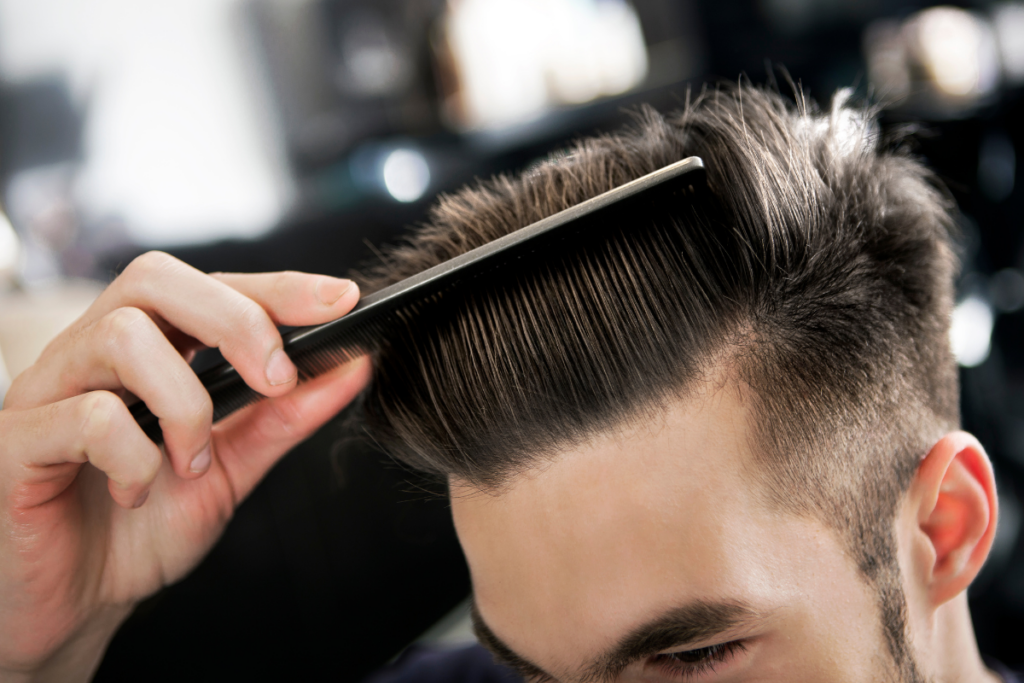
After the FUE hair transplant Toronto patients receive, each spot where a graft was taken leaves a tiny, dot-like mark that typically heals within one to two weeks. Once the surrounding hair grows back, these marks are usually hard to see as long as the grafts were taken evenly across the donor area.
Some redness, tenderness, and a temporary loss of feeling at the back of the head are common at first and generally settle over the following weeks. Following the post-op instructions closely during this time, including washing gently and avoiding pressure on the area, helps both the donor area and the newly treated areas heal well.
Thinking beyond the First Procedure
The value of an FUE hair transplant lies not only in what it achieves in the first year, but in how well the result holds up as hair loss continues around it. A plan that protects the donor area, places grafts with the future in mind, and adds treatment for the existing hair where it makes sense tends to age more gracefully than one designed only for quick fullness.
Searching for “FUE hair transplant Toronto” brings up plenty of general information, but a consultation is the right moment to talk about how the donor supply will be used, how many grafts are planned for the first session, and what options would remain if more hair loss happens later. Clear answers on these points help set realistic expectations for the years ahead.
About the Author