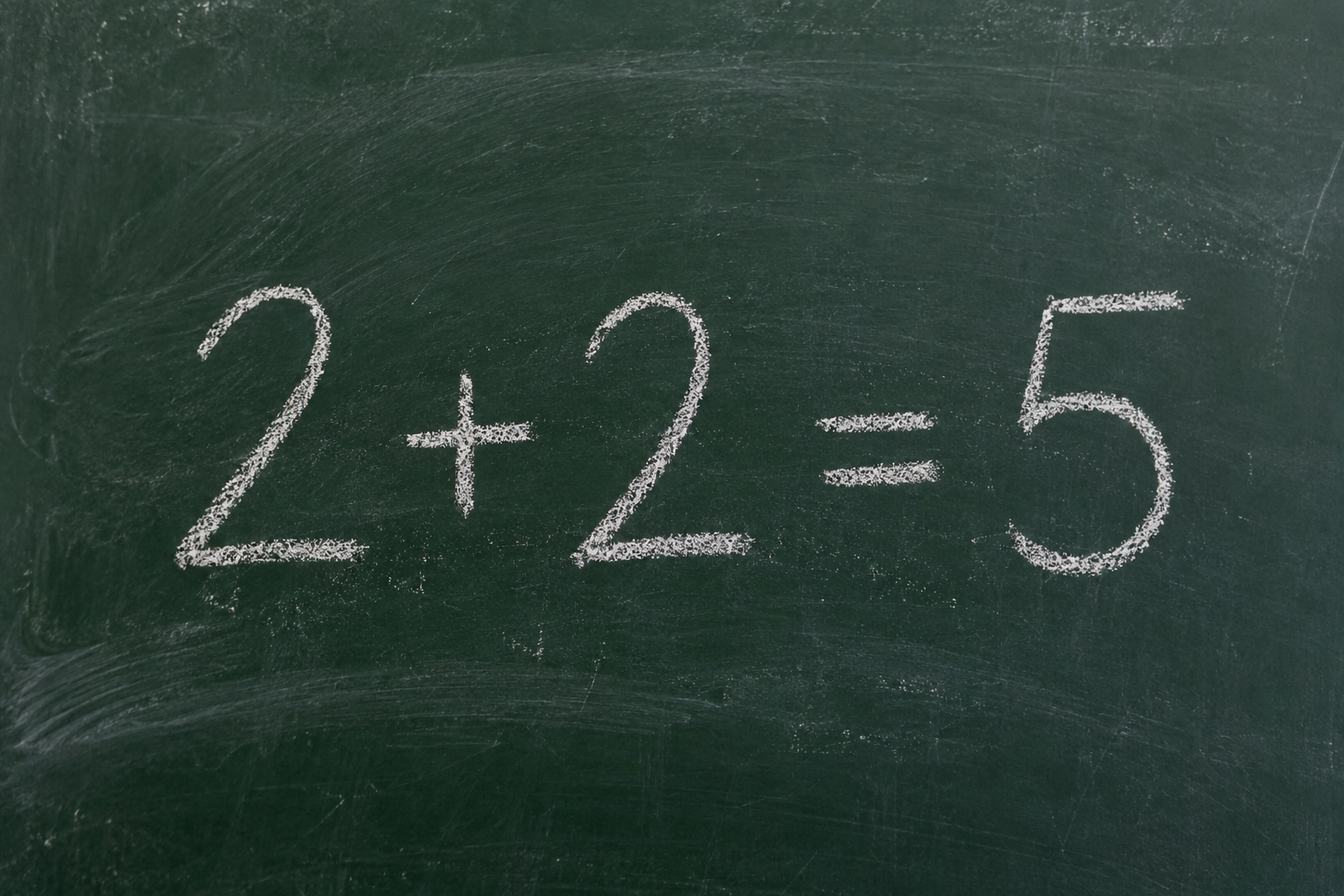
This morning, Mateo Lucio published a opinion piece here in The Seeker about the City’s election-night error. Boy, did it got a lot of criticism online!
His point was that the City’s mistake was serious on its own, but that the bigger damage came after. It gave people an opening to question whether the election itself was legitimate. As he pointed out, some were already saying it must have been rigged, and a few were calling for the whole election to be held again.
There’s a difference between asking questions and spreading a conspiracy.
Asking how a mayor’s total went from 2,141 to 4,559 is a fair question. So is asking the City to show its math. I did exactly that this week, and you’ll see below that it turned up something.
Saying the election was rigged is something else. That’s a conclusion with nothing behind it. The City says the error was in a spreadsheet used to display unofficial results, not in the ballots or the voting records, and the certified totals add up.
The danger is what that kind of talk does over time. Every time someone says an election was stolen without proof, a few more people start to believe their vote doesn’t count. Some of them stop voting. And the people who staff our polls and count our ballots, many of them our neighbours, end up under suspicion for doing their jobs.
Mateo pointed to the 2020 U.S. presidential election as an example of where that road goes. We don’t need to go down it here.
I agree with him on all of that. But then…
Recap on what happened
On election night, the unofficial results showed Mayor Justin Towndale with 2,141 votes. After the City’s verification process, that number became 4,559.
In a statement explaining the change, the City said the election-night display showed Towndale’s online voting result as 199. That was actually the number in the “Decline to Vote” column. A staffer had manually entered the wrong number in his column in the spreadsheet used to produce the unofficial results. The City said the online votes themselves were counted correctly, and that the human error was caught and corrected through its official verification process.
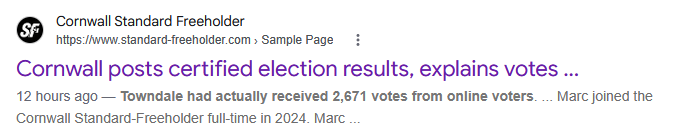
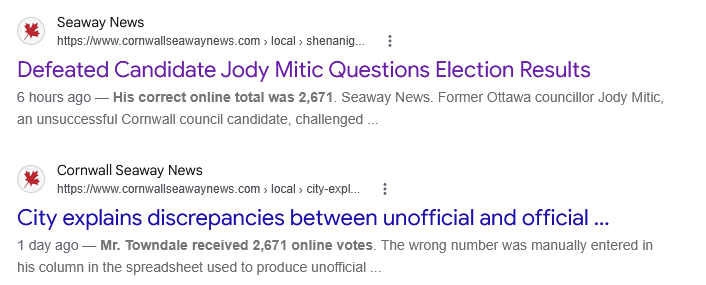
The statement put Towndale’s real online total at 2,671 votes. We published those numbers. So did other news outlets. Widely.
The city is not helping itself
On election night, Towndale stood at 2,141. That count included the 199 declined votes credited to him by mistake, and none of his actual online votes.
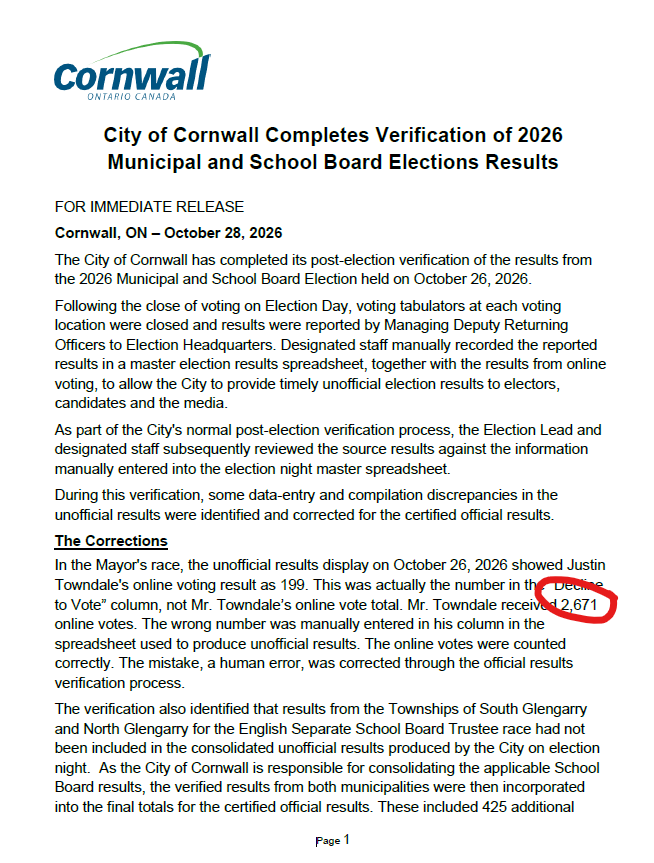
Take the 2,141, subtract the 199 and add the 2,671 from the City’s statement. You get 4,613, not 4,559.
That’s a 54-vote gap, so I wrote to the City and asked them to explain it. Here’s the answer I got:
“There is no discrepancy. We simply removed the 199 (the incorrect figure) and replaced it with 2617 (the correct number of online votes from our online provider), which comes to a total of 4559 (online votes + in-person votes (1942)).”
Their answer gives Towndale 2,617 online votes. Their statement said 2,671. Same four digits, with the last two switched.
The 2,617 is the number that works. Add the 1,942 in-person votes and you get 4,559, the certified total.
So the statement meant to explain an error contained another error. When I pointed that out, I was told there was no discrepancy. Two City documents give two different numbers for the same votes. That is a discrepancy. And it only adds to the already tensed climate, and to the distrust the city is already facing. So why write about it? How could I not? I had spent the entire morning defending the city from people complaining about the lack of transparency and shear incompetence. Oh the irony.
Does 54 votes matter?
It doesn’t change the outcome. Sarah Good won with 7,545 votes.
It does matter for credibility. Especially when that credibility is already in question.
The verification process did its job. It caught a mistake of more than 2,000 votes before anything was certified, and the certified numbers add up. The City deserves credit for that.
But a statement correcting an error has to be right. And when someone shows that it doesn’t add up, the answer should have been simple: the digits were transposed, here’s the correct number, and we’ll fix the release.
Can you blame people for asking?
This was Cornwall’s first election with online voting, and people were paying close attention. First the election-night number was wrong. Then the explanation had a wrong number in it. Then a simple question got the answer that there was no problem. Only one word comes to mind. Incompetence.
So when residents start asking questions and doubting those in charge, can we blame them?
Asking questions about an election is part of democracy. What keeps those questions from turning into conspiracy theories is clear, correct answers from the people running the election. Not more mistakes.
I suggested they send a correction. We’ll see what happens.
11:06pm. The City has updated their website to reflect the right number, but we have not received a correction.
About the Author