In October 2022, I returned to South Korea—the country known as the “Land of the Morning Calm.” A place where the people consider it a good day if they can tell you that they had helped someone.
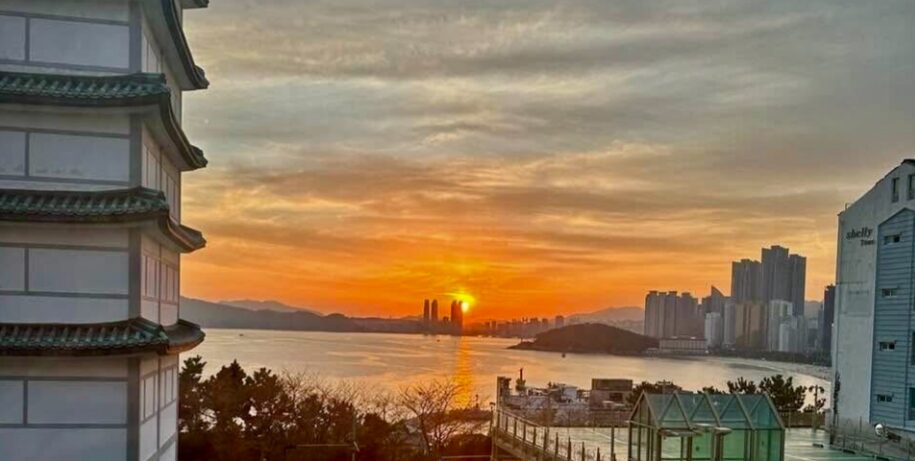
My journey led me once again to Busan’s Haeundae Beach district, a crescent of pristine coastline where the sea meets the city with effortless grace. Haeundae’s beaches, untouched in their beauty, draw admirers from across the world. The air there feels softer, the mornings brighter, as though the horizon itself is quietly breathing the morning calm.
Busan is a thriving, affluent city where education is deeply valued and teachers are revered. This reverence, paired with its cosmopolitan energy, has nurtured a vibrant expat community—particularly English-language educators arriving from abroad. For newcomers, you will be very well received! Busan offers both opportunity and belonging.
In Haeundae, many expats find their way to a gathering place popularly known as Home Bistro Café. Contemporary yet warm, the café is a vegetarian haven that attracts a colourful mix of writers, poets, artists, musicians, and filmmakers. Over plates of fermented wholesome food, served in the wood fired pottery of Canadian Master Potter, Brenda Mader, linking two distant worlds through clay…..As the evening conversations blossom; new friendships are made…and on select evenings, the space fills with live jazz that spills out into the street.
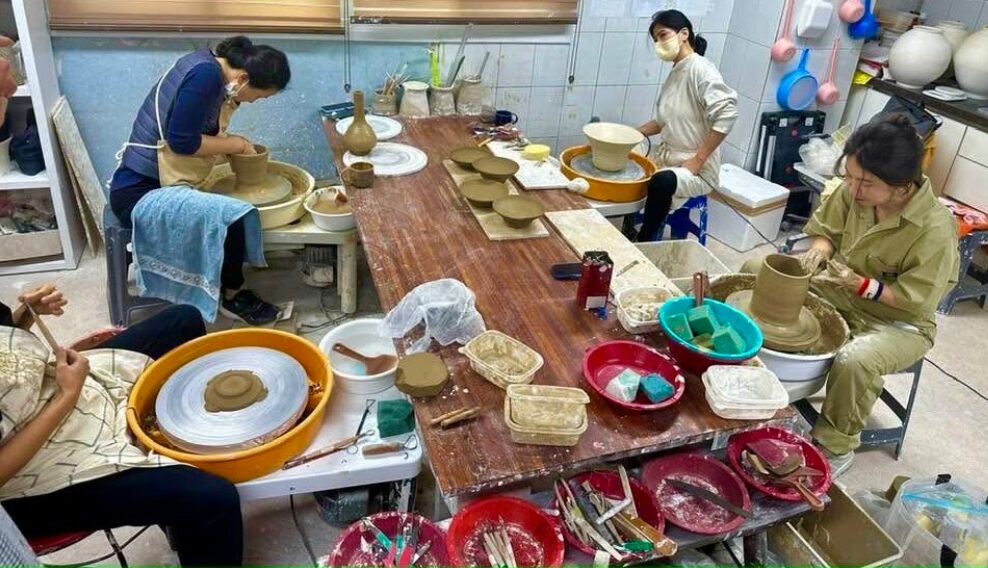
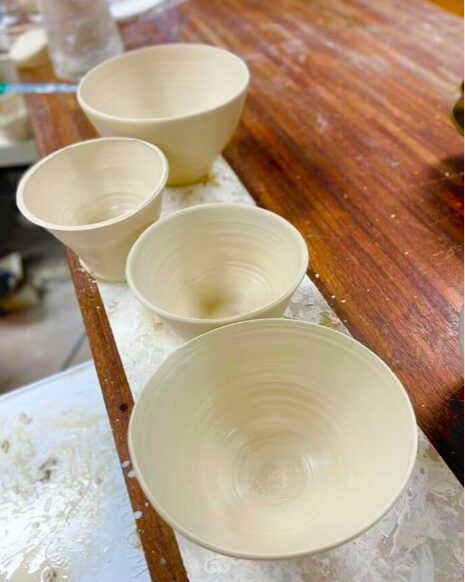
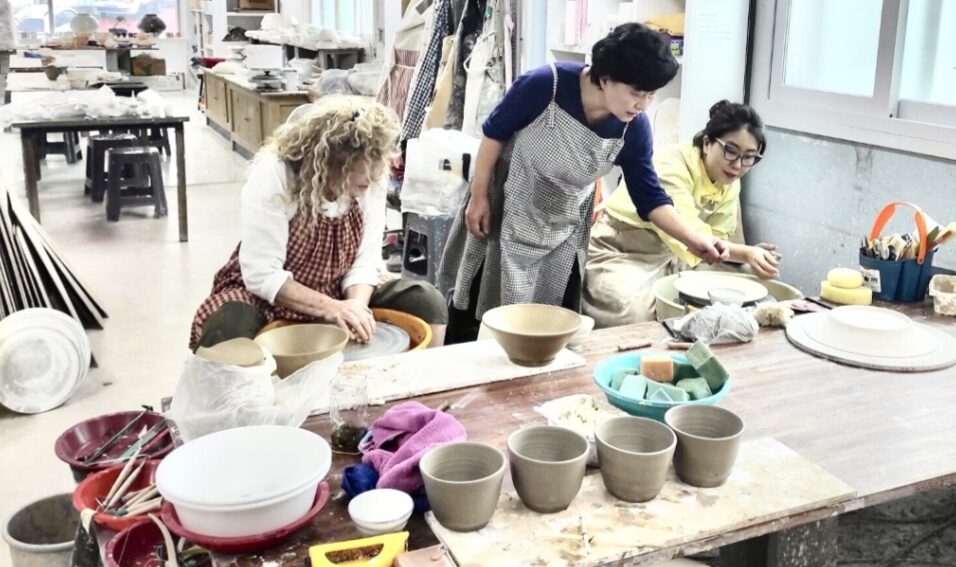
But the heart of my journey unfolded just a few streets away, behind a modest façade marked 도예학교 (Doye Hakgyo)—a pottery school where tradition and discipline are woven into every motion of the hands. I enrolled in their intensive program, drawn to deepen my connection to clay and to the philosophy that shapes Korean ceramic arts.
Here, I learned two concepts that have since become foundational in my practice: deep breath….
Jiriki—“self-power,” the strength born from one’s own hands, presence, and intention;
and Tariki—“other-power,” the inherent energy of the wheel, the water, and the clay itself.
Together, they form a partnership between human effort and natural force. To shape clay in this tradition is to negotiate patiently and gently with the elements……
breathe….
For three full weeks, I attended all-day classes among a group of women whose kindness softened the hours of very focused concentration. We encouraged one another, laughed at our wobbled forms, and celebrated our small victories. Friendships took shape as naturally as the pots on our wheels.
Inside the studio, sound became its own meditation…..The ZEN……
The steady hum of the wheel offered its rhythmic pulse. Water droplets fell onto the clay as if dancing, then vanished into the spinning surface. Hands and wooden paddles tapped softly, coaxing form from earth. Together, these sounds hummed a quiet symphony—the harmonic language of potters fully absorbed in their craft. It was here, in this sanctuary of repetition and quiet artistry, that I felt most connected to the soul of pottery.
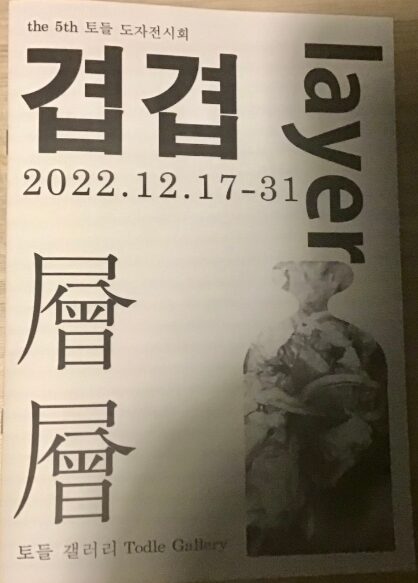
As my time in Haeundae drew to a close, I received a gesture of honour I had not anticipated: my teacher asked me to write an article about the school. It was a request that filled me with gratitude. The resulting piece, “The Zen of Pottery,” was later published in the Todle Gallery Pottery Magazine, December 2022 edition—my small tribute to the place that had welcomed me with such generosity.
Looking back, my return to South Korea was more than a journey; it was a homecoming of spirit. I left Busan with clay in my hands, friendships in my heart, and a renewed respect for the discipline and beauty of traditional Korean pottery.
“May all beings Be Happy”!
About the Author