

Happy April, everyone! We’re back with another Ask Anna your Gardening questions! This month, we are answering “Does straw actually decrease evaporation? I’m thinking of using straw this year with the heat waves we have been having the past few years.”
After a few summers of intense heat, many gardeners are asking the same question: how do we help our plants hold on through long, dry stretches without feeling like we need to stand outside with a hose all day? The good news is that one of the best answers is also one of the oldest. Straw really can help decrease evaporation, and for many gardens, it is a very smart choice.
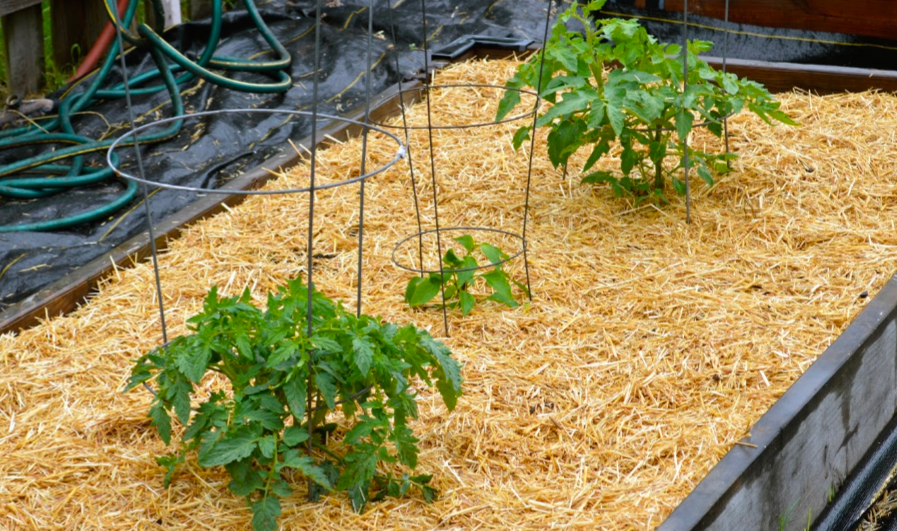
When soil is left bare, it takes the full force of the sun. The surface heats up quickly, and moisture begins escaping into the air almost right away. Add wind to the mix, and the drying happens even faster. That is why a garden can look damp after watering in the morning, but feel dry again sooner than expected. A layer of straw changes that. It acts like a light blanket over the soil, shading it from direct sun and helping keep the ground cooler. Cooler soil loses moisture more slowly, which means the water in the ground stays there longer for plant roots to use. That is especially important during the kind of heat waves we have been seeing more often over the past few years. When temperatures climb for days at a time, plants can become stressed very quickly. Leaves wilt, flowers may drop, and vegetables can struggle to grow properly. Even gardeners who water regularly can find themselves falling behind. Straw helps by slowing that moisture loss and creating a more stable environment around the roots. It is not a cure-all, but it is one of the easiest ways to give your plants a better chance.
Another big advantage is weed control. Weeds are more than just a nuisance. They compete with your flowers and vegetables for water, and during hot weather, that competition matters. A good layer of straw helps block sunlight from reaching weed seeds, which reduces the number that sprout. Fewer weeds mean more moisture left in the soil for the plants you actually want. Straw can help in other ways. It softens the impact of heavy rain, reducing soil splashing up onto leaves and fruit. That can be especially helpful around tomatoes, peppers, cucumbers, squash, and strawberries. In fact, strawberries and straw have gone hand in hand for generations for good reason. Mulch also helps prevent the soil surface from becoming hard and crusty, which can happen during hot weather and repeated watering.
If you decide to use it, a few simple tips will make a big difference. First, use straw, not hay. Hay usually contains lots of seeds, and spreading it in the garden can bring on a weed problem you did not bargain for. Straw is the cleaner option. Spread it in a layer about two to four inches thick around your plants. That is usually enough to shade the soil well without packing down too much. Keep it a little away from plant stems and crowns so that damp mulch is not sitting right against them. Of course, straw does not mean you can stop watering completely. During extreme heat, gardens still need a good, deep soak now and then. But mulching with straw means that watering goes further, and that can save both time and effort. In the end, straw is one of those simple garden practices that earns its reputation. It helps the soil stay cooler, reduces evaporation, cuts down on weeds, and makes hot summer weather a little easier on both plants and gardeners. Sometimes the best garden advice is also the most practical: cover the soil, protect the roots, and let nature do a little more of the work.
If you have gardening questions or need advice, feel free to reach out! You can send your questions to me at [email protected] with the subject line “Ask Anna,” and I’ll happily feature your questions in next month’s NewsMagazine.
Stop by Harvest in Cornwall at 2405 Vincent Massey Drive and also 75 Cornwall Centre Road to pick up your copy of the SDG&A Cornwall Seeker each month.
About the Author