


For a long time, “tap water” was something people didn’t think about much. Turn the handle, fill a glass, job done. That’s changing fast. News about boil-water advisories, aging pipes, PFAS, and microplastics has pushed a lot of families to treat water like they treat Wi-Fi or security: something worth upgrading, not just accepting.
Instead of living with chlorine taste or lugging cases of bottled water, more households are investing in advanced water treatment systems for the whole home or key taps. It’s less about being paranoid and more about taking control of one of the few things everyone actually puts into their body every single day.
“Safe enough” isn’t really cutting it anymore
Yes, municipal water in most developed regions meets basic safety standards. But that’s only part of the story.
On the way from a treatment plant to a kitchen sink, water passes through:
- Old mains and repair patches
- Neighbourhood pipes that have seen better decades
- The building’s own plumbing, solder, valves, and fixtures
Each link in that chain adds its own risks and flavours. Chlorine or chloramine gets dosed in to keep bacteria at bay, and that helps on the safety side, but it’s not exactly pleasant to drink. Then there are “emerging contaminants” standards weren’t really built for: trace pharmaceuticals, pesticide residues, microplastics, PFAS.
Most people won’t feel sick tomorrow from any of this. That’s not the point. The shift to treating water at home is more about long-term, low-level exposure and the simple fact that “legally compliant” doesn’t always mean “what a parent would choose if there was an easy alternative.”
Why “advanced” actually means something now
For years, “water filter” usually meant a jug in the fridge with a carbon cartridge and a reminder that no one ever changed on time. Useful to a point, but limited.
Modern advanced solutions look very different:
- Multi-degree filtration managing sediment, chlorine, unstable natural compounds, and odour
- Reverse osmosis gadgets that strip out dissolved solids, heavy metals, and plenty of chemical contaminants
- UV disinfection to neutralise micro organism and viruses with out chemicals
- Remineralisation stages that add back healthy minerals so water doesn’t taste flat or too aggressive
The result is water that’s not just cleaner on paper, but noticeably different in a glass. Clearer, no chemical smell, no metallic edge, no weird aftertaste.
That’s one of the reasons interest in whole-home and under-sink water treatment systems has exploded. People want something closer to lab-grade quality, delivered at the exact taps they actually use.
Everyday safety, not just disaster prep
A few years ago, only hardcore preppers talked about water systems. Now it’s common for regular families to bring up water quality when renovating a kitchen or buying a new build.
Reasons are usually pretty down-to-earth:
- Kids with sensitive stomachs or skin
- Elderly relatives in the home
- Immunocompromised family members
- Local advisories that may be “temporary” but keep popping up
It’s no longer about stocking up for the apocalypse. It’s about not wondering what’s really in a toddler’s sippy cup, or whether that “slight smell” after heavy rain is harmless.
Advanced filtration doesn’t promise perfection. It does significantly cut down on known categories of risk and builds a layer of protection between public infrastructure and what comes out of the tap.
Skin, hair, and those “small” everyday changes
The impact of better water isn’t only internal.
Hard, heavily treated water:
- Dries out skin
- Aggravates conditions like eczema or psoriasis in some people
- Leaves hair feeling brittle or coated
- Stains sinks, tubs, and fixtures with scale and residue
When a home adds decent treatment – especially combined with softening where appropriate – people often notice:
- Soap lathers easier
- Less need for heavy moisturisers
- Fewer spots on shower glass and dishes
- Towels and clothes that don`t sense stiff after washing
It doesn`t sound dramatic. But while each shower, each handwash, each load of laundry adjustments a little, the cumulative impact on consolation is difficult to ignore.
Taste that actually makes people drink more water
There’s a simple behavioural effect that keeps coming up in homes that upgrade: people finally start drinking water because they like it.
When tap water:
- Smells like a swimming pool
- Tastes metallic or “muddy” after rain
- Leaves a film on tea and coffee
people quietly switch to:
- Sugary drinks
- Flavoured powders
- Endless bottles from the store
Clean, neutral-tasting water from a good under-sink or whole-home system flips that equation. Kids reach for the tap instead of juice. Coffee tastes like coffee, now no longer chlorine. Ice cubes don`t bring strange flavours into the whole lot they touch.
It`s now no longer a medical claim. It`s simply common sense: if water tastes good, human beings drink extra of it.
Whole-home vs. under-sink: matching tech to real life
“Advanced system” doesn’t have to mean a giant, humming machine in the basement. There are a few main approaches, and they solve slightly different problems.
Whole-home (point-of-entry) systems
Installed where water enters the house. These typically:
- Filter all incoming water
- Reduce sediment, chlorine, and often hardness
- Protect pipes, fixtures, and appliances
Benefits show up in:
- Cleaner showers and baths
- Less limescale in kettles, dishwashers, washing machines
- Longer lifespan for warm water warmers and plumbing components
Under-sink or point-of-use systems
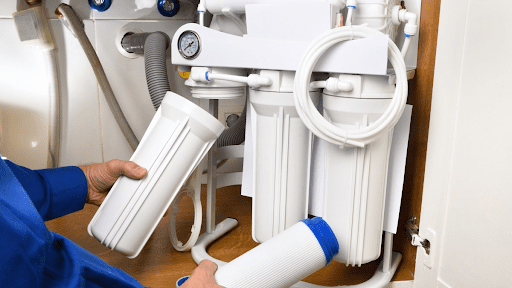
Installed at specific taps, usually the kitchen sink or a dedicated drinking tap. Reverse osmosis units often fall in this category.
They:
- Focus on drinking and cooking water
- Offer the highest level of contaminant reduction where it matters most
- Take up a small footprint in a cabinet
Many modern houses integrate both: broader safety for the building and appliances, plus top class filtration in which water is going without delay into glasses, pots, and toddler bottles.
Money and plastic: the boring but powerful reasons
There’s also the wallet and waste side of this shift.
Bottled water habits add up fast:
- Weekly grocery runs with cases in the cart
- Monthly costs that quietly rival a utility bill
- A constant stream of plastic into the recycling bin (or worse, the trash)
Once a solid filtration system is in place, most families:
- Stop buying bottled water altogether or reserve it for rare situations
- Cut impulse purchases of soft drinks and single-use beverages
- See clutter disappear from pantries and garages
On the appliance side, better-treated water:
- Reduces scale in kettles, coffee machines, and steam ovens
- Helps dishwashers and washers last longer and run more efficiently
- Saves on descaling chemicals and service calls
The system itself isn’t free, of course. But in households where bottled water and appliance issues were regular line items, the payback can be surprisingly fast.
Smart homes now include smart water
The same mindset that drives people to install video doorbells and smart thermostats is creeping into water.
Many advanced water treatment setups can now:
- Monitor flow and catch unusual use that might indicate a leak
- Track filter life and send reminders before performance drops
- Log basic quality indicators so changes don’t go unnoticed
For busy households, that matters. Nobody wants to remember cartridge dates or discover six months too late that a filter has been exhausted by unusually dirty incoming water.
Smart monitoring doesn’t replace professional testing, but it keeps a closer eye on the one utility that directly enters every meal, shower, and glass.
Water quality is becoming a buying question
In real estate, modern buyers don’t just ask about square footage and taxes anymore. Questions that used to sound fussy are now common:
- What’s the local water like?
- Is there a filtration or softening system installed?
- Are there any known well or infrastructure issues?
Homes with visible, well maintained water remedy structures frequently stand out, particularly in regions regarded for difficult water, vintage pipes, or beyond advisories. It alerts that the assets hasn`t left some thing essential to chance.
For sellers, that may be a small however significant facet in a crowded market. For buyers, it manner one much less task to feature to the to-do list.
Picking a system that actually does what it claims
Not every shiny unit on a store shelf is equal. A serious approach usually follows a simple sequence:
- Test the water
Lab tests or high-quality local testing reveal what’s really present: hardness, chlorine, metals, specific contaminants. - Match technology to the problem
Sediment and chlorine issues are different from nitrates, arsenic, or PFAS. That means carbon alone is sometimes fine, sometimes nowhere near enough. - Look for proper certifications
Reputable systems are independently tested to standards such as NSF/ANSI for specific contaminants. Vague claims without data are a red flag. - Plan for maintenance
Filters and membranes have lifespans. Good systems make them easy to replace and don’t bury the cost. Neglected maintenance is the fastest way to turn a high-end system into an expensive decoration. - Use professional installation where it counts
Whole-home systems, in particular, benefit from proper sizing, correct placement, and a clean tie-in to the existing plumbing. That’s not the job for a rushed Sunday afternoon experiment.
The goal isn’t to chase perfection. It’s to be intentional about what the household drinks and bathes in, instead of just inheriting whatever the street pipes and local plant happen to deliver that day.
Modern homes are wired, insulated, and secured more thoughtfully than ever. Water is simply joining that list. Advanced remedy is turning into much less of a luxurious add-on and greater of a quiet, integrated layer of protection for normal living.
About the Author