

There’s a ritual to the New Year. We wish each other well. We talk about fresh starts. We hope, quietly or out loud, that the next twelve months might be gentler than the last.
But entering 2026, gentleness isn’t guaranteed. What is guaranteed is that politics, power, and inequality will continue to shape daily life, whether we engage with them or not. And this year, that reality hits close to home.
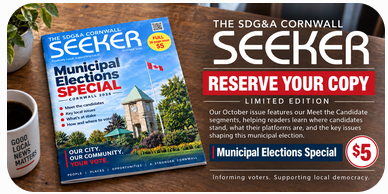
This is a municipal election year in Cornwall and across Ontario. It’s also a year marked by provincial strain, federal hesitation, and an increasingly unstable international climate that is already affecting Canada’s economy, prices, and sense of security. None of these layers exist in isolation. They stack. And people at the bottom feel the weight first. Always.
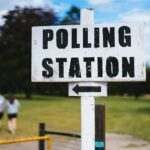
Municipal elections are often dismissed as small politics. But municipal government is where the abstract becomes concrete. Housing shortages aren’t theoretical at city hall. Neither are policing decisions, infrastructure neglect, tax pressures, water systems, recreation access, or how unhoused people are treated. These are the decisions that determine who is supported, who is managed, and who is ignored.
In Cornwall, as in many communities, local politics is often framed as practical and non-ideological. But budgets are moral documents. Zoning decisions reveal priorities. Enforcement policies reflect values. You can’t strip ideology out of governance just by refusing to name it. Choosing not to invest is still a choice. Choosing who gets patience and who gets punishment is still political.
This election year asks residents to look past familiarity and comfort and to ask deeper questions Who benefits from the status quo? Those already in positions of influence and wealth. Who bears the cost of inaction? Ordinary citizens struggling with rising rents, shrinking paychecks, and disappearing stability. Who understands that affordability, homelessness, and environmental stress aren’t personal failures but structural outcomes? The people who recognize that systems, not individuals, create and sustain inequality.
At the provincial level , Ontario continues to live with the consequences of deliberate underfunding and downgrading. Municipalities are expected to do more with less while being blamed when they can’t.
Health care pressures spill into emergency rooms, leading to overcrowded wards where wait times stretch for hours and staff exhaustion becomes the norm.
Education shortfalls land on families, forcing parents to fill the gaps with private tutoring, unpaid leave, or by juggling multiple jobs to support their children’s learning. Social services are stretched thin — shelters turn people away, food banks run out of supplies, and mental health programs face months-long waitlists. Meanwhile, local governments are left holding responsibilities without the resources to meet them, struggling to keep up with housing needs, infrastructure repairs, and basic public safety.
This isn’t bad management. It’s ideology. It’s the belief that public systems should be walked back, privatized, or allowed to erode until people stop expecting them to work at all. It’s the belief that failures are a result personal shortcomings rather than the consequences of a rigged system. The result is a permanent state of crisis that benefits no one except those who profit from scarcity.
Federally, Canada sits in an uncomfortable middle. Climate commitments exist on paper while fossil fuel realities persist. Housing promises collide with market dynamics that governments refuse to seriously challenge. There are gestures toward progress, but also a deep reluctance to confront wealth concentration, speculation, and corporate power head-on.
And then there’s the international context, which in 2026 can no longer be treated as background noise.
The return of Donald Trump to the centre of global politics has had immediate and tangible consequences. His administration’s aggressive use of tariffs has reshaped global trade, increased uncertainty, and raised costs throughout international supply chains. These are not abstract trade wars. They affect food prices, manufacturing costs, farm incomes, and cross-border economies, including ours.
From a left perspective, this matters deeply. Tariffs are being wielded not as thoughtful economic tools, but as blunt instruments of nationalism and coercion, oppression and manipulation.
They are sold as protection for workers, yet their real-world effects often include job losses, higher prices, and increased volatility for people already struggling to get by. Meanwhile, corporations with the most flexibility adapt, pass costs down, or lobby for exemptions.
Globally, the normalization of authoritarian language, scapegoating, and economic strong-arming creates fertile ground for disinformation and democratic erosion. Those forces do not stop at borders. They influence rhetoric here. They embolden cruelty. They narrow political imagination at the exact moment we need it to expand. Louise: to what end? Who gains / who loses?
As 2026 begins, the question isn’t whether change is coming. It’s who that change will serve, and who will be asked to absorb the damage quietly.
Municipal elections matter because they are one of the last places where people can still directly influence power. Where accountability can still be demanded in person. Where community solidarity can still push back against narratives of scarcity and division.
Happy New Year, Cornwall and SDG. May 2026 be the year we stop pretending local choices are small, stop accepting instability as normal, and start demanding governance that puts people before profit, here at home and beyond our borders.
About the Author