


Shall I compare thee to a summer’s day? Thou art more lovely and more temperate: Rough winds do shake the darling buds of May. – William Shakespeare, 1609
Throughout Western art history women have been a dominant subject for artists; especially amongst male artists. Male artists have painted, drawn, photographed, and sculpted females as the vulnerable muse; the object/subject of allegories, religious icons, and mythical figures.
The body is a charged subject, any artist whether male or female must approach it with a sense of subjectivity and humility. I was curious to discover how female artists might approach the female body, drawing upon their own innate life experiences.
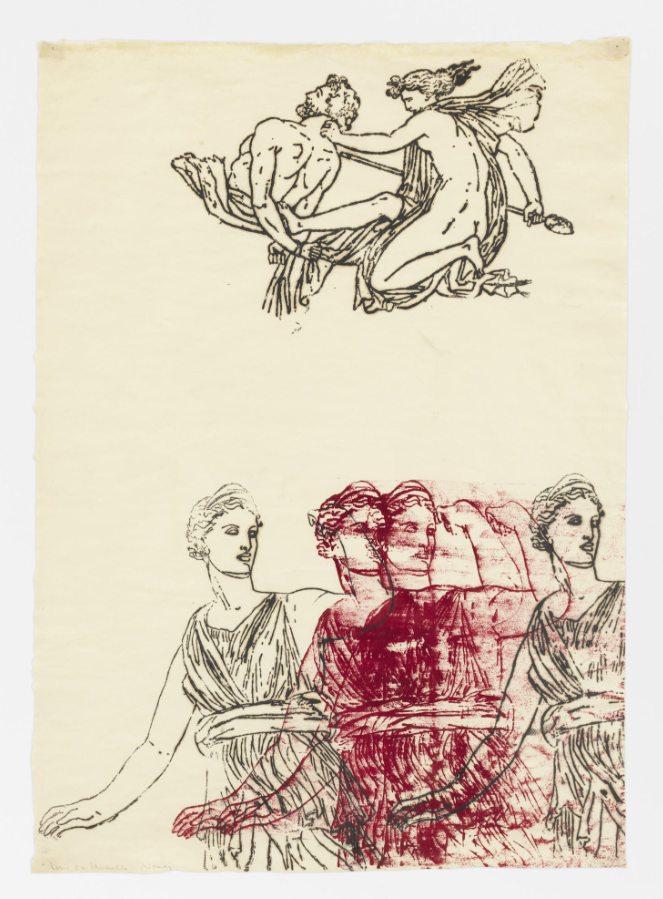
Nancy Spero, Artemis, Goddess and Centaur, 1983. Handprinting on paper
Among the first feminist artists, American artist Nancy Spero drew on archetypal representations of women across various cultures and times to reframe history itself from a perspective that she termed “woman as protagonist.” In the depiction of Artemis, Spero reminds us that women had and have power in other cultures, times, and mythologies. We can observe Artemis as a goddess and huntress who encompasses multiple roles.
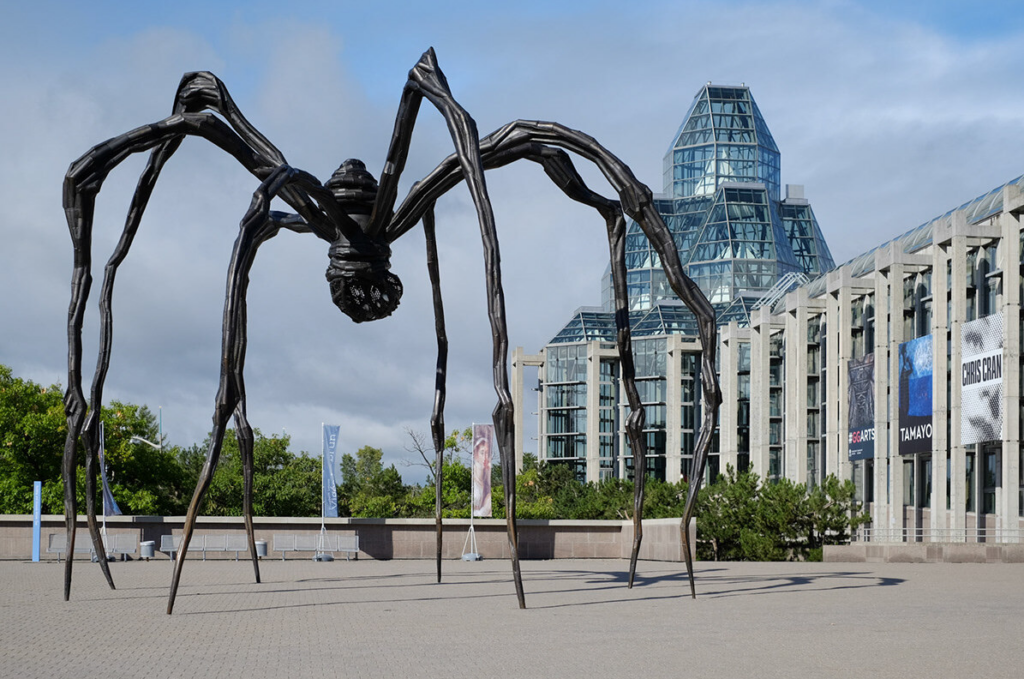
Louise Bourgeois, Maman, 1999, bronze, stainless steel, and marble, 29.528 ft height
Franco-American artist Louise Bourgeois described her spider sculptures as her “most successful subject.’ Bourgeois uses the spider both as a threathening predator and mother protector; the marble eggs at the centre are firmly within Maman’s web. The spinning and weaving of the spider’s web link to Bourgeois’s own mother, who worked in the family’s tapestry and restoration business, and who encouraged Louise to create. A giant spider and a beloved mother – cast together in an eternal struggle between arachnophobia and primal allure.
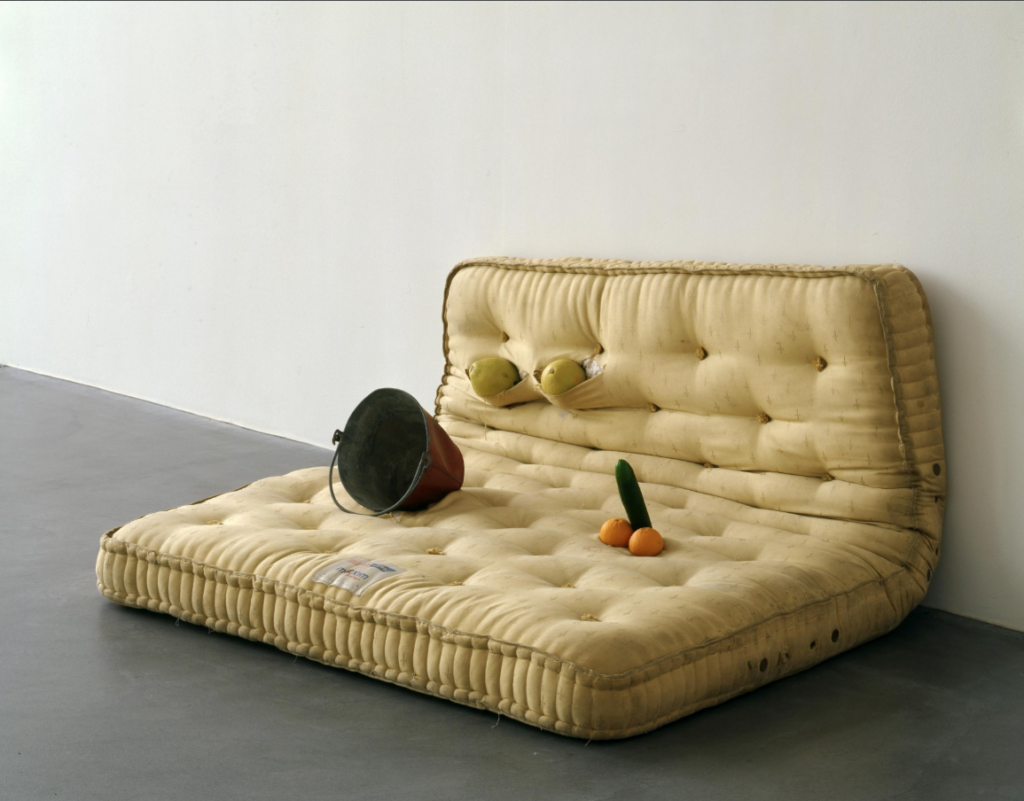
Sarah Lucas, Au Naturel, 1994 mixed media, assemblage
In the early 1990s British artist Sarah Lucas began incorporating furniture as a stand-in for the human body. Lucas transforms the ordinary into striking compositions that explore the human body with humor, desire, and vulnerability. Lucas says “I choose materials for their reality”.
Material is reality. That includes qualities like texture, colour, pliability or absoluteness, their cheapness or expensiveness. With Au Naturel Lucas creates a sleazy tableau meant to shock and yet remind us of the banality of gender roles.
Canadian artist Jana Sterbak provocative and controversial meat dress was made up of 50 to 60 pounds of raw flank steak, the meat was salted and sewn together into a sleeveless sheath dress, which was then draped over a mannequin. In the title, vanitas references the 17th-century Dutch painting tradition, which used symbols like rotting food or skulls to remind viewers of the transience of life and the inevitability of death.
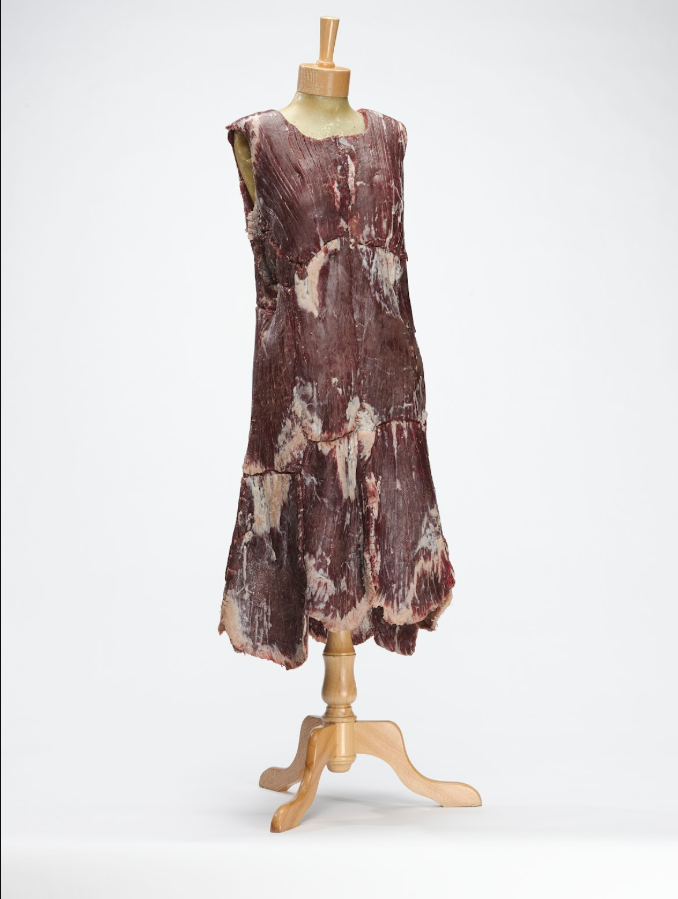
Critics often interpret the dress as a commentary on the objectification of the female body. Sterbak highlights how society consumes and commodifies women, while the title’s reference to “anorectic” links the piece to issues of body image and control. Seen above is Jana Sterbak’s Vanitas: Flesh Dress for an Albino Anorectic, 1987, raw flank steak
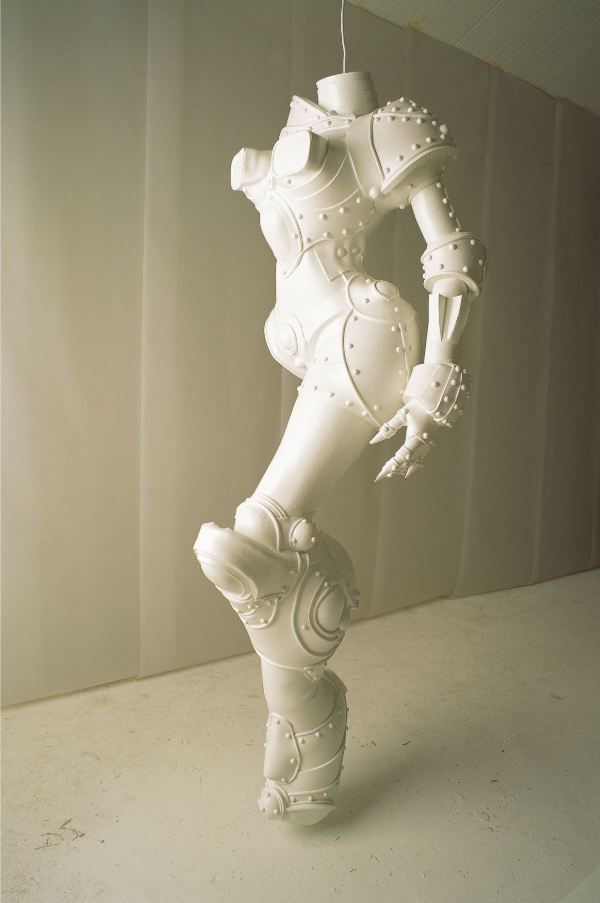
Lee Bu, Cyborg W1, 1998, cast silicone, polyurethane filling, paint pigment.
South Korean artist Lee Bul’s sculpture Cyborg W1 from her celebrated Cyborg series is part of a larger, ongoing exploration of humanity’s obsession with technological perfection and the human body. Unlike the idealized, fully functional cyborgs often seen in media, Cyborg W1 is presented as fragmented, usually missing limbs or a head, highlighting the failed or incomplete pursuit of perfection. Cyborg W1 is designed to be suspended from the ceiling by wires, creating a sense of hovering, otherworldly presence.
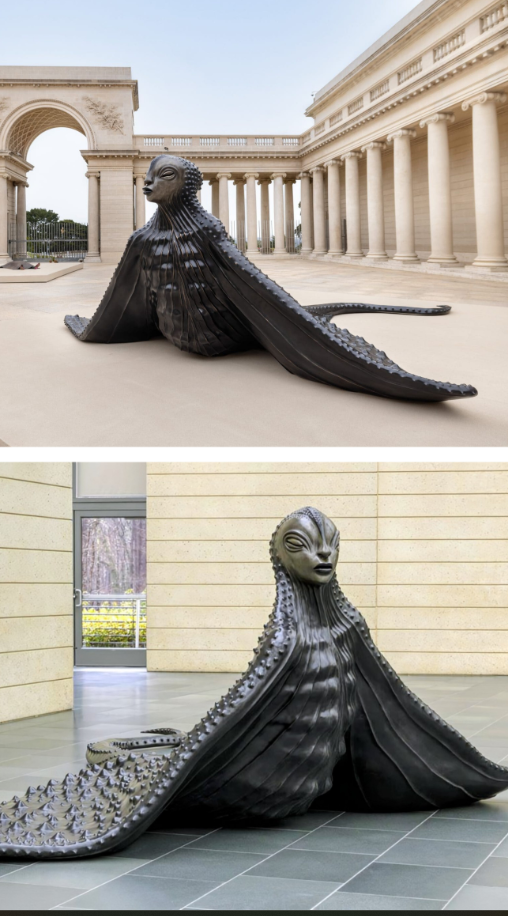
Wangechi Mutu, MamaRay, 2020, bronze, 15 feet long by 12 feet wide
Kenyan American artist Wangechi Mutu’s large scale bronze sculpture MamaRay is a hybrid creature that merges a woman’s form with the characteristics of a manta ray, featuring wide, cape-like wings extending from her head to a serpentine tail. The figure is designed as a “triumphant goddess” and a protective guardian.
The sculpture references the history of the transatlantic slave trade and the lives lost at sea, transforming that tragic, “dark history” into a figure of safety, strength, and a “free future. Black women have historically been misrepresented or oppressed. MamaRay exudes power, grace and a unique sense of beauty.
About the Author