


Live roulette bets pay out differently based on the type of bet. A straight-up bet on a single number pays 35:1. A bet on either red or black pays 1:1 and covers 18 numbers. Experienced players recognize the differences between these bet types and can treat those two options as almost separate games. Within the design there is a constant relationship between coverage, payout, and probability. The five main bets in roulette include straight-up, split, corner, dozen and red/black, which all illustrate the structure and probability of the betting menu. Understanding these bets provides insight into the structure of roulette and the probability of each bet.
A live roulette game is the same game whether it’s played online or in person. Now, online players can experience the same thing as players in land-based casinos, as they can play games hosted by real dealers. The payouts and coverage are the same. Betinia Ontario Live Roulette gives players a familiar setting.
To understand roulette mathematically, you will see that all payouts have the same formula. Each of those payouts can be calculated using the formula “36/number(s) covered – 1”. Using this formula, a player can calculate the payout for covered numbers. Bets covering one, two, and four numbers pay 35:1, 17:1, and 8:1, respectively.
When comparing the single-zero and double-zero roulette wheels, players will see that the formula for calculating payouts and the numbers covered by each bet are the same. Winning probability is where players will see the difference. Getting to know these equations and probabilities will be useful when players decide to make bets.
The Straight-Up Bet
One of the fun aspects of the game of roulette is the variety of bets you can make. One of the bigger, more dramatic payout bets is the straight-up bet. A straight-up bet is where you place a chip on a single number on the table. The payout for a straight up bet is 35 to 1. If you were to bet $10 on a number and that number hit, you would win $350, plus your $10 stake back.
A European wheel has 37 pockets: 1 through 36 and a single zero. Because a European wheel has 37 pockets, the probability of any one of those numbers hitting is 2.70%, which means a number would be expected to hit once every 37 spins on average. With 37 pockets, the true odds against a number hitting are 36 to 1. The house edge on this bet is 2.70% on a European wheel.
Because an American wheel has an additional pocket (a double zero), the true odds of hitting any one of the numbers on the wheel is 37 to 1. Similar to a European wheel, the payout of a straight up bet would still be 35 to 1. Like everything else in roulette, the house edge is built into the payout and odds of the game. Because an American wheel has an additional pocket, the house edge would be 5.26%.
The payouts in single zero roulette and in double zero roulette are the same. The only difference between the two is probability. A player needs to understand the house edge and the true odds of the game to be a smart player. Everything in roulette is set up this way.
What is a Split Bet?
This bet is made up of two adjacent numbers. A bet like this pays 17 to 1 and is made by placing your chip on the line that separates the two numbers. Vertical and horizontal numbers both count as adjacent numbers.
On a European wheel, covering two numbers gives you a 5.41% chance to win, which is about once every 18 or 19 spins. A $14.15 bet (about €10) would yield a profit of $240.55 and your stake back. A split bet covers two numbers, so the wheel coverage is double that of a straight up bet, but the payout is roughly half.
Compared to straight bets, splits increase the probability of winning. However, the payout decreases. As we mentioned earlier, on average, you will win a split about once every 18 or 19 spins. Many players find straight up bets too harsh, and broader bets too compressed. Splits are a nice in between.
Of course, the way chips are placed is very important, and the chip has to be placed on the line separating the two numbers, and the two numbers have to be adjacent to each other on the layout. Diagonal numbers do not count. In online games, this is usually not an issue because chip placement is always precise.
The Corner Bet
A “corner” bet covers four numbers arranged in a square. The chip is placed on the corner where all four numbers meet. The payout is 8:1. A corner bet that wins pays $200 for a $25 bet (8 x $25). The probability of this happening on a European wheel is 10.81%.
It’s useful to understand that, in covering more numbers, the payout reduces. The four numbers covered in a corner bet pay 8:1. A single number pays 35:1. While the larger coverage leads to more frequent wins, the payout in relation to the bet is smaller. Covering four numbers in a corner pays $200 for a $25 bet. Covering a single number with the same $25 bet pays $875. The coverage is expanded, and the payout is compressed by roughly the same factor. This relationship occurs across the entire layout.
A Dozen Bet
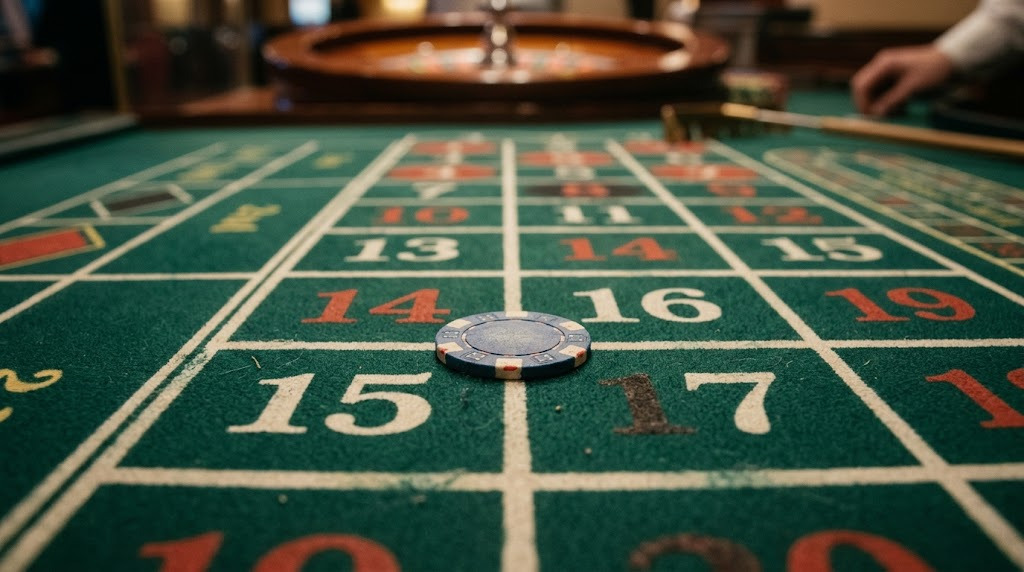
Bets covering numbers 1 through 12, 13 through 24, and 25 through 36 are available. Each bet pays 2:1. A bet of $10 on a dozen pays $20 plus the bet if that dozen wins.
Here is where zero makes a difference. A French (or European) roulette wheel has 37 pockets. There is a 32.43% chance to win with a dozen bet. Clean odds of 1 in 3 would be given by 36 numbers. Zero is the difference. It is outside all the dozen numbers and therefore reduces the probability of a bet winning.
On an American wheel, the addition of a second zero reduces the probability further. Twelve numbers out of 38 create a win probability of 31.58%. Zero on a French wheel would leave the win probability of a dozen bets at 32.43%. On both wheels, the payout for a dozen bets is 2 to 1.
This is one of the clearest examples where the wheel makes a difference to a player’s expected value.
Betting on Red or Black
An even-money bet covers 18 of 37 (or 38) pockets and gives a win probability of 48.65% (or 47.37%). Those numbers are less than 50%, and the reason is always the same. Zero and double-zero pockets are green and therefore advantageous to the house.
The difference between 48.65% and a fair coin-flip result of 50% is 1.35 percentage points. The difference between 47.37% and 50% is 2.63 percentage points. These differences relate directly to the house edges for the corresponding types of wheel.
La Partage is a rule that some European tables implement. With this rule, if zero is called and a player has made an even-money bet, the player gets back half of the bet, leaving a house edge of 1.35% for those bets. Therefore, the house edge for all even-money bets with the La Partage rule is 1.35%, making a wheel with the La Partage rule among the most favourable roulette wheels. Keep in mind that the La Partage rule does not protect players” bets for the straight-up, split, corner, or dozen bets.
Without La Partage, the house edge is the same for every standard bet on a single zero European wheel. One of those bets, red or black, covers 18 numbers. It has the same house edge as all the other standard bets.
Why More Numbers Does Not Mean Better Odds
Without La Partage, the house edge stays the same for all five bets, regardless of how many numbers are covered. For example, the house edge is the same for a straight-up bet or for a bet covering 12 or 18 numbers. The more numbers covered, the lower the payout.
The house edge for standard bets on the single zero wheel is 2.70% and for standard bets on the double zero wheel is 5.26%. The house edge is the same for these five bet types on a particular wheel and is independent of the player’s decision-making process.
This structural truth is embodied in the payout formula. The payout formula always assumes that the wheel has 36 pockets. Thus, the single zero on a European wheel and the double zero on an American wheel are not considered in the payout formula. Covering more pockets increases the frequency of wins and decreases the size of each payout.
Knowing this structural truth allows the player to change how they evaluate the bets on the table. A player can evaluate bets based on the variability and expected size of the wins rather than the long term expected value. Based on this, a bet on a corner and a bet on red or black have the same house edge.
Read the Wheel Before You Bet
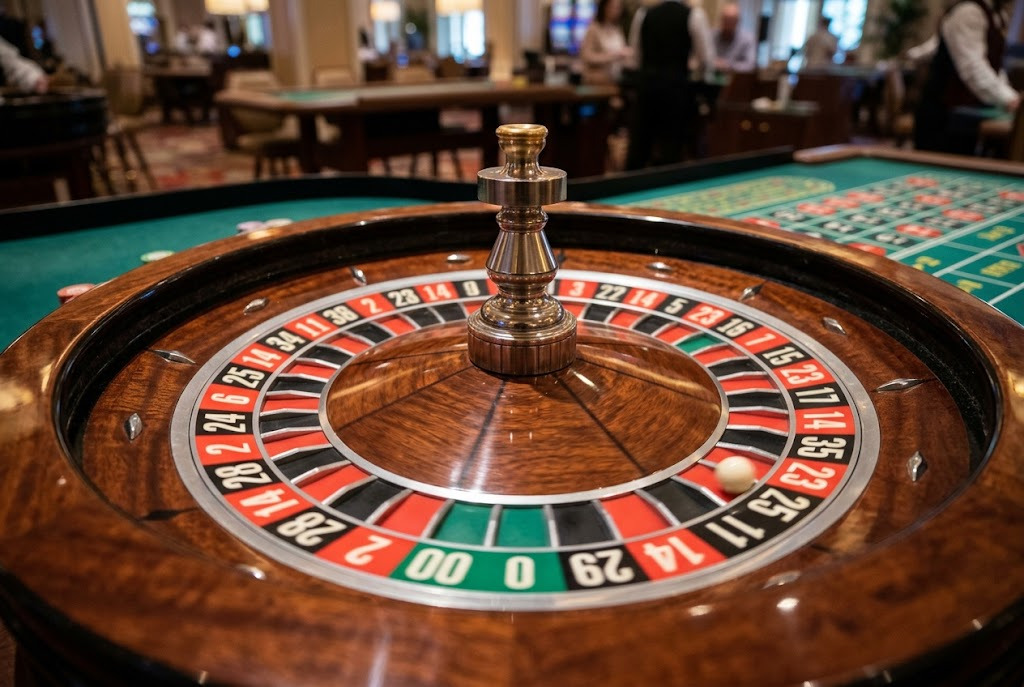
The most important decision a player makes before putting a chip down on a roulette table is figuring out which wheel they will be playing. The house edge on a single zero European wheel is 2.70% versus the 5.26% house edge on a double zero wheel.
When playing live dealer roulette, you are able to view the wheel before betting gets underway. It is easy to see if a double-zero pocket is present and distinguish between a wheel with 37 pockets and one with 38.
The five bets discussed in this article, a straight-up bet, split bet, corner bet, dozen bet, and red/black bet, have different frequencies of wins and different payout amounts. Additionally, the house edge remains the same for all bets on a given wheel. With that understanding, a player can choose among the bets based on the level of variance they prefer.
About the Author