
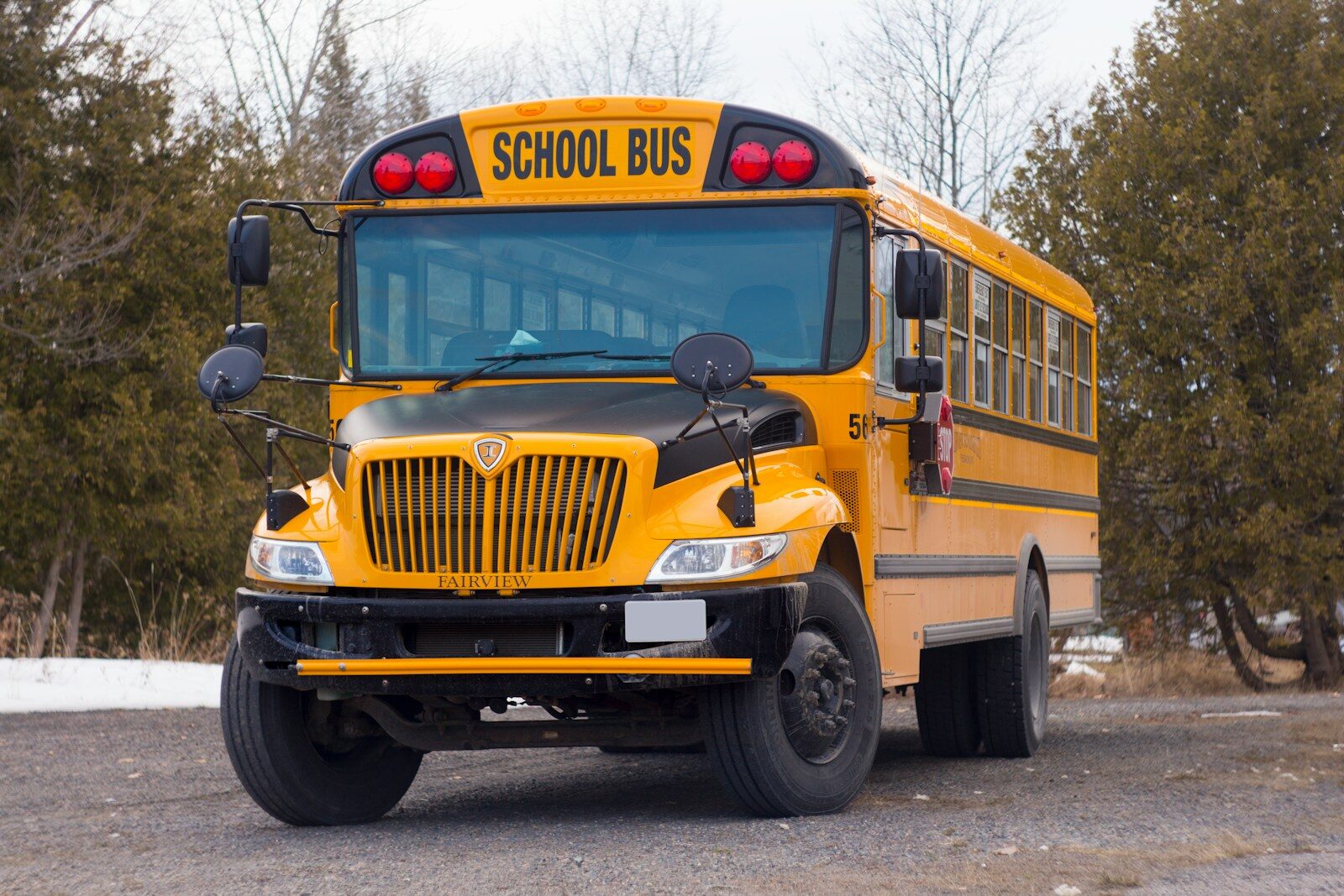
Every weekday morning, millions of Canadian parents watch their kids climb the steps of a school bus, trusting that they will arrive at school safely. Statistically, school buses are a safe mode of transportation, with occupants being 16 times less likely to be injured in a collision than those in personal family vehicles. However, a series of serious highway incidents has reignited a fierce national debate over a major omission in on-board safety: the lack of mandatory three-point seatbelts.
For years, transport regulators have relied on compartmentalization to protect students. This passive safety system uses high-backed, energy absorbing seats spaced closely together to form a protective barrier. In a standard frontal or rear-end collision, the seats act like an egg carton, absorbing impact forces.
While compartmentalization works in low-speed, linear impacts, safety advocates argue it fails during a rollover or a violent side-impact collision. In those situations, unrestrained passengers are thrown from their seat, colliding with the vehicle’s interior or one another.
The limitations of this design became clear following a school bus rollover on Highway 10 in Western Manitoba. The bus, carrying 14 students from the Sapotaweyak Cree Nation, careened off the highway and flipped multiple times. While no lives were lost, fifteen people were rushed to the hospital, with four students needing emergency airlifts to Winnipeg’s Health Sciences Centre for severe injuries, including broken bones and spinal trauma.
Jodi Ruta, a veteran school bus driver and the force behind a new safety campaign says the Manitoba rollover hit close to home for her. Having experienced a previous collision behind the wheel, Ruta has seen the chaotic reality of an impact first-hand. She argues that relying solely on vehicle size and padded seats ignores the violent physics of highway accidents, leaving children vulnerable.
“When you’re behind the wheel of a bus, you realize that padding isn’t enough when a vehicle actually rolls over. We need more protection for the kids,” says Ruta.
The baseline safety of student transit is being challenged by worsening conditions on Canadian roadways. According to the latest finalized national collision data from Transport Canada, traffic risks are actively climbing; road fatalities recently spiked to a 10-year high of 1,964 annual deaths, while serious injuries reached a five-year high of 9,261. Historical federal safety records compiled by CBC’s The Fifth Estate reveal that passengers inside the cabin are far from immune, revealing more than 10,000 documented injuries in school bus incidents across Canada over a multi-decade timeline, averaging hundreds of injuries per year inside the vehicle cabin.
The Manitoba incident accelerated legislative discussions. In the province, lawmakers started looking at provincial frameworks, with some political leaders tabling bills to mandate three-point passenger seatbelts on all newly manufactured school buses. Similar conversations are happening at community levels in Ontario and other provinces, where localized pilot programs testing seatbelts yielded positive feedback regarding student behaviour and peace of mind for drivers.
Despite public demand, changing outdated transportation policies faces bureaucratic and financial challenges. Historically, transport authorities hesitated to mandate seatbelts, citing the cost of retrofitting existing fleets and the operational challenges of ensuring young children stay properly buckled without distracting the driver. There are also lingering concerns from older studies suggesting that improperly worn lap belts could cause abdominal or neck injuries.
“We aren’t talking about old lap belts anymore. Three-point seatbelts keep kids securely in their seats, which also stops rowdy behavior and lets drivers focus entirely on the road,” says Ruta.
Safety experts point out that objections to seatbelts rely on outdated data. Today’s advocacy focuses on adjustable three-point lap-and-shoulder belts, the exact technology parents legally must use to secure their children in personal vehicles. Additionally, school bus drivers note that seatbelts improve cabin management, keeping students securely seated and reducing dangerous driver distractions.
As communities prepare for the upcoming school year, structural changes to student transportation are urgent. Relying on an engineering philosophy established decades ago satisfies old standards but fails families who expect the highest levels of protection for their children.
The choice facing Canadian policymakers is simple: can school buses be made safer? Relying on luck on high-speed highways is an unacceptable strategy. Implementing mandatory three-point seatbelts is a logical evolution in student transit that ensures the peace of mind parents feel when waving goodbye in the morning is justified.
About the Author