

Oh my goodness.
“AI” has to be the word of the week.
I’ve had at least a dozen conversations with peers and colleagues about it this week. Some had read my previous articles about how I feel I’m slowly being erased — partly by my own doing, mind you — while others were simply commenting on AI in general. Either way, it reopened the question of ethical AI.
I think most people can appreciate how AI has simplified a lot of tasks. I’m not going to lie, I use it daily, and the applications are pretty varied. I’ll ask it to rewrite a press release for the Seeker. I’ll ask it to find me a dinner recipe using whatever is in my fridge. I’ll ask it to review a boring contract and flag anything suspicious. I’ll ask it to render a concept for a website I’ll later build. I’ll even ask it to look at my blood test results and explain them in layman’s terms, then give me a list of questions to bring to my doctor. I love it. It makes my life easier, and I use it not because I’m lazy, but because I can achieve results far faster than if I did it myself. More than anything, AI has expanded my creativity and productivity by freeing that time.
But more time for what? Because lately, we’ve seen dramatic change in our print version. Advertisers who used to hire a graphic designer, or have us do it, have discovered that AI can do it faster and for free. The ads we publish are now largely AI-rendered. So that time is definitely not spent building ads.
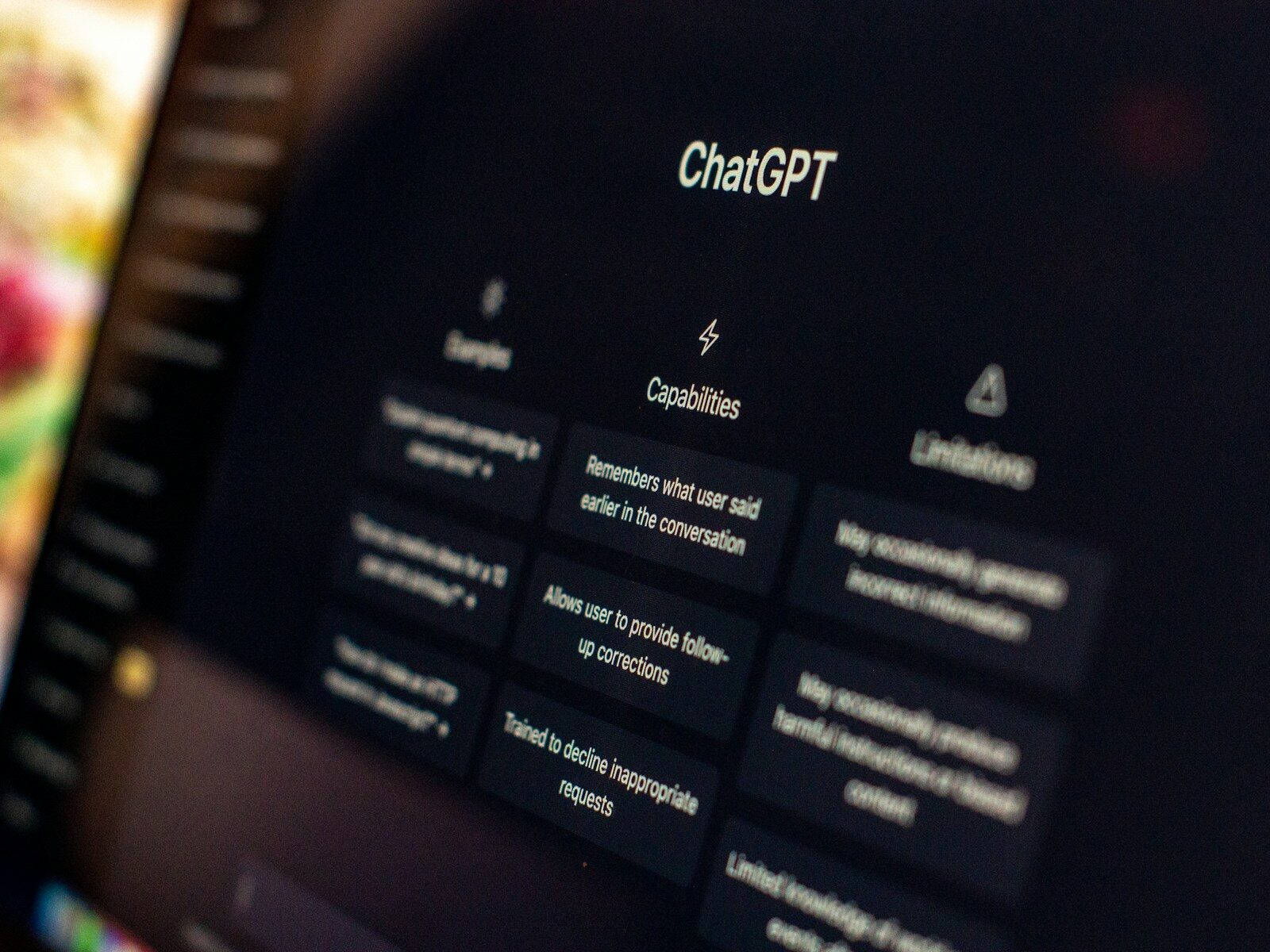
At first the ads all looked the same, but as time passed, ChatGPT got incredibly good at mimicking the work of graphic designers. It’s all in the prompt. Mark my words. Soon, there will be no way of knowing.
Which brings me back to ethics.
I heard someone this week argue that using AI for writing is fine, but not for graphic design or music. Why?
Why is it okay for a good writer to use it to help with grammar and punctuation, but not for a bad writer with an idea to use it to write a book? Why is it okay for a musician to feed it lyrics and melodies and get back a fully mastered track with instrumentals, but not for someone with zero music knowledge to use it to write a song about their dog? Why is it okay for a movie producer to sprinkle a little AI into a low-budget film, but not for my 16-year-old son to use it entirely to produce a full feature? Where do we draw the line?
The argument is about taking work away from professionals, and I think that threshold varies for all of us. But what if you never would have hired those professionals in the first place? Does it justify using it?
What if you wouldn’t have used a graphic designer anyway?
What if you never would have paid for professional studio time?
What if the choice was either having a promo video for your non-profit, or having nothing at all because you simply can’t afford a video producer?
And if you ask AI to design your logo, witth precise instructions, specific colours, exact lines, a clear vision, isn’t that logo still your idea?
Maybe the conversation isn’t really about AI at all. Maybe it’s about access. For most of human history, art, music, film, and design were gatekept by cost, connections, and formal training. AI annihilated those barriers. It moved past them entirely. That’s uncomfortable for people who spent years mastering their craft. I should know! There is no denial that AI has taken work away from me. But it also gave me the ability to finally hear my songs the way I always imagined them — melodies, lyrics, and all — something I would never have seen in my lifetime hadn’t it been for SUNO. So I get the uneasiness and discomfort. It’s valid. But discomfort isn’t the same as wrongdoing.
At this point, you’re probably totally confused about where I stand — and you’d be right to ask. So go ahead: “Julia, do you love AI or hate it?” My answer: it’s complicated.
About the Author