Law enforcement officers and security professionals rely on their gear every day. Not as accessories. As tools that support safety, speed, and decision-making under pressure.
Each piece of equipment serves a purpose. Protection. Mobility. Communication. Identification. When gear fails, the consequences can be serious.
This article takes a closer look at the core equipment used by police and security professionals and why each component matters in real-world conditions.
Why Gear Quality Matters in High-Risk Work
Police and security work is unpredictable. Conditions change quickly. Threat levels escalate without warning.
Gear must perform consistently. It must withstand impact, weather, and long hours of use. Comfort matters too. Equipment that causes fatigue or restricts movement creates risk over time.
Professionals do not choose gear for looks. They choose it for reliability.
Body Armor as the Foundation of Protection
Body armor is one of the most critical pieces of equipment. It protects against ballistic threats and sharp force injuries.
Modern armor systems allow flexibility. Officers can scale protection based on assignment. Soft armor is common for routine patrols. Hard armor is added for higher-risk situations.
In extreme threat environments, level IV plates are used to stop armor-piercing rifle rounds. These plates are heavier, but they provide the highest level of ballistic protection available.
According to the National Institute of Justice, body armor has saved more than 3,600 law enforcement officers’ lives since its widespread adoption. That figure underscores why armor remains a non-negotiable part of professional gear.
Duty Belts and Load Distribution
Duty belts carry essential tools. Firearms. Handcuffs. Radios. Medical supplies.
Poor weight distribution leads to back and hip injuries over time. Modern duty belts and inner belt systems spread weight more evenly and reduce strain.
Placement matters. Tools must be accessible without interfering with movement. Every second counts during a response.
Communication Equipment Keeps Teams Aligned
Clear communication saves lives.
Radios allow officers and security teams to coordinate quickly. Earpieces reduce noise interference. Push-to-talk systems keep hands free.
Modern communication gear prioritizes clarity and reliability. Dead zones and signal loss are serious risks, especially in large facilities or urban environments.
Good communication reduces confusion and improves response accuracy.
Uniforms Built for Function, Not Fashion
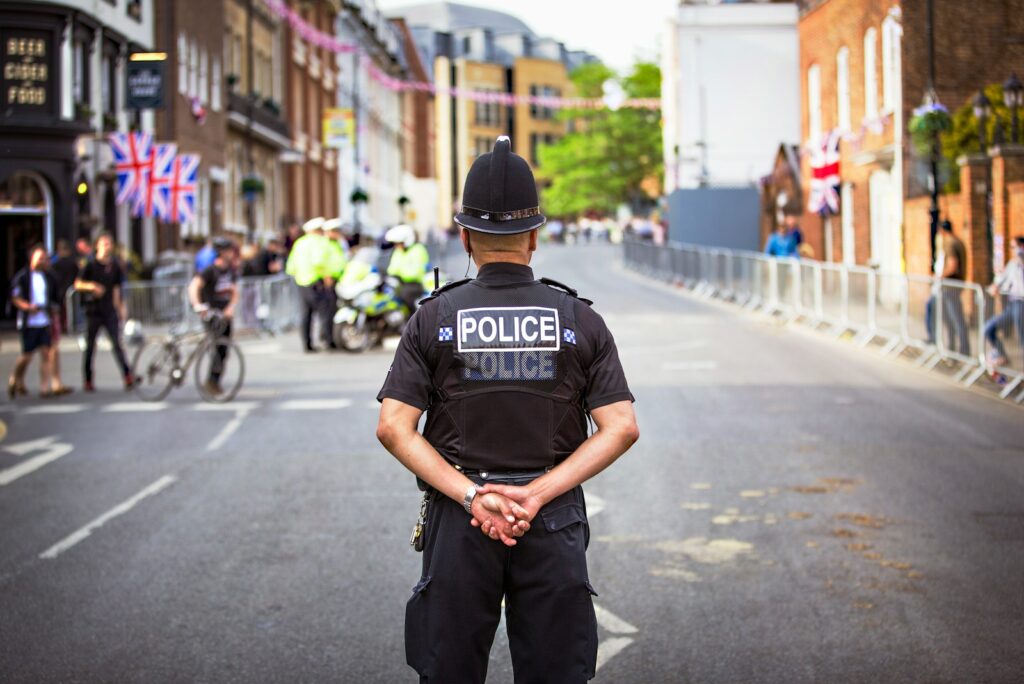
Uniforms do more than identify authority. They support movement and comfort during long shifts.
Professional uniforms use durable fabrics, reinforced seams, and flexible panels. Breathability helps regulate body temperature. Moisture-wicking materials reduce discomfort.
Uniforms must also support equipment attachment. Pockets, loops, and mounting points are placed intentionally.
Comfort improves focus. Focus improves safety.
Footwear That Supports Long Hours on Duty
Footwear is often overlooked, but it plays a major role in performance.
Officers and security professionals spend hours standing, walking, and running. Boots must provide support, traction, and durability.
Poor footwear leads to fatigue and injury. Good boots reduce impact and support joints over time.
Mobility starts from the ground up.
Less-Lethal Tools and Defensive Options
Not every situation requires lethal force. Less-lethal tools give officers and security teams alternatives.
Batons, pepper spray, and conducted energy devices are commonly used. Each requires training and clear policy guidelines.
Proper storage and quick access matter. These tools must be available without interfering with other equipment.
Choice expands options. Options reduce risk.
Identification and Visibility
Clear identification helps prevent confusion. It also supports accountability.
Badges, patches, and name identifiers communicate role and authority quickly. In some environments, high-visibility markings improve safety. In others, subdued identification reduces attention.
Gear choices reflect context.
Medical Gear as a Critical Component
First aid is not optional. Officers are often first responders at medical emergencies.
Tourniquets, trauma kits, and gloves are standard components of modern loadouts. Training ensures these tools are used correctly.
Immediate care saves lives, including those of officers and civilians.
Maintenance and Training Matter as Much as Gear
Even the best equipment fails without maintenance. Regular inspection catches wear early. Cleaning extends lifespan.
Training ensures gear is used properly. Tools are only effective when the user understands their limits and capabilities.
Preparation is continuous.
Security Professionals Beyond Law Enforcement
Security professionals operate in many environments. Corporate campuses. Events. Transportation hubs. Critical infrastructure.
Their gear often mirrors law enforcement equipment but is adapted to specific roles. Threat assessment, access control, and monitoring are key priorities.
The principles remain the same. Reliability. Comfort. Function.
Final Thoughts
The gear used by law enforcement and security professionals is designed for real-world demands. Each item supports safety, performance, and decision-making under pressure.
From body armor and communication tools to uniforms and medical kits, every component plays a role. Together, they form a system built for reliability.
Good gear does not replace training or judgment. It supports them. In high-risk work, that support can make all the difference.
About the Author