


By Grace Soares, Chair, Cornwall Youth for Climate Action
The common snapping turtle (Chelydra serpentina) is a species native to Ontario and the SDG area and remains one of the most interesting native animals found here. Often known as Ontario’s most prehistoric-looking animal, it has a brown and green scaly shell and a long, spiky tail, reminiscent of a stegosaurus. Unlike many others, snapping turtles cannot fully retreat into their shells for protection, since their shells only cover their backs. Because of this, they rely on their only other defensive mechanism, rapidly extending their necks to snap at oncoming threats. Despite being mostly harmless to humans, they are often mistaken for alligator snapping turtles that are much more dangerous. Consequently, these fascinating native creatures receive little aid from locals and are often feared rather than helped.
Currently, snapping turtles are facing many environmental challenges and are considered an endangered species by the Government of Canada and of special concern by the Government of Ontario. This dangerous state is caused by many factors including invasive species and slow reproduction rates, however, the most common cause that is putting at risk the common snapping turtle population is road ecology. Snapping turtles occupy habitats as large as 8 km², and they travel extensively within this range during mating and nesting seasons, as well as when searching for food or water. Unfortunately, this movement often forces them to crossroads, sometimes with multiple lanes. Considering their slow walking speed of around 2 km/h, these crossings are extremely dangerous and frequently result in injury or death.
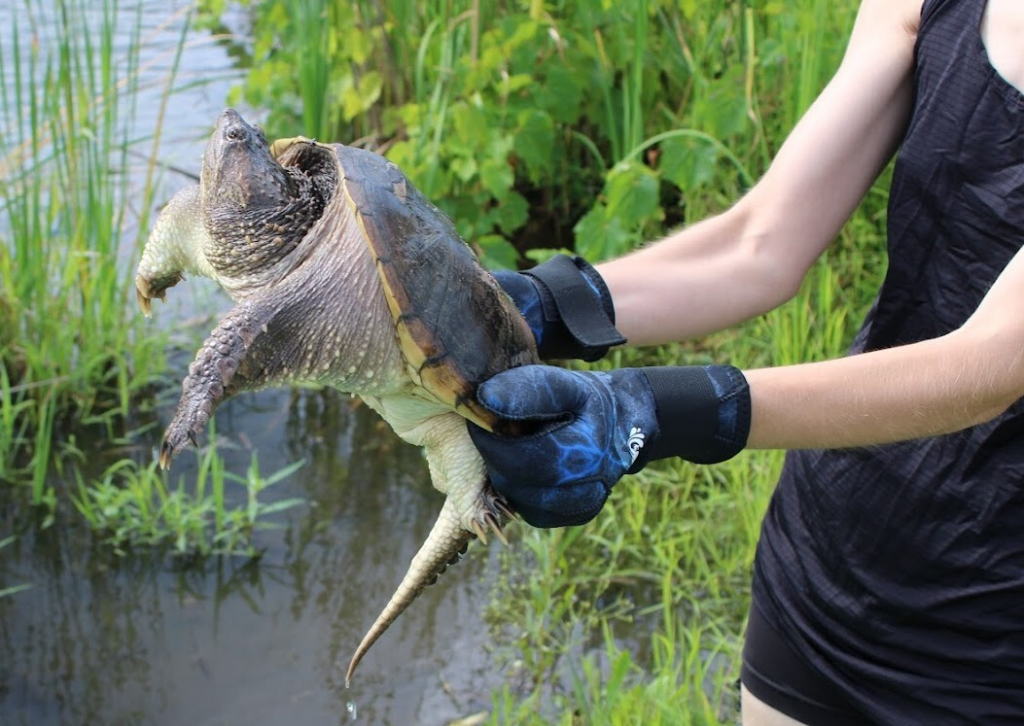
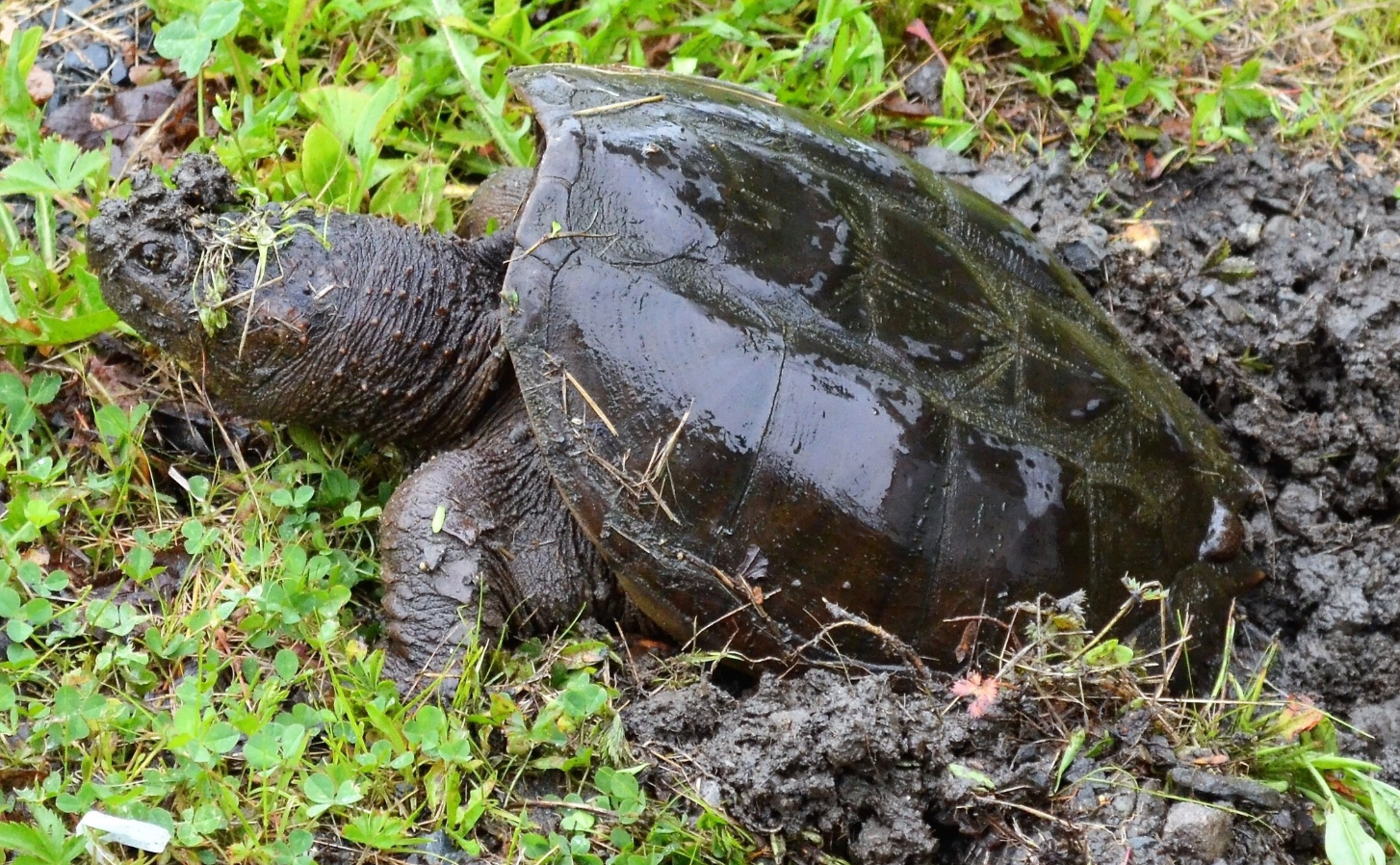
Photo credit for 2 pics below – Ross Dobson
Snapping Turtle digging a hole to lay her eggs.
Turtle nest protector to keep predators from eating the turtle eggs.
Despite these challenge, common snapping turtles remain incredibly important to local ecosystems. As necrophagous animals, they feed on dead organisms and waste, helping to clean and maintain the environment. Unlike other endangered species in Ontario, their current situation is not hopeless, and there are still many ways people like you can help protect them. For example, if you encounter a snapping turtle on the road and it is safe to stop, you can assist by carefully moving it to the side it was heading toward. It is important not to redirect the animal, as it already knows where it is going. If you accidentally hook a snapping turtle while fishing, try to reel it in slowly and remove the hook carefully, releasing it again if it appears healthy. Additionally, pet turtles should never be released into the wild, as non-local species can become invasive and harm native populations.
Finally, the most impactful difference you can make is by supporting local conservation efforts. Organizations such as SDG Turtles, run and founded by Nicole Truesdell, work to rehabilitate injured turtles for release. The River Institute in Cornwall also plays an important role in protecting the St. Lawrence species and ecosystems. The Ontario Turtle Conservation Centre further supports conservation through initiatives like the Turtle Taxi program, which transports injured turtles so they can receive proper medical care.
To conclude, common snapping turtles are not dying, far from it, they just need a little help from locals like you! To stay in touch with climate action efforts please sign up to our e-mail list at transitioncornwall.com
About the Author