



With all of the debate about the building of a high speed railway from Quebec City to Toronto, it is time to remember that fear of American annexation of British North America led directly to Confederation, while the completion Canada’s transcontinental railway in 1885, linked Canada from the Atlantic to the Pacific, making it a viable economic and political entity.
Throughout the 19th and mid 20th century SDG was served by five railways with more than 40 stations, connecting the region to all of North America. These Lines made it possible to take a train from Finch and travel south to Boston, west to the prairies, east to the Maritimes and from 1932, to James Bay. Individual mobility, coupled with the opening up of rural SDG brought new prosperity to farmers, who could now sell their apples cattle, dairy, eggs, lumber and an array of other produce across the continent.
In Cornwall railways allowed its furniture, paper and textile industries to thrive.
The opening of the Ottawa and New York Central, with its terminus near the University of Ottawa, provided accessible postsecondary education for people living along its route from Cornwall and surrounding countryside. While the section of the CPR line that ran between Apple Hill and Finch allowed rural children to have daily access to a high school education.
The railway made villages such as Apple Hill the centre of the cattle trade, gave life to Berwick’s and Dalkeith’s timber trade, almost started a “gold rush” at the “whistle stop,” dubbed Goldfield, and led to people in Newington to dream of untold wealth, by selling the peat from the bog as an alternative fuel for trains.
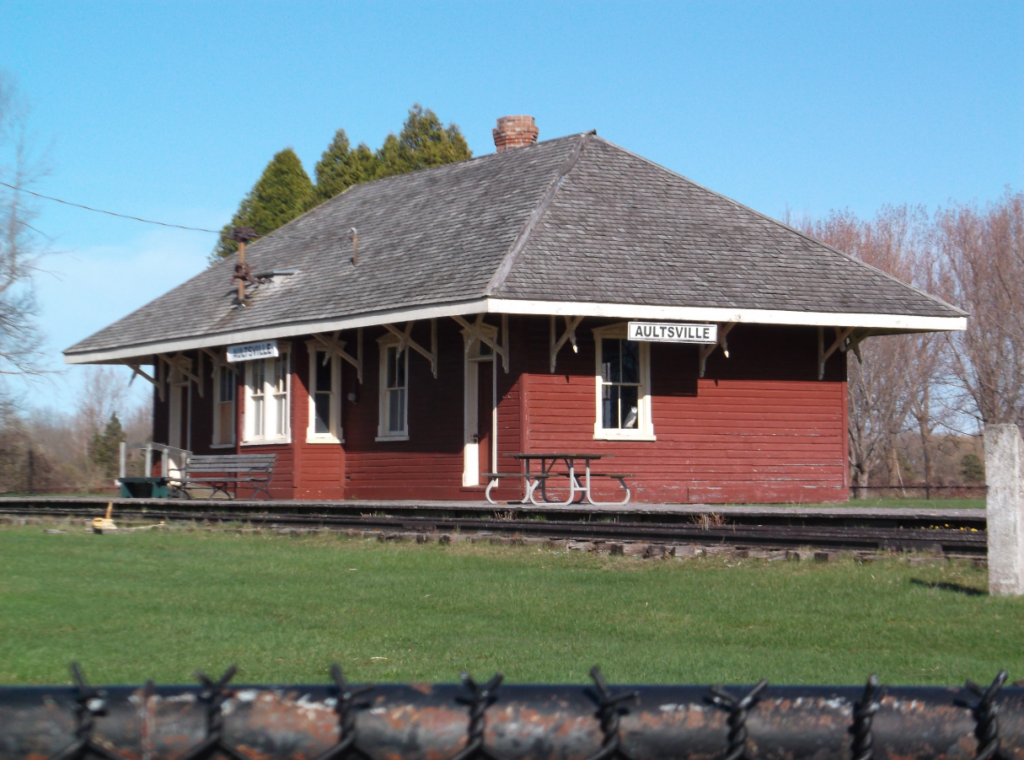
The railway age opened in SDG when the Grand Trunk Railway (GTR/CNR) laid its tracks just north of the St. Lawrence and opened its first station in Eastern Ontario, in Brockville in 1855. A year later the Cornwall station came online, inaugurating the railway era in earnest. For many the “milk run” “moccasin train,” which travelled between Brockville and Montreal, daily from 1855 to 1958, epitomized rail service. In its heyday, the GTR had stations in Bainsville, Lancaster, Summerstown Sta., Cornwall, Mille Roches, Moulinette, Wales, Farran’s Point, Aultsville, Morrisburg and Iroquois. Let me know if I have left any out!
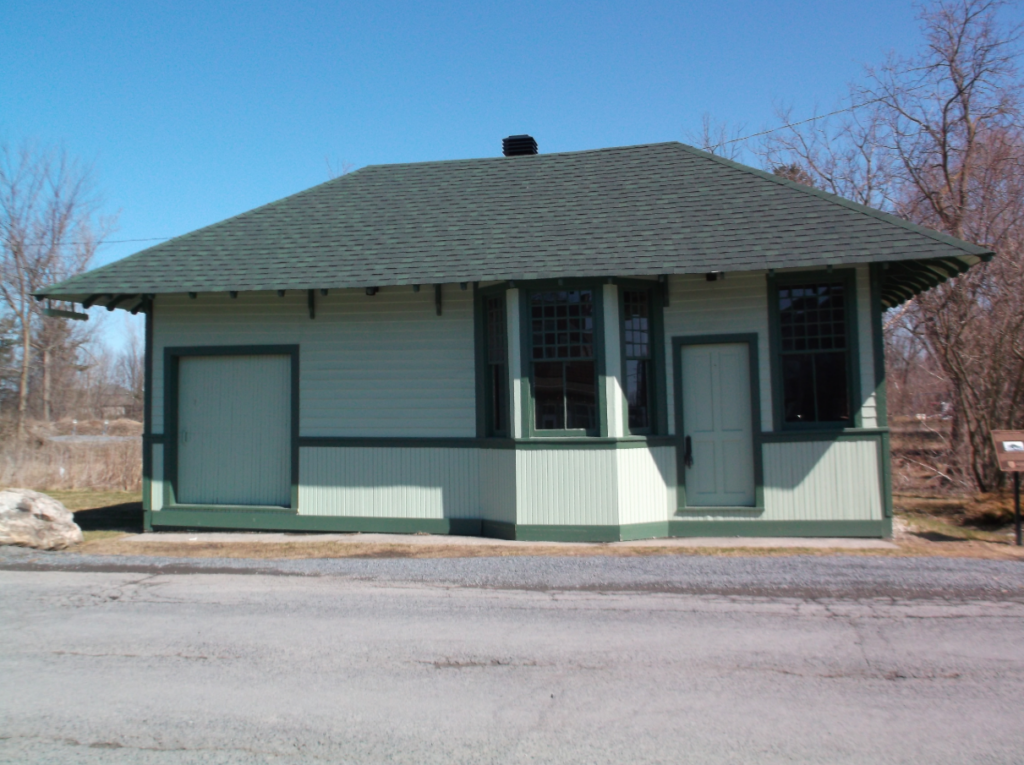
The Canada Atlantic Line, (CNR) opened its first station in Alexandria in 1882. Providing service between Montreal (the U.S.) and Ottawa, it was seen as “North Glengarry’s Road to Fortune.” The Line had stations or sidings in Glen Robertson, Alexandria, Dornie, Greenfield, Maxville, and Moose Creek. A spur line went from Alexandria to Dalkeith, allowing area farmers to economically sell their hay as far south as Boston.
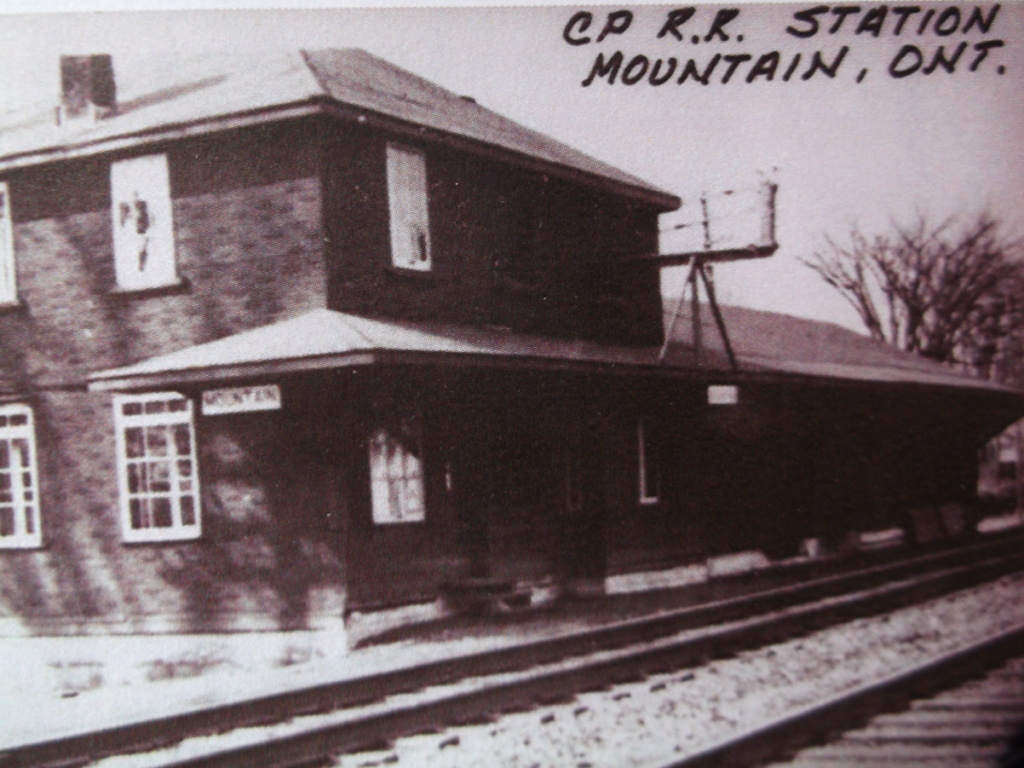
Montreal’s and Toronto’s markets were made available to farmers in the late 1880’s, when the Ontario – Quebec Line (Winchester Subdivision/CPR) opened. The Line ran from Dalhousie Station (Quebec), to Glen Norman, Green Valley, Glen Roy, Apple Hill, Monkland, Avonmore, Finch, Goldfield, Chesterville, Winchester, Inkerman and Mountain.
The Ottawa and New York Central, opened in 1897, linking Cornwall to Ottawa to the north and Tupper Lake and onto New England to the south. Boasting two freight trains and four passenger trains a day, in 1933 locals maintained that the 129 mile long line “was, one of Cornwall and Stormont’s institutions and many residents of the town and country…wonder how they got along before the line was opened to traffic.” Its arrival gave a vital economic shot in the arm to Black River, Harrison’s Corners, Northfield, Finch, Berwick and Crysler.
Former O. & N.Y. employee Charlie Thompson related that the line’s demise, “…began with the motor age, the coming of the transport truck and the four-wheeled powered family car.” Revenues fell, and passenger service ended in 1954, followed by the Line’s closure four years later.
Fortunately for local explorers, the Line has left many physical remains, starting with the two bridge piers and wheel in the St. Lawrence behind the old Domtar property.
The CPR’s “Peanut Line”, (Glengarry Stormont/CPR Cornwall subdivision) linking south Glengarry to the CPR’s mainline at St. Polycarpe Junction, Quebec, ran from 1915 to 1995. This 45 km long Line provided passenger service until 1952 and shipped dairy and other products to the Montreal market, until it could no longer successfully compete with highway transportation. During its time, the Line gave life to Glen Brook, Williamstown, Glen Gordon, North Lancaster, and Bridge End. The Line’s most visible remains are the recreational trail, along its former right of way, two bridges near Williamstown and the relocated Glen Brook station.
About the Author