Today our club is doing the opposite of an outdoor event; instead, we are going underground into the mid- 20th century, 75 feet below ground to be exact. If it sounds a little claustrophobic, then just be glad you never had to spend a month living there.
We are in Carp to tour the Diefenbunker, named after former Prime Minister John Diefenbaker, much to his dismay. Built secretly below a cow pasture between 1959 and 1961 in a pro-active attempt at emergency preparedness in the event of a nuclear attack, it later functioned as a station for the Canadian Armed forces until it was decommissioned in 1994 and turned into a Canadian Cold War museum a few years later. Here ends my history lesson, for the most part. At 100,000 square feet, over 350 exhibit rooms, and a one-and-a-half-hour tour that merely skims the surface of the history that lies within these walls, you could easily spend the better part of a day soaking it all in. It is best to book your own visit. A word of caution: it may blow your mind!
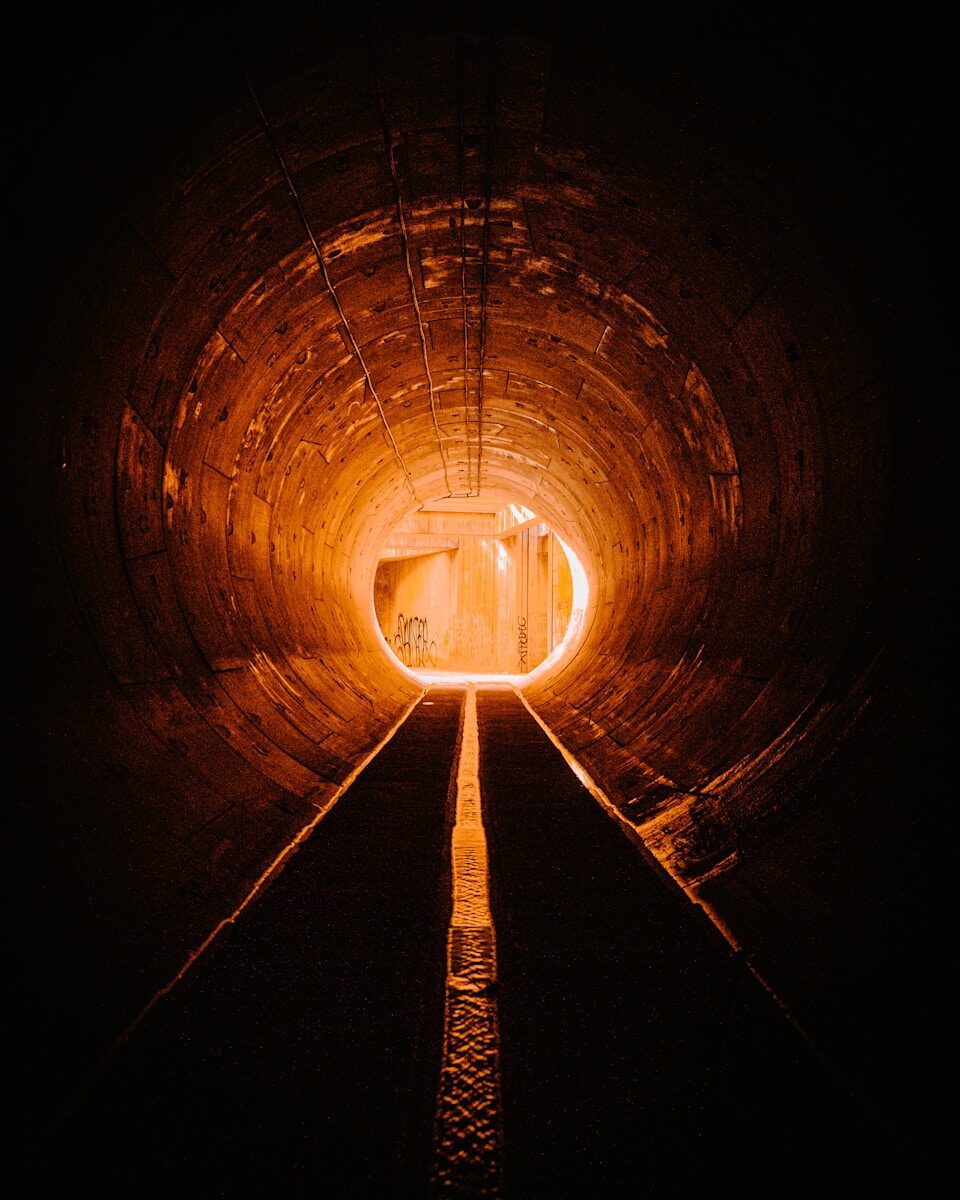
Upon our arrival, the first thing I notice is a helicopter pad and what looks like a typical hangar. This rather underwhelming building cloaks the entrance to the museum, if you can imagine it without the current telltale signs. The approach to the Museum doors is a lengthy one, halfway through a blast tunnel which was designed to protect the bunker.
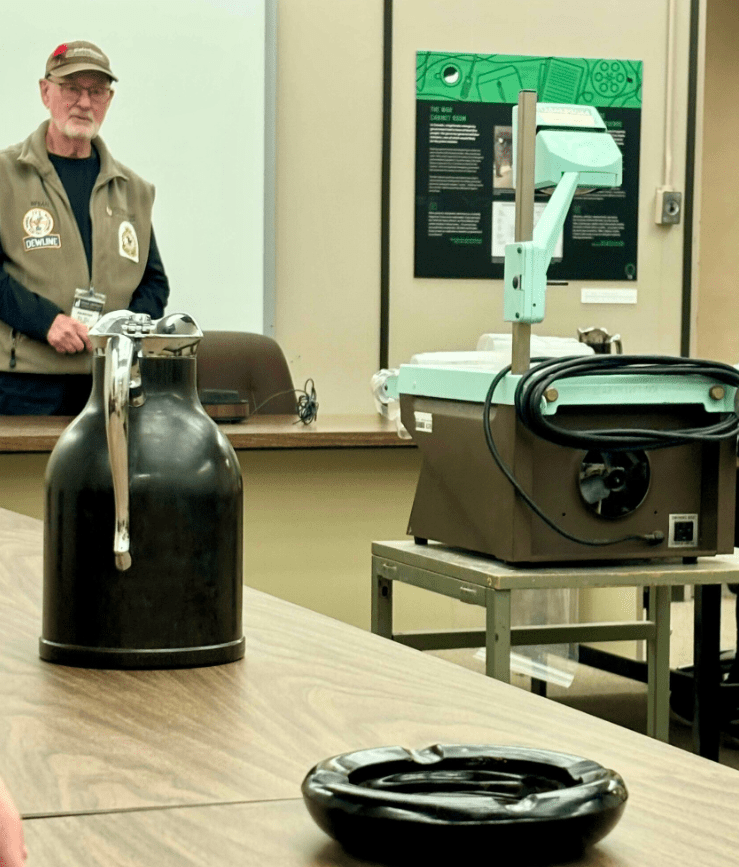
Our guide, Brian Jeffrey, is an 84-year-old volunteer and the author of a book entitled “Adventures from the Coldest Part of the Cold War,” which, he is quick to point out, is available in the museum gift shop. It is immediately evident that this witty man will be anything but dry in his delivery of historical facts. He is quite entertaining. The room in which we are meeting is decorated with a series of National Security Cold War propaganda posters with mascots aptly named Bea Alerte and Justin Case, calculated to encourage Canadians to take steps to prepare for the worst.
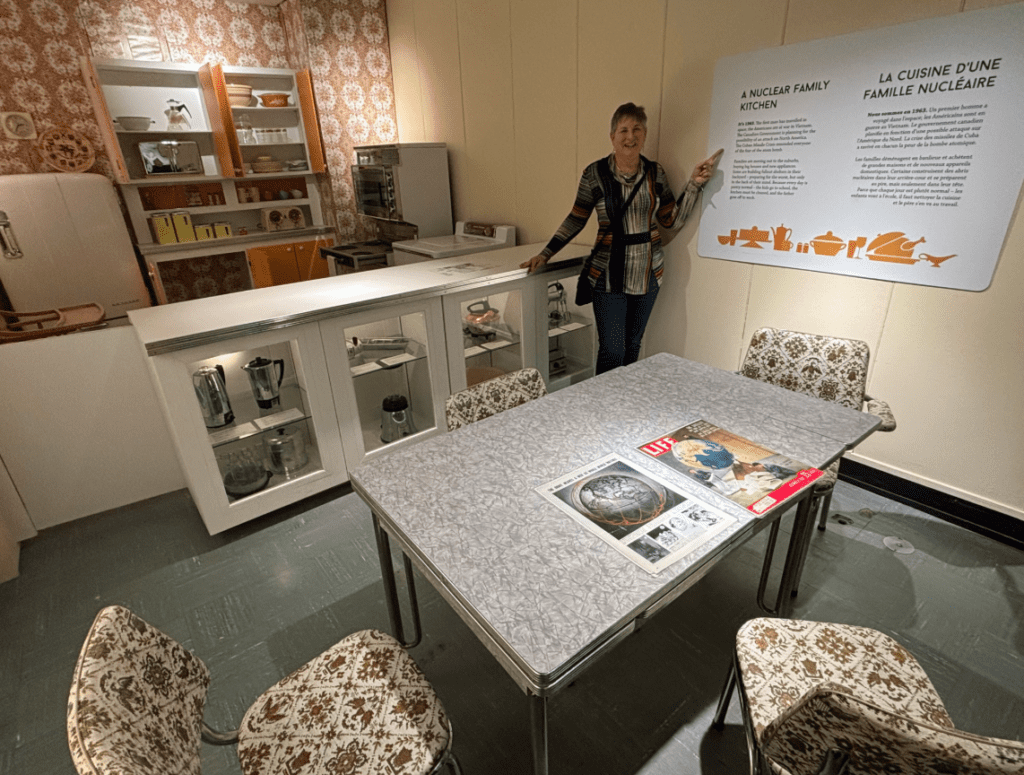
My first impression is that I have stepped back in time – linoleum floors, orange chairs, and turquoise accents. It becomes more personal when we visit one of the exhibit rooms entitled the “Nuclear Family Kitchen,” with its Formica-top table trimmed in chrome, its vinyl-upholstered chairs, busy wallpaper, and aluminum canister sets. “It’s 1963,” proclaims the sign on the wall. So, this is what a kitchen looked like the year I was born! “A good vintage,” someone pipes up.
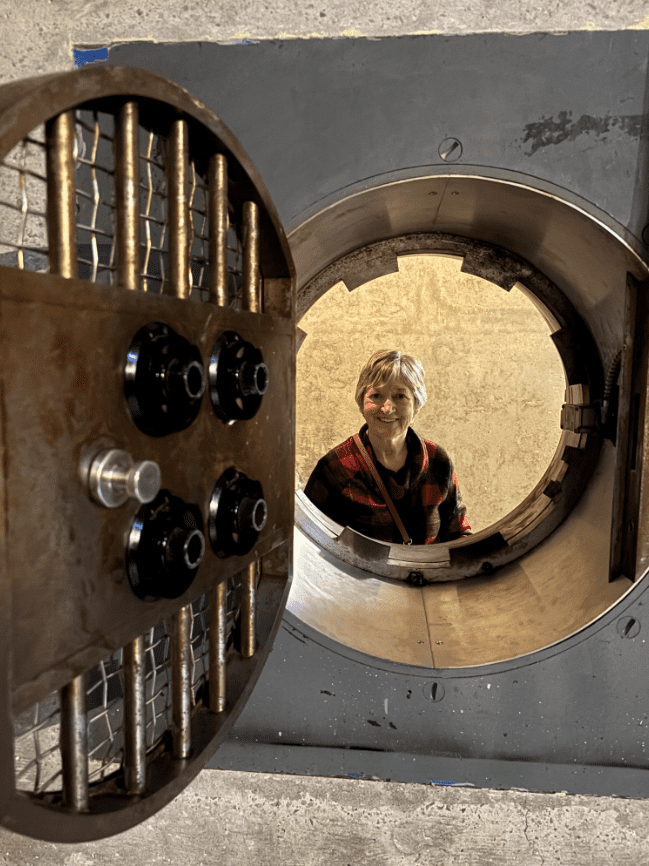
Built to house over 500 people, the Diefenbunker even has an operation room, an infirmary, a dental facility, and a morgue. In addition, it houses a Bank of Canada vault that was meant to store all of Canada’s gold. In the Conference room, we have a chance to rest out feet and sit for a while to listen to our guide. A retro overhead projector stands in the centre in sharp contrast to the Smart Board at the front, a recent addition as the room is still used for meetings. On the table are several vintage ashtrays which we realize are foreign objects to the children in our group. That, to me is a clear sign of progress.
We visit the Communication Room where Station VE3CWM, an Amateur Radio Station, has been operating since 2002 communicating by voice and morse code with other operators worldwide. A volunteer operator is on site, available to answer any questions. On the wall behind him is a map, a relic from the 2001 movie “The Sum of All Fears,” a portion of which was filmed in this location. According to Brian, the map was purposely hidden on the premises after filming was completed and thus remains here as an artifact.
In the immense cafeteria, which operated 24/7 in its heyday, a large outdoor scene decorates a wall. Someone remarks that if she had to live here, she would stand and look at this scene for hours, a reflection on the lack of windows and natural daylight. That comment sums up the entire tour for me. Imagine living here in isolation from the rest of the world, without ever stepping outside for 30 days straight! Suddenly, I can’t wait to be outside breathing fresh air again.
For more information about the Cornwall Outdoor club, visit www.cornwalloutdoorclub.ca or follow us on Facebook.
About the Author