


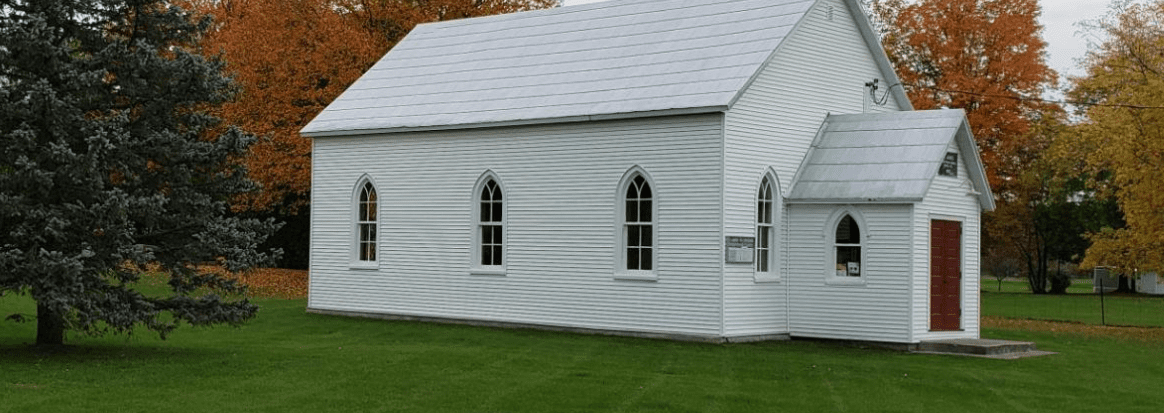
First off I would like to dispel the notion that Monkland was so named because there was once an abbey full of Monks!
The village has had a variety of names, but none with religious connotations. When the first post office opened here in 1854, it was called Roxborough, after the Township it is located in. This name is disputed by the Monkland Historical Society, who claim it was called MacMillan’s Corners, and that the Village moved here when work started on the railway in 1885. The Historical Society also states that the place was renamed Monckland in 1862, in honour of Canada’ Governor-General. Finally, on April 19, 1966 Monkland became the Village’s official name for both the Post Office and the C.P.R. water and refueling stop.
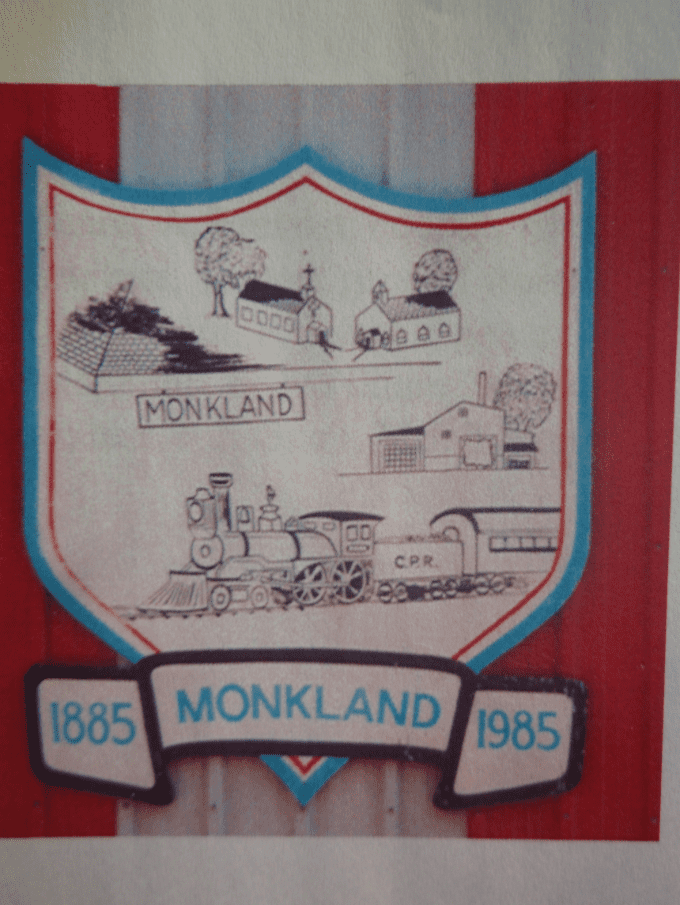
Monkland, Monckland, Monklands, Monkland Station, or Roxborough. The Village has been known by all five names.
EGG HOAX.
The presence of the railway opened Ottawa’s market to the local farmers, attracting a buyer from the G.Gunn & Co. of Ottawa, to send a postcard to W.B. Fickes of Monkland, offering to purchase his eggs 10 to 20% above market price, on April 1st, 1903. Not wanting to miss out on this windfall, Fickes promptly sent $11.25 of his “fruit from the hen,” to the would-be purchaser. Unfortunately for Fickes, and many other egg sellers from the Quebec border east to Whitby, he was caught in a hoax, that resulted in $2,000 (approximately $75,000 today), worth of eggs, left unclaimed in Ottawa, along with many more eggs left to spoil in express and railway offices across the region. The “Ottawa Citizen,” of April 30th, 1903 does not record if the mastermind behind this practical joke was every apprehended.
STOVE PIPE ALLEY
In 1903, a Township by-law was passed granting the C.P.R. an $8,000 bonus to build a 3.2 km spur line from Monkland to the Warina Pits, to transport sand and gravel, purchased from McEwan and Munroe, for the laying of the Line’s double-tracks.
Apparently finding it easier to settle down along the Line than return home, some of the workers built temporary cabins between the Pits and Monkland. According to local historian Vera Reid, these shelters were “…hastily built…lacking concrete chimneys, (with) a link or two of tin stove pipe” protruding “from the roof,” leading people to dub the area “Stove Pipe Alley,” a “suburb” that went on to provide homes for several generations.
Until the late 1990s vestiges of these shacks were still visible east of Highway 138.
TRAIN GANG MURDER, DECEMBER 10, 1918.
Repairs on the C.P.R. “Short Line,” between Montreal and Smith’s Falls, like all rail lines required constant repairs, leading the company to bunk the repairmen in freight cars, where the bored men might brawl, to relieve boredom. Sadly these fights could end tragically. In 1918, Austrian-Polish train gang member Worzye (Bill) Tomaszewski was shot during a liquor fuelled dispute by co-worker John Vegrynuik, near Winchester’s C.P.R. station, on December 10th. Now intent on murder and covering his tracks, Vegrynuik placed the wounded man under a freight car, and then went to an adjacent car to find more ammunition “to finish the job,” according to the four Austrians who were in the car.
In an attempt to cover-up the murder, Vegrynuik placed the murder weapon across Tomaszewki’s left arm and shoulder and then instructed, the Austrians to tell the police that it had been a suicide.
After approximately three hours, Vegryniuk went to foreman Adelard Dubois to tell him that there was a man sleeping under the car. Dubois now went to look under the freight and found Tomaszewski’s corpse and duly informed Constable Steinberg, who was soon accompanied by Dr. McLaughlin.
Vegryniuk’s, fate, however was already sealed, as he had admitted to his co-workers that he had murdered Tomaszkewsi, leading the jury at the subsequent inquest to declare Vegrynuik had committed the crime.
Tried in Cornwall, two of the workers testified that Vegryniuk had admitted to the killing. In absence of witnesses for the defence, the trial ended, leaving the jury to deliberate for a mere 40 minutes before bringing in a guilty verdict.
Despite the fact the defence tried to reduce the charge to manslaughter, on the grounds that there was no motive and that it was a drunken quarrel that got out of hand, Judge Logie stated that the evidence was too strong to lessen the charges and sentenced the accused to death.
Vergyniuk was hung in Cornwall jail’s courtyard, on the morning of March 28, 1919 by Arthur Ellis, Canada’s official executioner.
I have often wondered why “enemy” Polish-Austrian” workers were part of the work crew. I speculate, that as the vast majority of able-bodied Canadian men were involved in the War effort, and as the work crew were Polish-Austrian, from the Central Powers, that they were prisoners of war. Furthermore, I wonder if the unspoken reason for the imposition of the death penalty, may have been due the fact that the accused was an “enemy alien.”
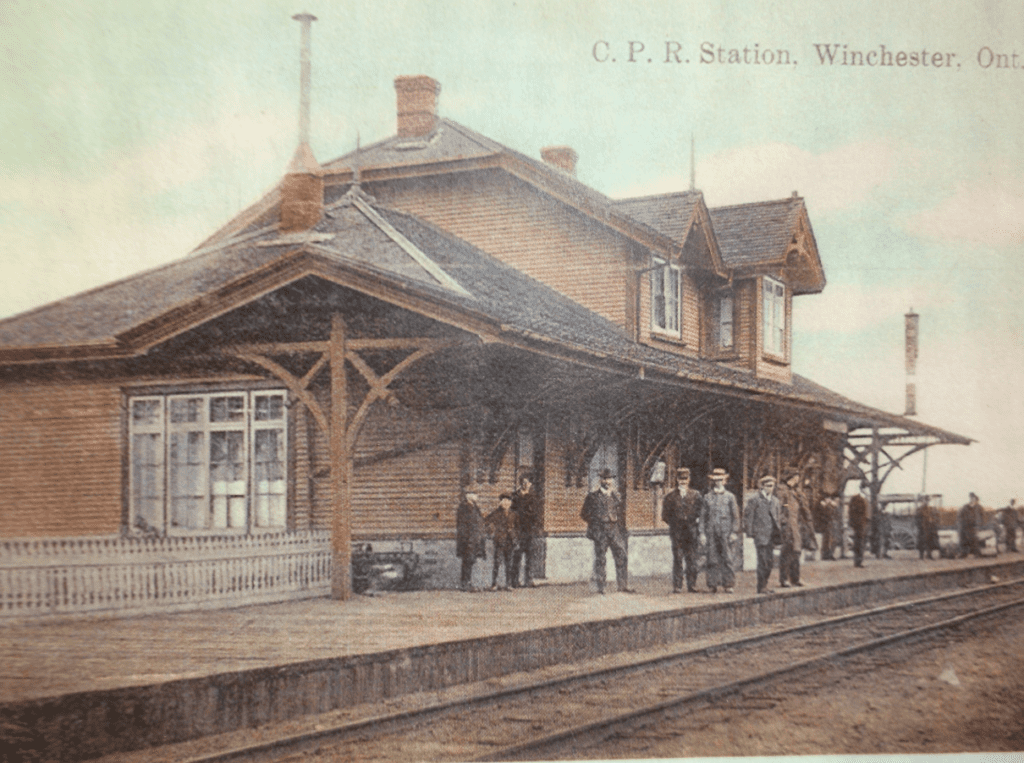
World War I era postcard showing Winchester’s Railway station. Passenger service ended in the mid 1960s, the station closed in 1969, to be moved Victoria Street to become a group home, in 1972.
About the Author