
” At the Writers Group we were asked to write an essay about a mentor, or someone we looked up to and emulated. In the second portion of the essay, the tables turned, and we were then interviewed briefly by the mentor “
Good Copy
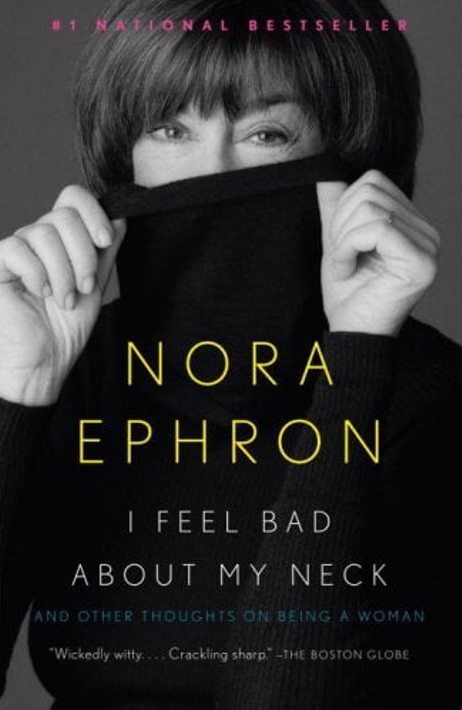
In her essay collection I Feel Bad about My Neck, the late essayist and screenwriter Nora Ephron, advised readers to “Write everything down – keep a journal and take more pictures.”
Asked to speak freely of her early days in news reporting and journalism, Ephron saw everything as an instructive tool. Learning from her mother’s common phrase, she lived by the mantra that personal experiences — including painful ones — should be documented. Graduating with a political science degree from Wellesley College in 1962, Ephron got her start as a “mail girl” in the basement of Newsweek Magazine.
Smiling in reflection, she explained how women of the era were seen as mere possessions or chattels. On reflex, Ephron knew what she was up against walking into blue, smoke filled newsrooms as men checked out her ass.
Learning pretty fast, she got herself out of there and one year later was hired as a reporter at The New York Post. A typical day consisted of a forty-five minute window, interviewing people. Working harder than she ever had- to get the whole story; in this, Ephron believed it made her a better reporter.
Explaining how at one time the role of journalism, was to find things out about people you weren’t supposed to know: Ephron’s early essays were packed with thousands of tiny details, resulting from hours of research. Building on someone’s strengths, insecurities and normalizing quirks, Ephron made her characters memorable and life-like. With so much ground to cover, the reader came away knowing far more than they expected.
Tables Turn . . . .
Questions to Lisa:
Q: What is your writing style, Lisa?
Taking to heart what Ephron’s mother said, about something being good copy, came from keeping a journal 26 years. Emptying the proverbial (daily) pail is where most inspiration comes from.
In the family stories, items like finding the lost elephant charm and the emotional strings behind it- began as mere sentences from the main journal. Essays like that come out like butter – they are so easy to write.
When I interview people for legacy stories, the 750 word formula comes in three parts. Where you came from – what happened to you and how you mentor or teach other people today? Staying true to the Ephron legacy of researching someone’s curious little foibles and connections from a past, they may not know about, is icing on the cake. Sharing the research document at the end is pretty cool too.
To her credit, Norah Ephron wrote and / or co-wrote screen plays for:
Silkwood ~ Heartburn ~ When Harry Met Sally ~ Sleepless in Seattle ~You’ve Got Mail ~ Julie & Julia (and many others)
Many scenes from Nora Ephron’s most famous films were based on real-life everyday experiences while living in New York – including the famous restaurant phrase from WHMS – ‘I’ll have what she’s having’
Lisa Gray – Copyright © March 2026
About the Author