


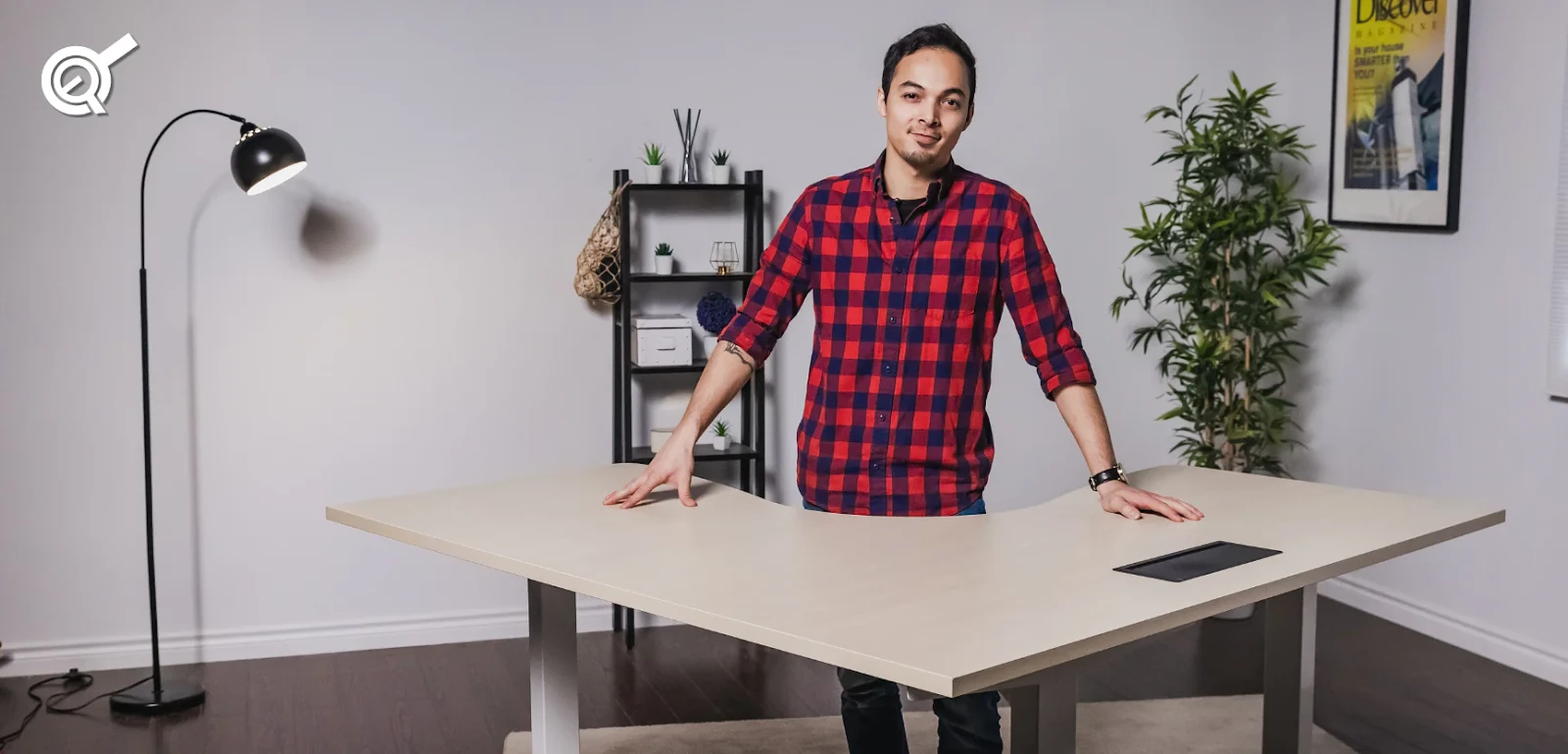
Most people don’t think much about their desk until something starts going wrong. The neck ache that shows up around 3pm. The second monitor balanced on a stack of books. The coffee is sitting dangerously close to the keyboard because there’s nowhere else to put it. At some point the setup stops working and you have to actually deal with it.
A corner standing desk is one of those changes that seems straightforward on paper but ends up affecting more than you’d expect. Not just how much stuff fits on your desk. How you feel at the end of a long day. Whether you dread sitting down to work or don’t mind it. Small things, but they compound.
Why desk shape matters more than you’d think
A standard rectangular desk works, technically. It holds a monitor and a keyboard and that’s about where the space ends. Real work is messier than that. There’s usually a notebook, a second screen, a charger, something you’re eating, something you shouldn’t be eating, and three things you keep meaning to put away. A single strip of surface handles none of that gracefully.
The corner format changes the whole equation. You end up with two zones instead of one. The primary side gets the monitor, keyboard, mouse. The secondary side gets everything else, the planner, the sketchbook, the coffee, the small pile of things that don’t have a proper home yet. It’s not a dramatic transformation. But suddenly things have somewhere to go, and the desk stops feeling like a constant negotiation for space.
The standing part is worth taking seriously
Sit-stand desks have been around long enough now that you can ignore the marketing and just look at how people actually feel after using them for a year. The consistent feedback is pretty simple. Staying in one position for hours is genuinely bad for your body, and having the option to change that without leaving your desk makes a real difference.
The mid-afternoon fog, the stiff neck, that specific lower back tension that builds up over a long session. A lot of that is just the result of being static for too long. Being able to raise the desk, stand for twenty or thirty minutes, then lower it again when you want to sit keeps things moving without breaking your concentration. You don’t need to go for a walk. You just need to change position.
For long study sessions, creative projects, anything that stretches across most of the day, that flexibility is genuinely useful. Not life-changing, maybe. But you notice it.
Setting it up so it actually works
Getting the desk is only the beginning, honestly. How you arrange things on it is what determines whether it helps or just becomes an expensive surface that accumulates stuff.
A few things worth sorting before you start. Figure out which side is your primary zone, the one where you’ll spend most of your focused time, and put your monitor, keyboard, and mouse there. The other side handles everything else. Simple division, but it matters.
Monitor height is something people get wrong more often than you’d think. Whether you’re sitting or standing, the top of the screen should be roughly at eye level. Looking down for hours puts real strain on your neck, and you won’t notice it until the end of a long day when your shoulders are somewhere around your ears. A monitor arm solves this properly because you can adjust the height independently from the desk surface. A fixed stand can’t do that.
Get a mat for standing. Seriously. This sounds like a minor detail but it’s actually the reason most people either maintain a standing habit or quietly abandon it within a few weeks. Hard floors are uncomfortable. That discomfort accumulates, and eventually you just leave the desk lowered and forget the whole thing. An anti-fatigue mat costs very little and makes standing feel easy rather than something you’re enduring.
Use the inner corner intentionally. That spot tends to feel awkward for active work but it’s actually perfect for the things you want nearby without them being in your way. A lamp, a wireless charger, a small plant, a speaker. Whatever belongs in the workspace but not in the middle of it.
Aesthetic matters too, be honest about that
Here’s something most productivity guides won’t tell you. If you hate looking at your desk, you’ll avoid sitting at it. Maybe not consciously, but you’ll find reasons to work from the couch, the kitchen table, anywhere else. A space you actually like being in is one you’ll return to without having to convince yourself.
Corner desks have a natural visual advantage here. The L-shape just looks considered, like someone actually thought about the room. Clean lines, a neutral finish, nothing too loud. It works whether your space is minimal and white or warm and cluttered with books. Drop in a lamp with warm light, a plant, a few things that are genuinely yours, and it stops being a desk and starts being your workspace.
That’s probably worth spending twenty minutes on when you set it up. Arrangement, lighting, and it pays back every single day.
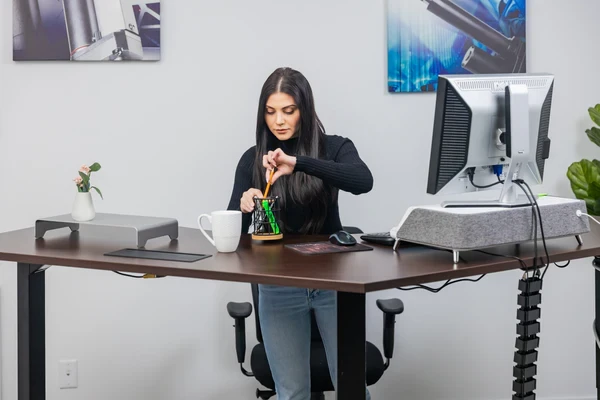
It works in smaller rooms too, actually
People assume corner desks need space. Understandable assumption. But think about what a standard rectangular desk does. It sticks out from the wall and eats into the middle of the room. A corner desk disappears into a space that was probably just collecting coats and forgotten gym bags anyway.
Done right, the room can actually feel bigger after. Or at least less cluttered. The desk fills dead space instead of creating new obstacles.
The one thing you have to do, and genuinely don’t skip this, is measure before you buy. Not just the corner itself. The space beside it, the door swing, the gap between the desk and your bed or wardrobe. A desk that almost fits is worse than no desk at all.
It’s worth the investment
Good furniture doesn’t need replacing every couple of years. A solid corner standing desk moves with you through different apartments, different cities, different chapters. The habits you build around it tend to stick too. Alternating positions, keeping the screen at the right height, having a workspace that actually supports how your body functions. These aren’t complicated things, but they make a difference when they’re consistent.
Your workspace shapes how your days go in ways that are easy to underestimate until something changes and you suddenly notice it. Getting it right is worth the thought.
About the Author