

The Sacred Teachings of Ojibwe Grandmother Josephine Mandamin
By Geraldine Fitzpatrick
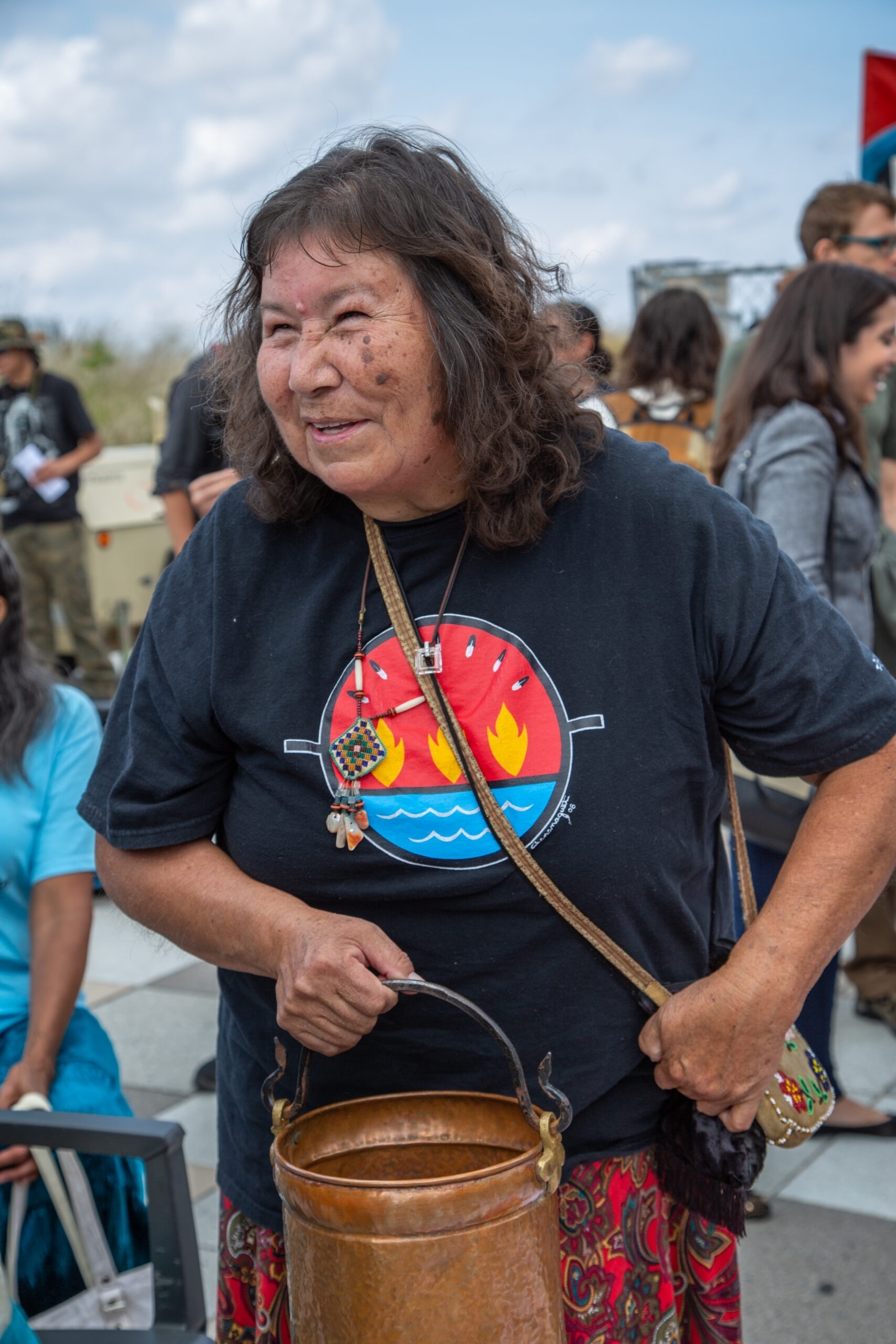
For Anishinaabe Elder Josephine Mandamin, water was not simply a natural resource—it was a living presence deserving of respect, prayer, and protection. Through thousands of kilometres of Water Walks around the Great Lakes, she carried a copper pail and a powerful message: water is life.
Water moves quietly through our lives. It flows through rivers and lakes, through the land, and through our bodies. We turn on a tap and rarely stop to think about the miracle it represents.
Here along the shores of the St. Lawrence River, water has shaped our communities for generations. It carries history, sustains life, and reminds us that the health of the land is inseparable from the health of the water.
But there are people who remind us that water is sacred.
One of those people was Josephine Mandamin, the Anishinaabe Elder known across North America as the Grandmother Water Walker.
For the Anishinaabe people, the word Nibi means water. It is more than a physical element—it is a living presence connected to Mother Earth and to all life.
A member of Wikwemikong First Nation, Josephine was also a survivor of the Canadian Indian residential school system. Despite the hardships of those early years, she carried forward the teachings of her people and later became a cofounder of the Mother Earth Water Walkers, a movement dedicated to protecting the sacred waters of the land.
Around the year 2000, an Elder shared a vision—a warning both simple and powerful: that by the year 2030, water could become as valuable as gold. This message strengthened Josephine’s belief that people must begin caring for the water before it was too late.
In 2003, Josephine began the sacred Water Walks.
Carrying a copper pail, she and other women walked the shorelines of the Great Lakes, offering prayers and raising awareness about the protection of freshwater. Their purpose was simple but powerful: to pray for the health of the water.
Over the years, Josephine and the Water Walkers travelled extraordinary distances around the lakes and rivers of the continent. By the time she completed her final water walk in the summer of 2017, she had walked more than 25,000 kilometres, including roughly 17,000 miles (27,200 km) around the Great Lakes themselves.
In the 1990s, Japanese researcher Masaru Emoto photographed frozen water crystals under a microscope and reported that water exposed to positive words such as “love” and “gratitude,” or to prayer and music, formed beautifully structured crystals. Water exposed to harsh words often produced distorted patterns.
Emoto’s findings echo what Indigenous teachings have long understood—that water is alive and responsive, reflecting the care and intentions surrounding it.
Josephine’s dedication was widely recognized. In 2016, she received the Lieutenant Governor’s Ontario Heritage Award for Excellence in Conservation, honouring her efforts to protect the waters of the Great Lakes.
In 2021, the children’s book The Water Walker, written and illustrated by Joanne Robertson, introduced young readers to Josephine’s inspiring story and the importance of caring for the water.
More recently, in 2024, Canada Post issued a commemorative stamp honouring Josephine Mandamin as part of its Indigenous Leaders series, recognizing her cultural and environmental contributions.
Josephine Mandamin passed away on February 22, 2019, the day after her seventy-seventh birthday. Yet her message continues to ripple outward through the people she inspired.
As communities marked World Water Day on March 22, Josephine’s footsteps continued to guide us.
Her message remains simple and profound:……“Water is life.”
May All Beings Be Happy!
About the Author